How a model reads on and on without re-reading a thing.

SRC·33 Source
It reads the whole book — without ever re-reading a word.

It reads the whole book — without ever re-reading a word.

Attention re-reads every word against every other; twice the text, four times the work. But there's another way. Carry one running state — a small, fixed summary — and fold each new word into it as you go. No looking back, no growing grid. The cost stays flat, however long the page. The question becomes: what's worth keeping?
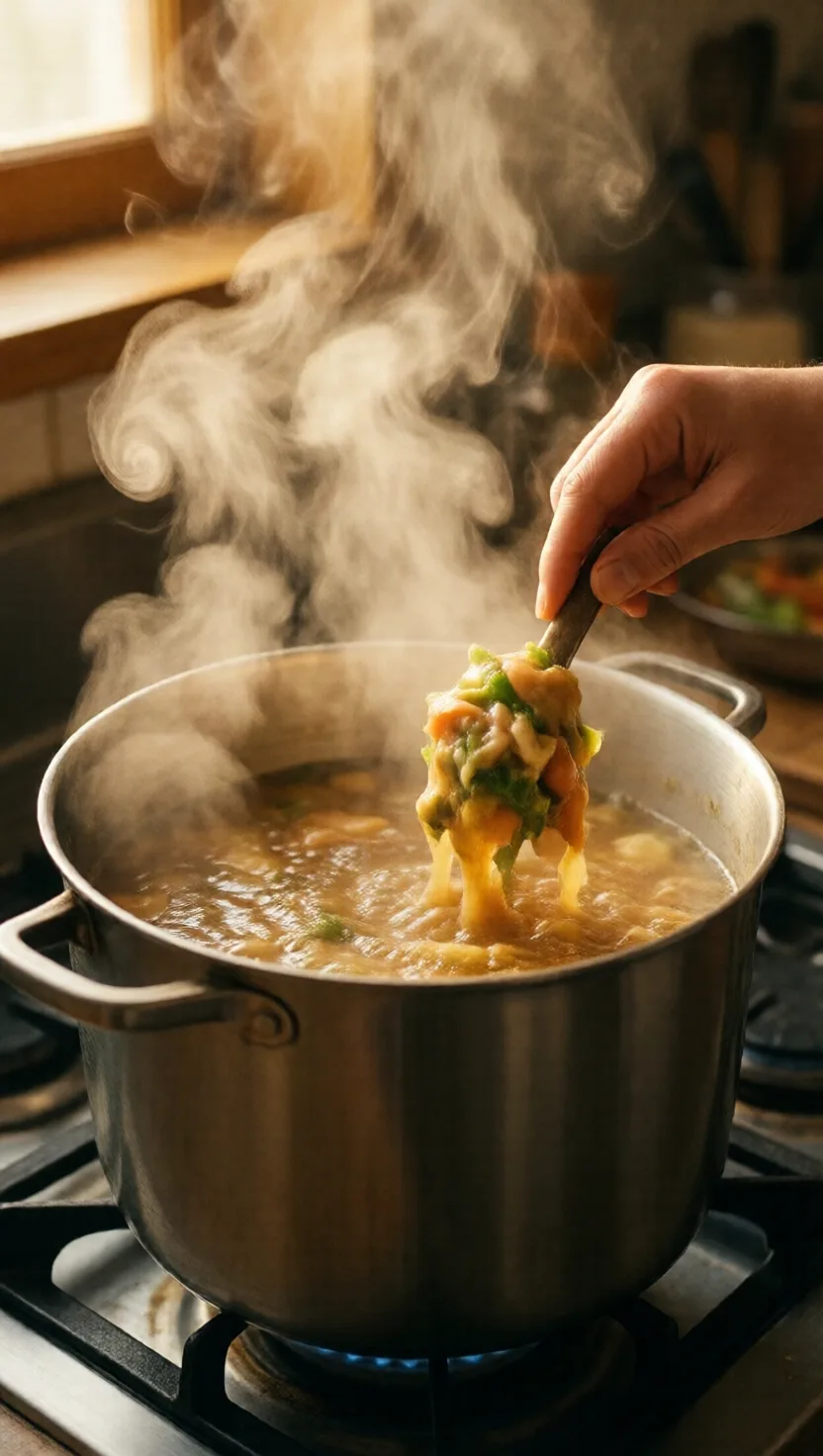
Don't keep every word. Keep one running summary.

Don't keep every word. Keep one running summary.

Here's the other way, in one move. Instead of storing every word and comparing them all, keep a single state — a compact running summary — and stir each new word into it. Like one stockpot you keep adding to: you don't line up every ingredient again at each step; you fold the new one in and taste. The pot holds the whole meal so far, in one place.
The whole machine in one line: fade, add, read.

The whole machine in one line: fade, add, read.

ht=Aht1+Bxt,yt=Chth_t = A\,h_{t-1} + B\,x_t,\qquad y_t = C\,h_t
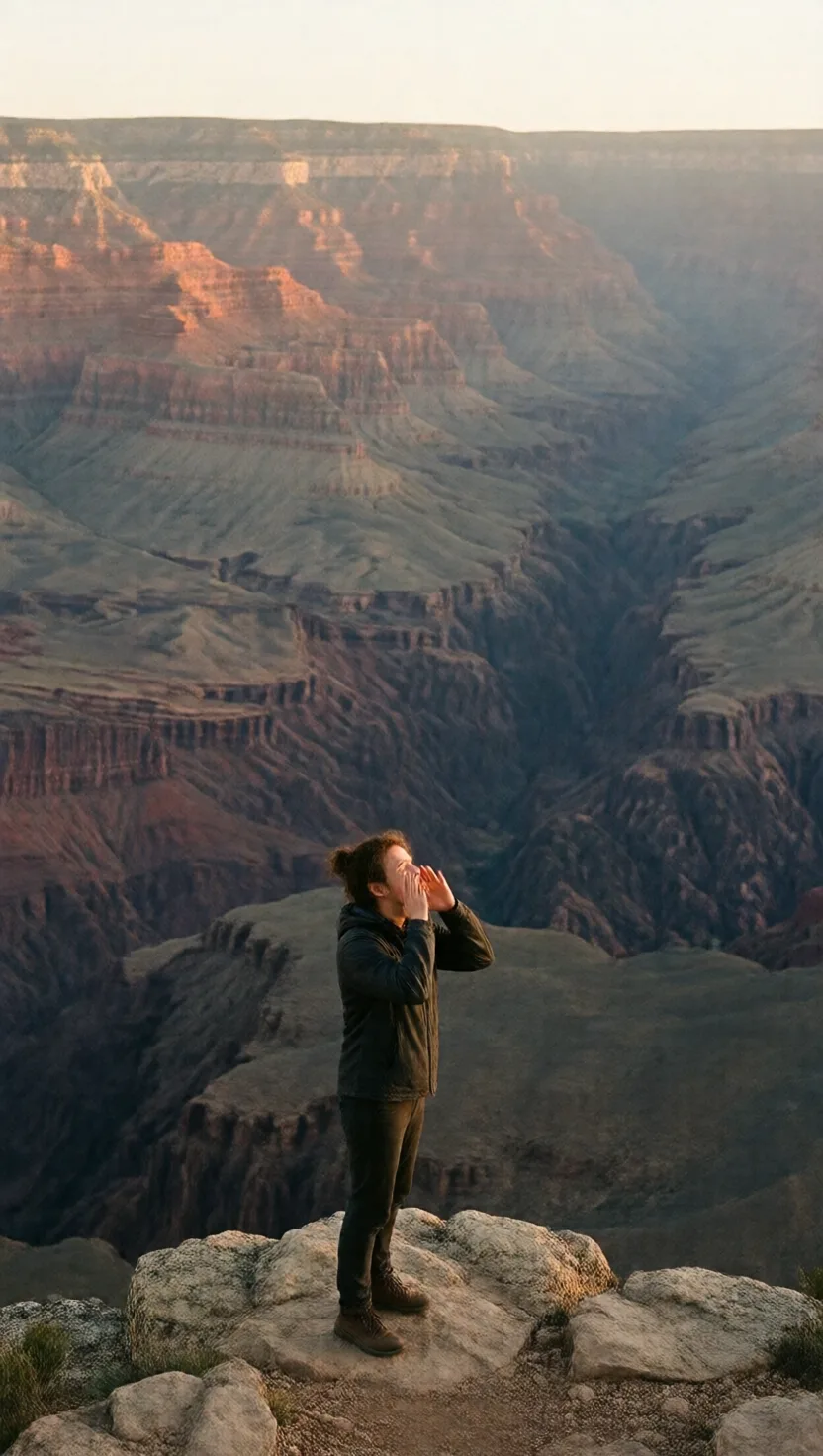
The state updates by a simple rule. Each step, the old state fades a little (the A term), the new word is added in (the B term), and what you report is a read-off of the state (the C term). Like a canyon echo: each fresh shout joins a softly-fading reverberation of every shout before — and what your ear catches is the blend.
Freeze the rule, and it becomes one fixed filter.

Freeze the rule, and it becomes one fixed filter.

yt=k=0tCAkBxtk=(Kx)t,Kk=CAkBy_t = \sum_{k=0}^{t} C A^{k} B\,x_{t-k} = (K * x)_t,\qquad K_k = C A^{k} B
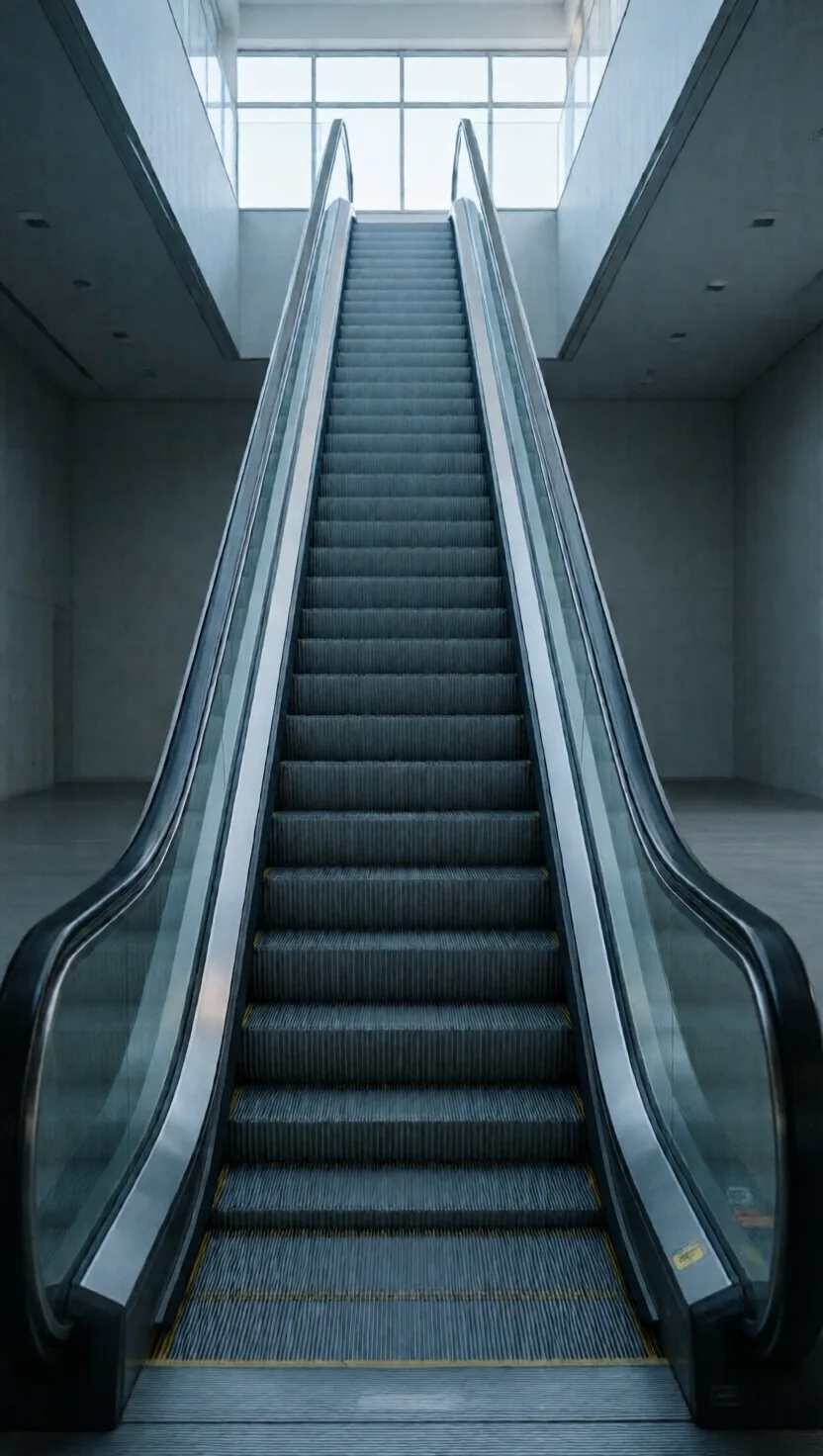
If A, B, C never change, unroll the recurrence and it collapses into a single filter slid across the whole input — computable all at once, blazingly fast. But there's a price: like one escalator at a fixed speed, it carries every word at the identical pace. It can't rush the filler or linger on the one word that matters. Fast, but blind.
The leap: let the word decide what to keep.

The leap: let the word decide what to keep.

Δt,Bt,Ct=f(xt),ht=Aˉtht1+Bˉtxt,Aˉt=exp(ΔtA)\Delta_t,\,B_t,\,C_t = f(x_t),\qquad h_t = \bar{A}_t\,h_{t-1} + \bar{B}_t\,x_t,\quad \bar{A}_t = \exp(\Delta_t A)
Now the real trick. Make the gates depend on the word itself: how much to write in (B), how fast to forget (the step Δ), what to read out (C) — all functions of the input. Like a surfer reading each wave: let the small swells slide under, paddle hard for the one worth riding. The model now chooses, word by word, what's worth remembering.
Selectivity broke the shortcut. A scan rebuilds it.

Selectivity broke the shortcut. A scan rebuilds it.

(Aj,bj)(Ai,bi)=(AjAi,  Ajbi+bj)O(logn) depth(A_j,\,b_j)\oplus(A_i,\,b_i) = (A_j A_i,\;\, A_j\,b_i + b_j)\quad\Rightarrow\quad O(\log n)\ \text{depth}
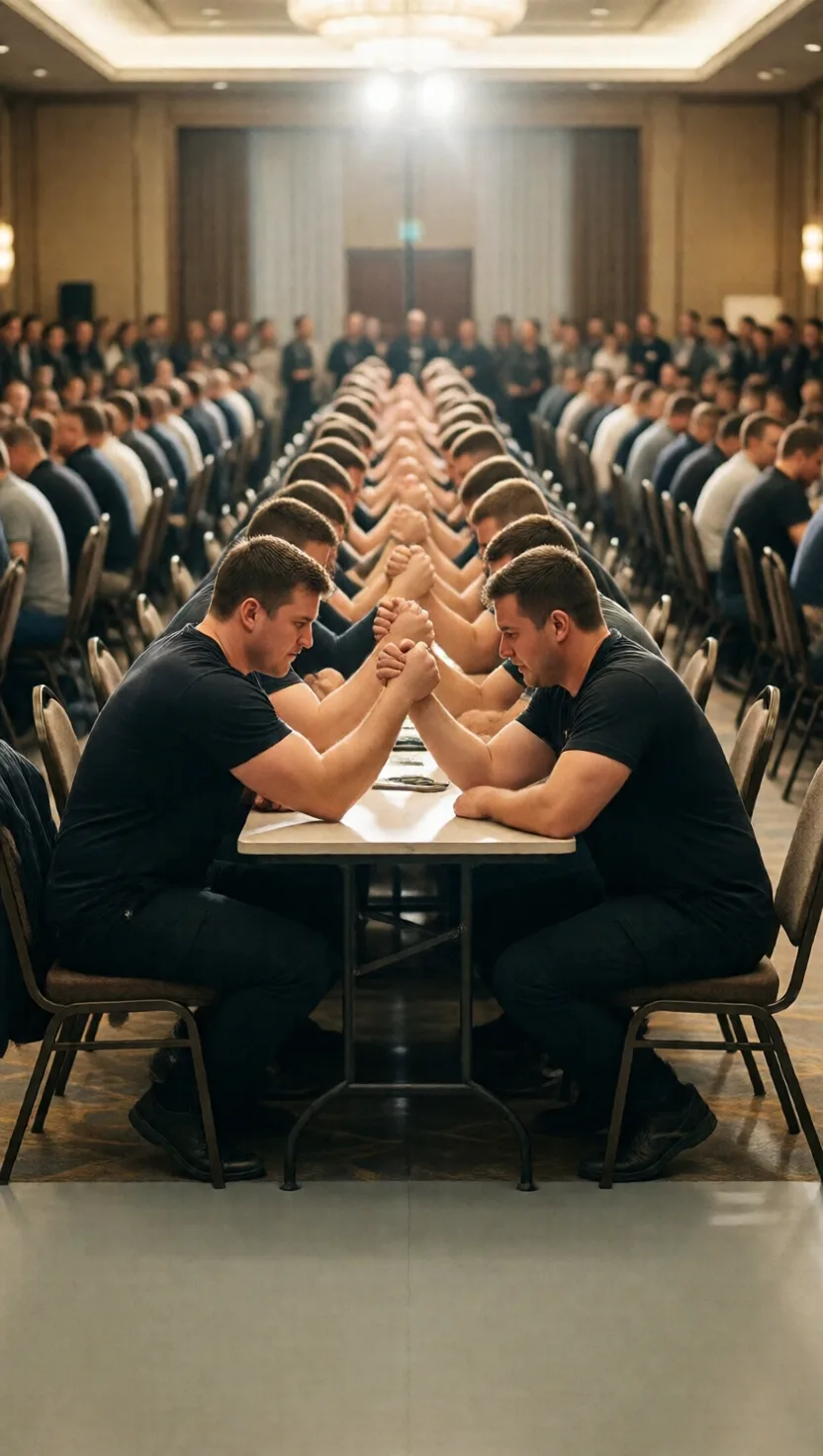
Letting the word steer means there's no single fixed filter anymore — so the all-at-once trick is gone. But the step is still associative: combining two runs of 'fade-then-add' gives one run of the same kind. So pair them up and merge in parallel. Like a knockout bracket: whole rounds resolve at once, and the champion is known in just a handful of rounds — not one match at a time.
Linear cost — and a memory that never grows.

Linear cost — and a memory that never grows.

time O(ndN),state size O(dN) (fixed in n)vs. attention O(n2d)\text{time } O(n\,d\,N),\qquad \text{state size } O(d\,N)\ \text{(fixed in } n)\qquad \text{vs. attention } O(n^2 d)
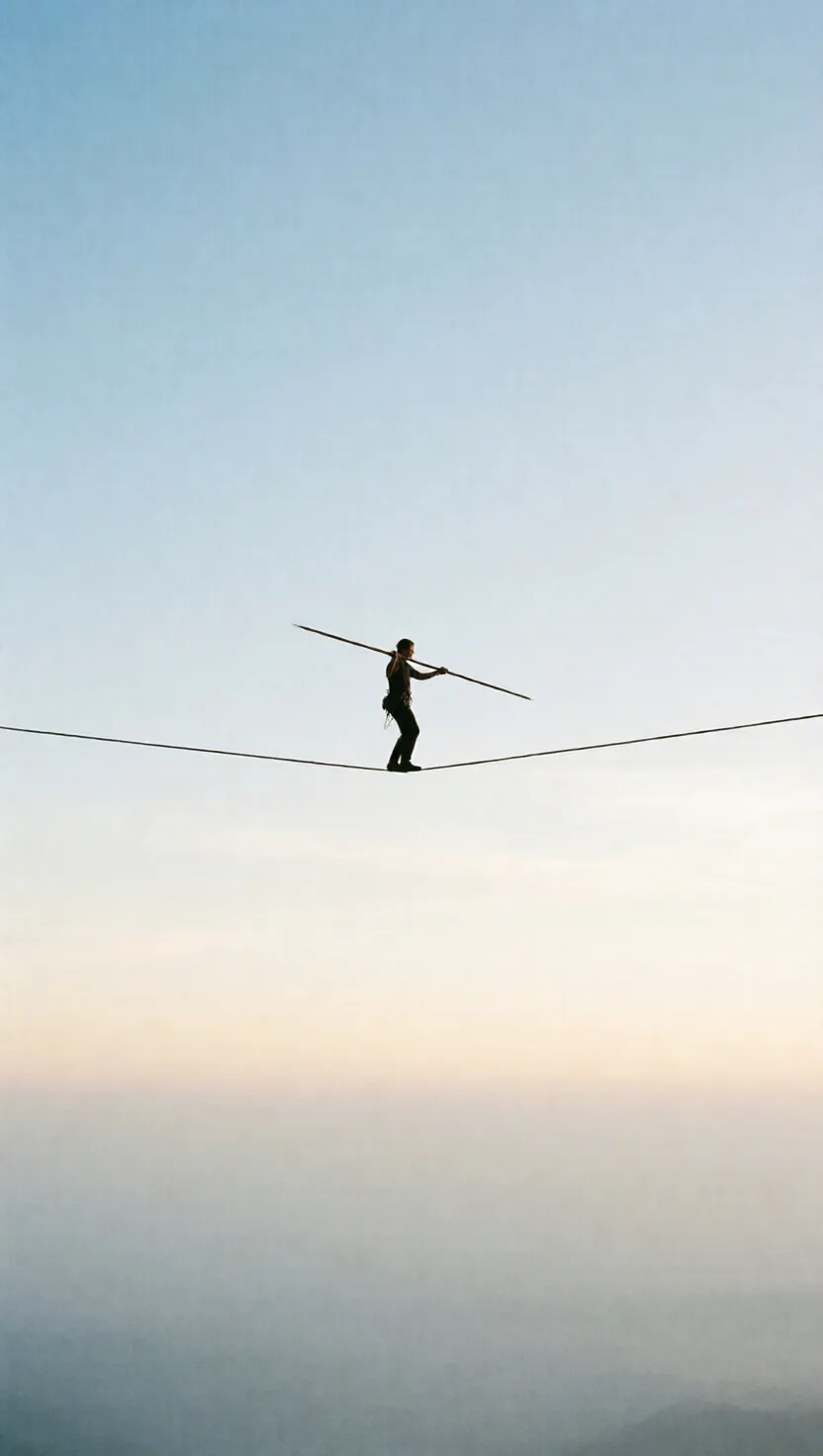
Add up the bill. Work grows straight-line with length, not as its square. And at generation time you carry just one fixed-size state — it never swells the way a stored history does, no matter how long the talk runs. Like a tightrope walker's balance pole: the same single pole in your hands at step ten or step ten-thousand. Length stops being a wall.
It keeps a summary — never the past itself.

It keeps a summary — never the past itself.

An all-pairs reader keeps every word and can always glance back. This one keeps only an evolving state — and must decide, the instant each word arrives, what to fold in and what to let fade. It can never un-forget. 🌱 If a mind chooses what to keep the moment it sees it, and never revisits the raw past — is what it carries memory, or only the story it told itself about what mattered?
tap →swipe ↑ for depthswipe ↓ to exit