Why one neuron means many things at once.

SRC·25 Source
Peek at one neuron — and it lights up for a dozen unrelated things.

Peek at one neuron — and it lights up for a dozen unrelated things.

You'd expect one neuron to mean one thing. Instead, a single one fires for DNA, for French, for a perfect free throw. Why the jumble? Because the model is holding more ideas than it has neurons — so it makes them share. Read one neuron and you read a blur. The true unit of meaning is hiding somewhere else.

An idea isn't a neuron. It's a direction.

An idea isn't a neuron. It's a direction.

xifidi\mathbf{x} \approx \sum_{i} f_i\,\mathbf{d}_i
Here's the reframe: a concept isn't one neuron firing — it's a whole direction across all of them. What you observe is simply those directions added up, each turned up by how strongly its idea is present. Like a chord: press several strings at once and you don't hear them apart — you hear a single sound, every note still folded inside.
Want zero confusion? Make every idea perpendicular.

Want zero confusion? Make every idea perpendicular.

didj=0    at most d such directions in Rd\mathbf{d}_i \cdot \mathbf{d}_j = 0 \;\Rightarrow\; \text{at most } d \text{ such directions in } \mathbb{R}^{d}
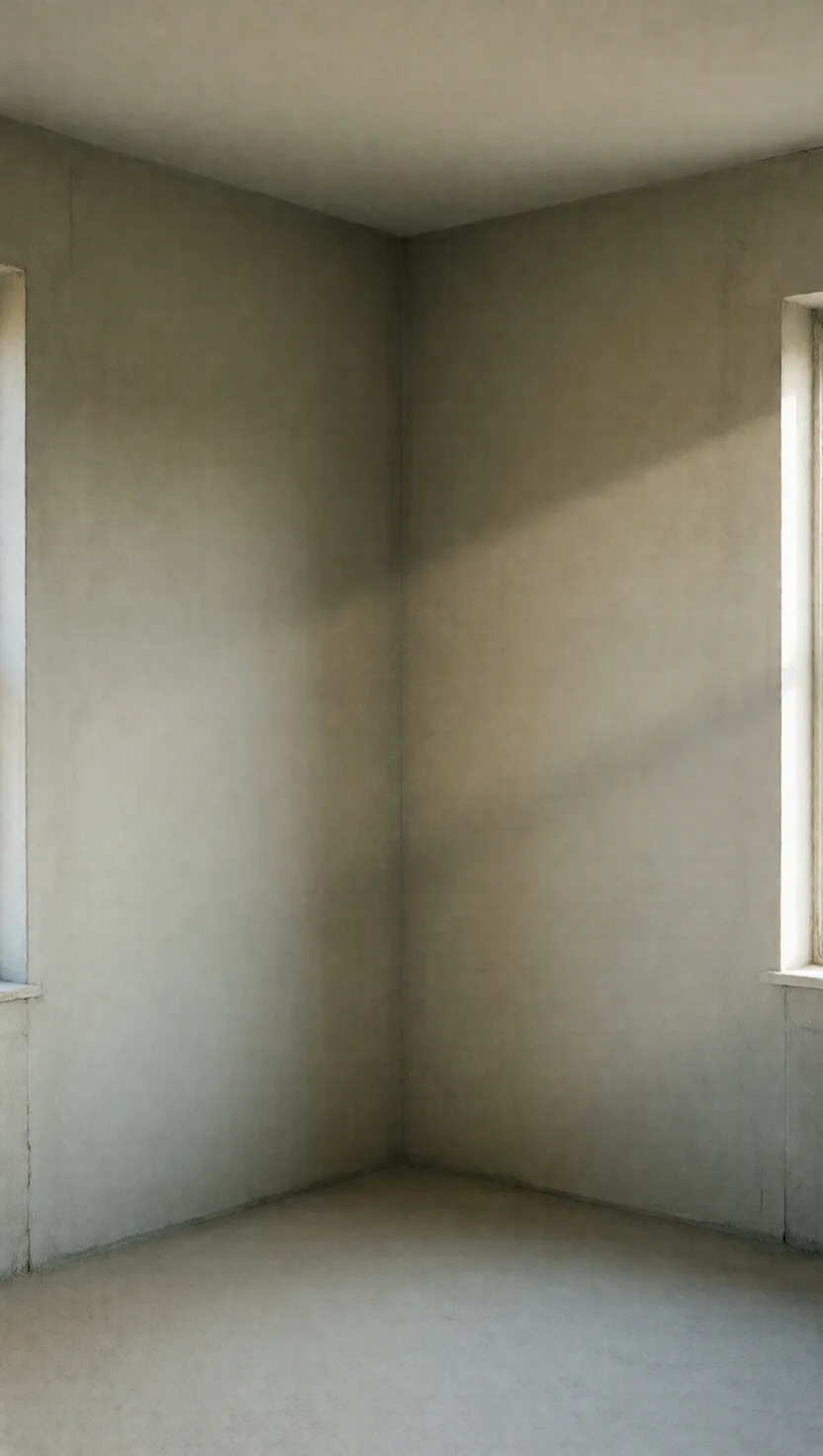
Two directions at a right angle never bleed into each other — perfectly separate, zero overlap. So why not give every idea its own perpendicular direction? Because you run out. Like the corner of a room: three edges meet at clean right angles, and there's simply nowhere to stand a fourth. A space of d dimensions hands you exactly d clean directions — no more.
Loosen 'exactly 90°' to 'about 90°' — and room explodes.

Loosen 'exactly 90°' to 'about 90°' — and room explodes.

Nexp ⁣(cε2d),didjεN \sim \exp\!\big(c\,\varepsilon^{2} d\big), \qquad |\mathbf{d}_i \cdot \mathbf{d}_j| \le \varepsilon
Here's the escape. Drop the demand for perfect right angles, allow a sliver of overlap, and the number of usable directions stops matching the dimensions and starts exploding past them. Like a sea urchin: from one small body, hundreds of spines fan out, no two quite parallel, each its own near-distinct heading. Almost-perpendicular turns out to be almost as good — and there's room for vastly more of it.
Overlap should cause chaos. Sparsity keeps it quiet.

Overlap should cause chaos. Sparsity keeps it quiet.

di,x=fi+jifj(didj)interference\langle \mathbf{d}_i, \mathbf{x}\rangle = f_i + \underbrace{\sum_{j \ne i} f_j\,(\mathbf{d}_i \cdot \mathbf{d}_j)}_{\text{interference}}
But overlap means cross-talk: read off one idea and you pick up faint smudges of every idea sharing its slant. Why doesn't that wreck everything? Because ideas are sparse — at any moment only a handful are switched on. Like a spice drawer: a hundred jars, but a single dish reaches for only three. Two flavors that would clash almost never go in together — so the clash almost never happens.
A faint hum remains. A simple floor wipes it.

A faint hum remains. A simple floor wipes it.

Even when ideas are sparse, a little interference always hums underneath. The fix is almost crude: set a floor — zero out anything below it, let everything above pass straight through. Faint cross-talk never clears the line; only a real, present idea rises over it. Like a snow line on a mountain: below a certain height nothing sticks and the rock stays bare; only high enough does the white hold. That one threshold is what keeps all the crowding safe.
So one neuron ends up meaning many things at once.

So one neuron ends up meaning many things at once.

nk=ekx=ifi(di)kn_k = \mathbf{e}_k \cdot \mathbf{x} = \sum_{i} f_i\,(\mathbf{d}_i)_k
Now the opening puzzle dissolves. A neuron is just one axis of the whole space — and it lights up for every idea whose direction leans even slightly its way. Dozens of unrelated concepts, each tilting a little toward the same axis, all firing the same cell. Like a watering hole: zebra, stork, and warthog share one pool — not because they're alike, but because they all happen to pass through. The neuron was never confused. We were — for reading meaning off the wrong thing.
🌱 If no neuron holds an idea, where does it live?

🌱 If no neuron holds an idea, where does it live?

We keep hunting for the cell that holds a memory, a word, a face — and there isn't one. Every idea is smeared as a direction across thousands of neurons; every neuron carries scraps of thousands of ideas. The meaning is real, yet it has no address. Maybe a thought was never in a place at all — only in a pattern, the way a chord is nowhere on the strings and everywhere in the air.
tap →swipe ↑ for depthswipe ↓ to exit