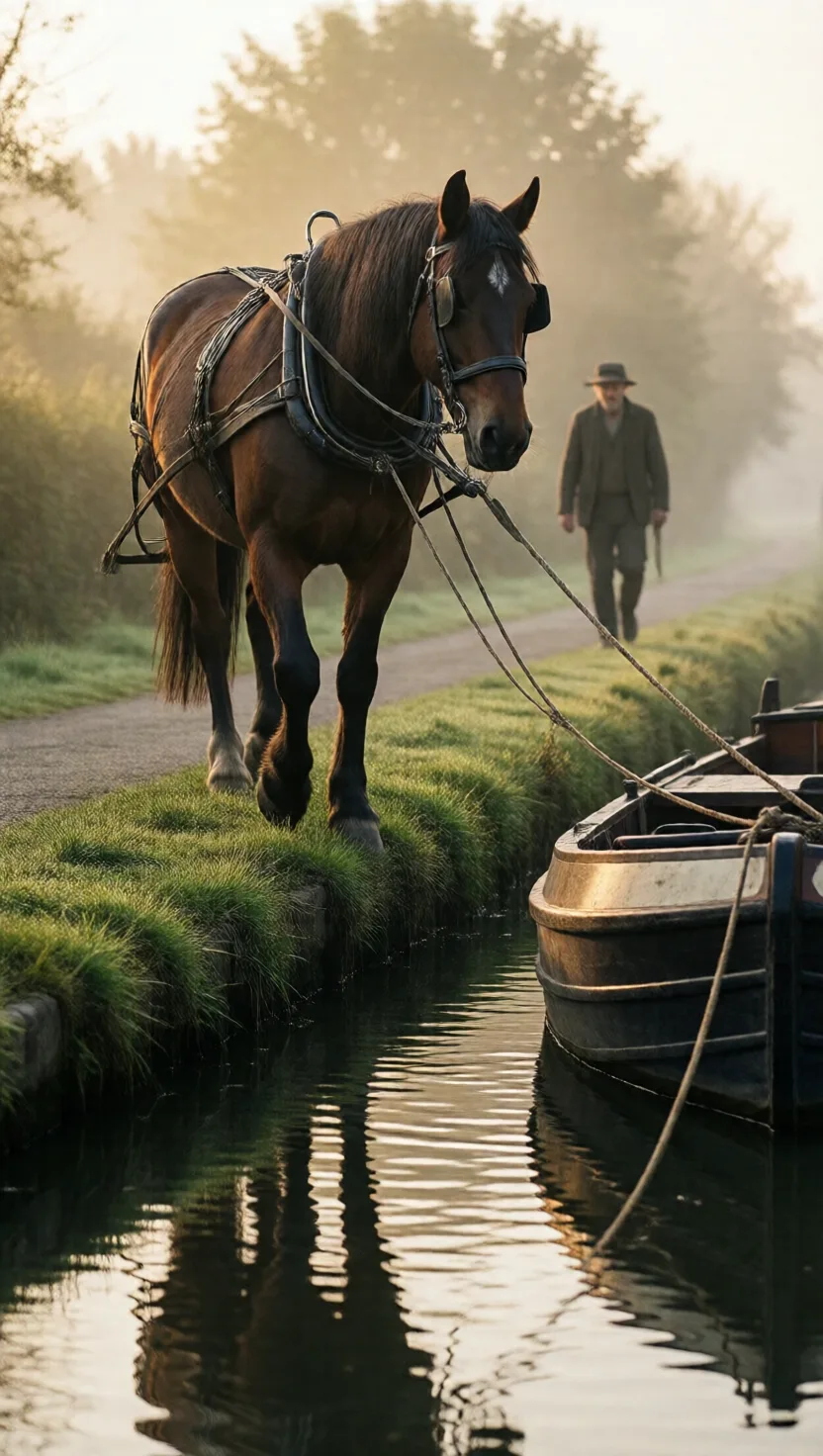
The horse hauls hard, but the boat barely moves.

SRC·137 Source
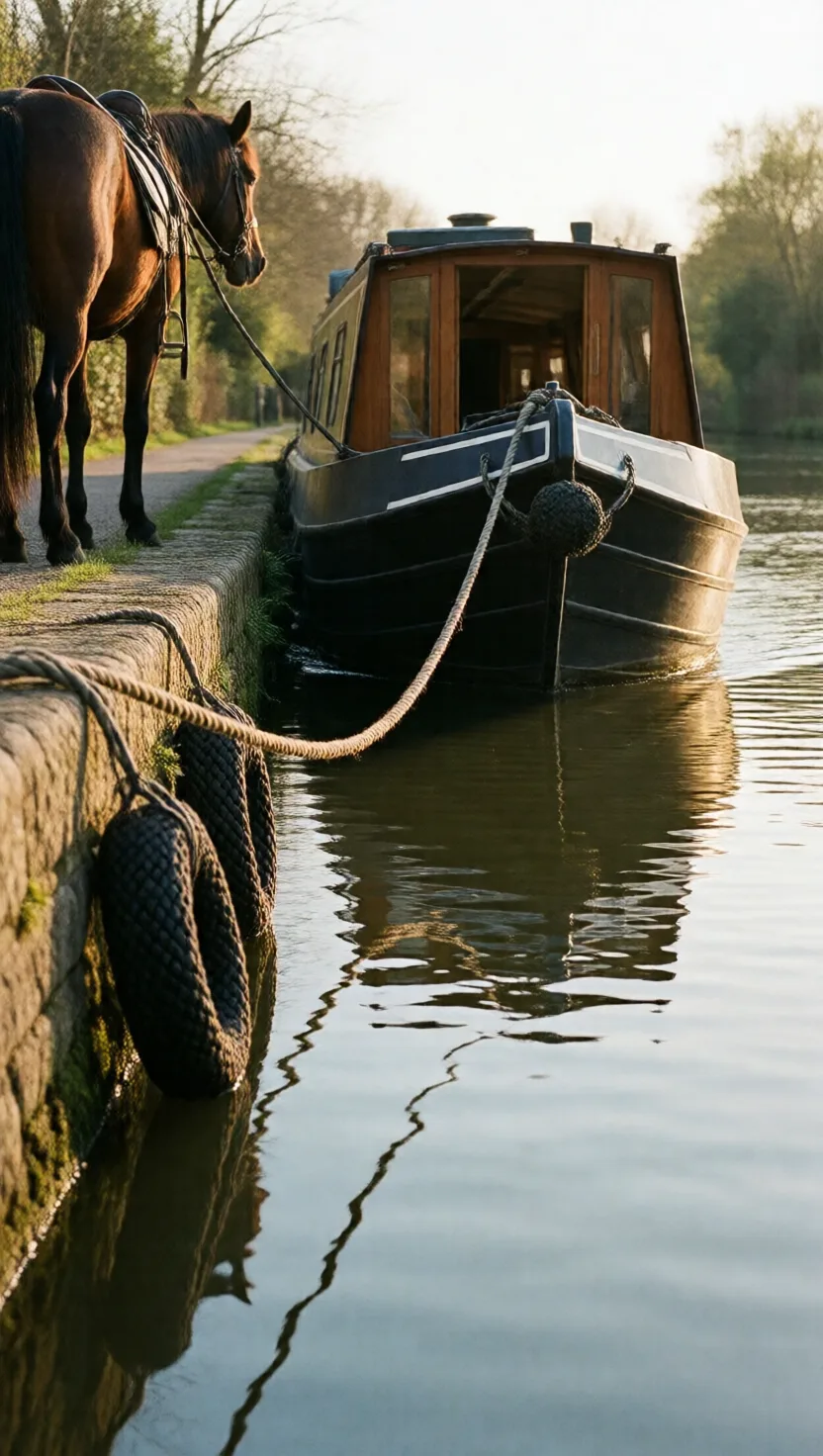
The rope leaves the bank at an angle

The rope leaves the bank at an angle

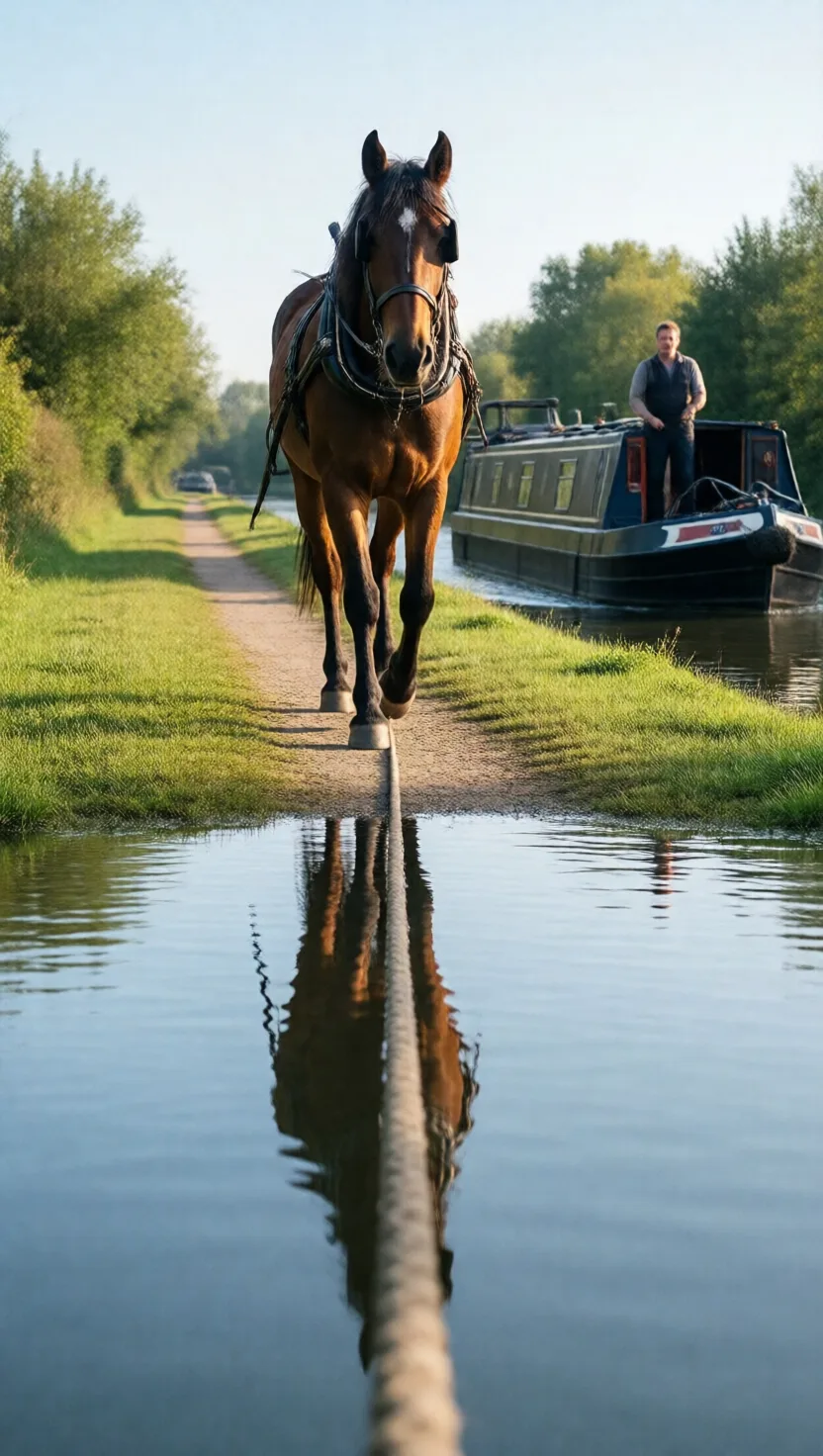
On the towpath, the big horse leans into its collar and hauls. But the barge floats out in the middle of the canal, so the rope runs from the bank to the boat at a slant — the horse can never pull straight along the water. It strains with all its weight, yet the barge slides forward slowly, almost lazily. Where is all that honest effort going?
The strain says 'fast', the boat says 'slow'

The strain says 'fast', the boat says 'slow'

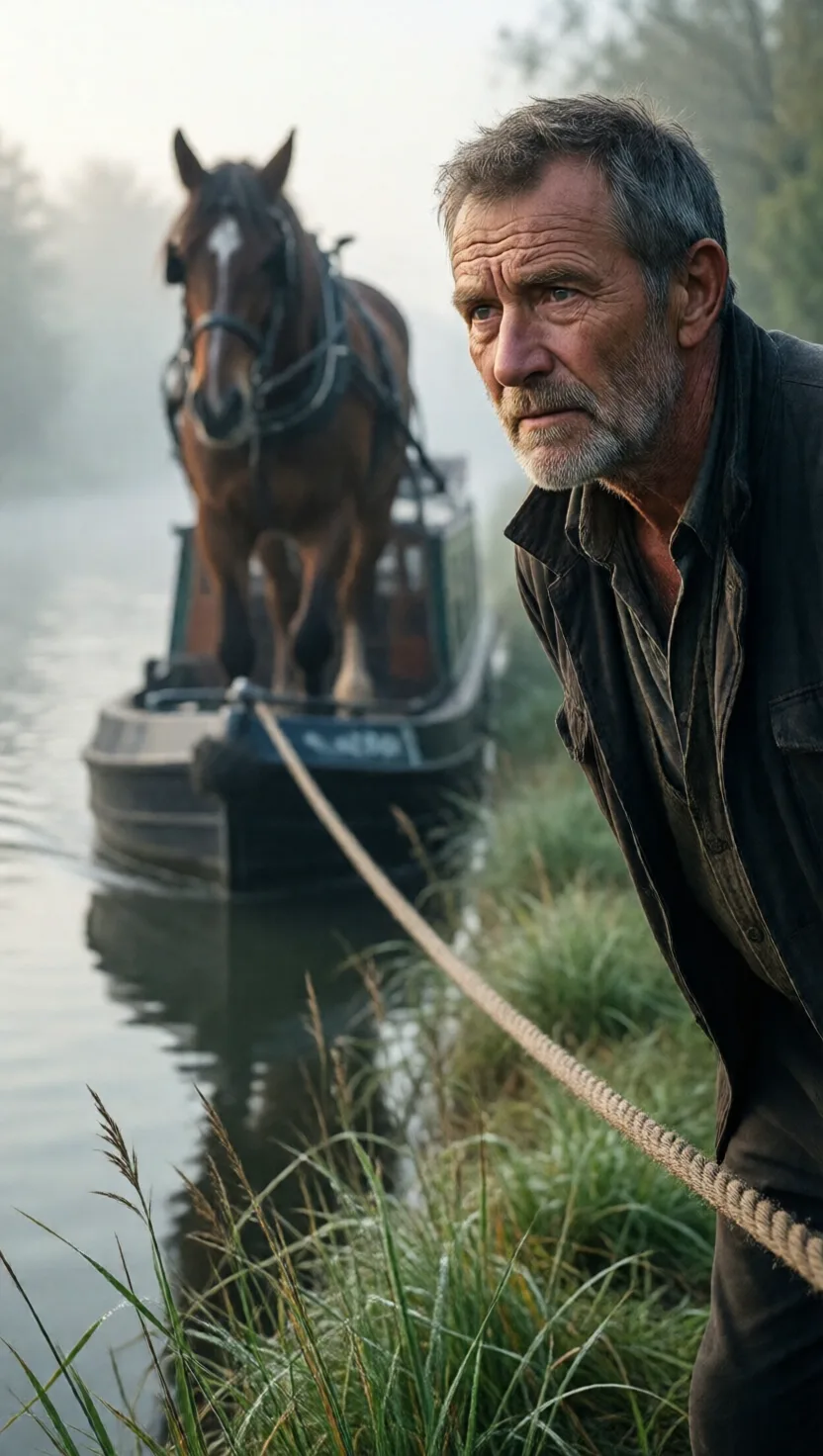
The bargeman has seen this all his life and it still nags him. The horse's muscles promise a fast boat; the water delivers a slow one. Nothing is slipping, nothing is stuck — the rope is tight, the horse is fresh. And yet a clear share of that pull simply never becomes forward motion. Follow the rope, he thinks, and you'll find where it hides…
The angled pull splits two ways

The angled pull splits two ways

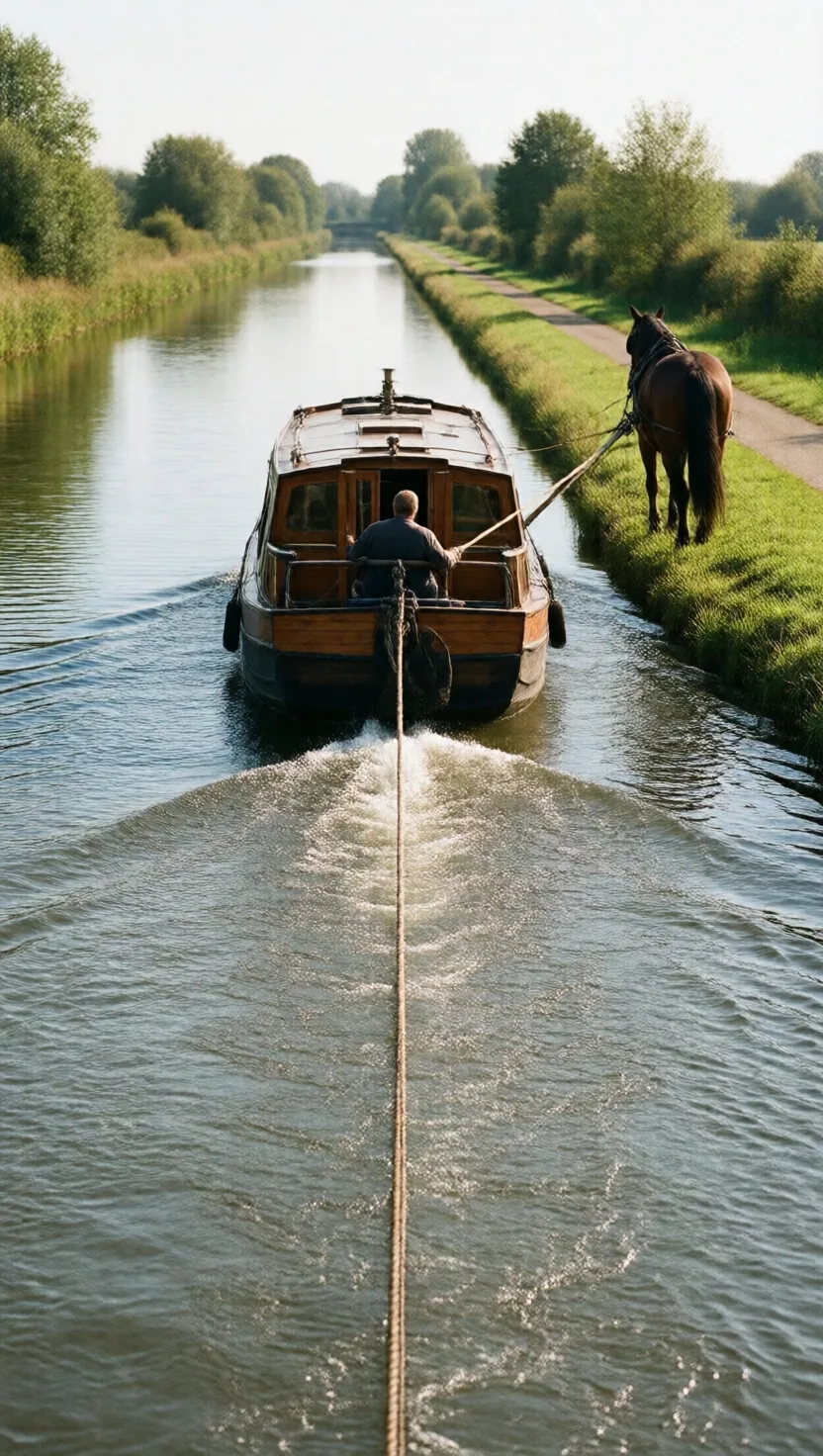
Then he sees it plainly. The slanted pull is really two pulls in one. A part runs along the canal — that is the only part that carries the boat forward. The rest runs across, straight toward the bank, and it does no travelling at all; it just presses the barge sideways until the fenders groan against the wall. Same rope, two fates. So which part should he count?
Flatter rope, more of the pull becomes travel

Flatter rope, more of the pull becomes travel

And the angle rules it all. When the horse walks far ahead and the rope lies almost flat along the bank, nearly the whole pull becomes travel and the boat surges. Let the horse stray wide and the rope cut sharply across, and most of its effort just presses the wall. He can feel, in the reins, exactly how much of a pull runs along — and how much is thrown away across.
Only the shadow along the track does the work

Only the shadow along the track does the work

p=pcosθp_{\parallel} = \lVert p \rVert \cos\theta
That along-the-track part has a name: the projection of the pull onto the canal — the pull's shadow cast along the direction of travel. Its length is the strength of the pull times how flat the rope lies (a value that is 1 when the rope points straight along, and 0 when it points at the bank). Only this shadow ever moves the boat.
🌱 How much of your effort runs across the track?

🌱 How much of your effort runs across the track?

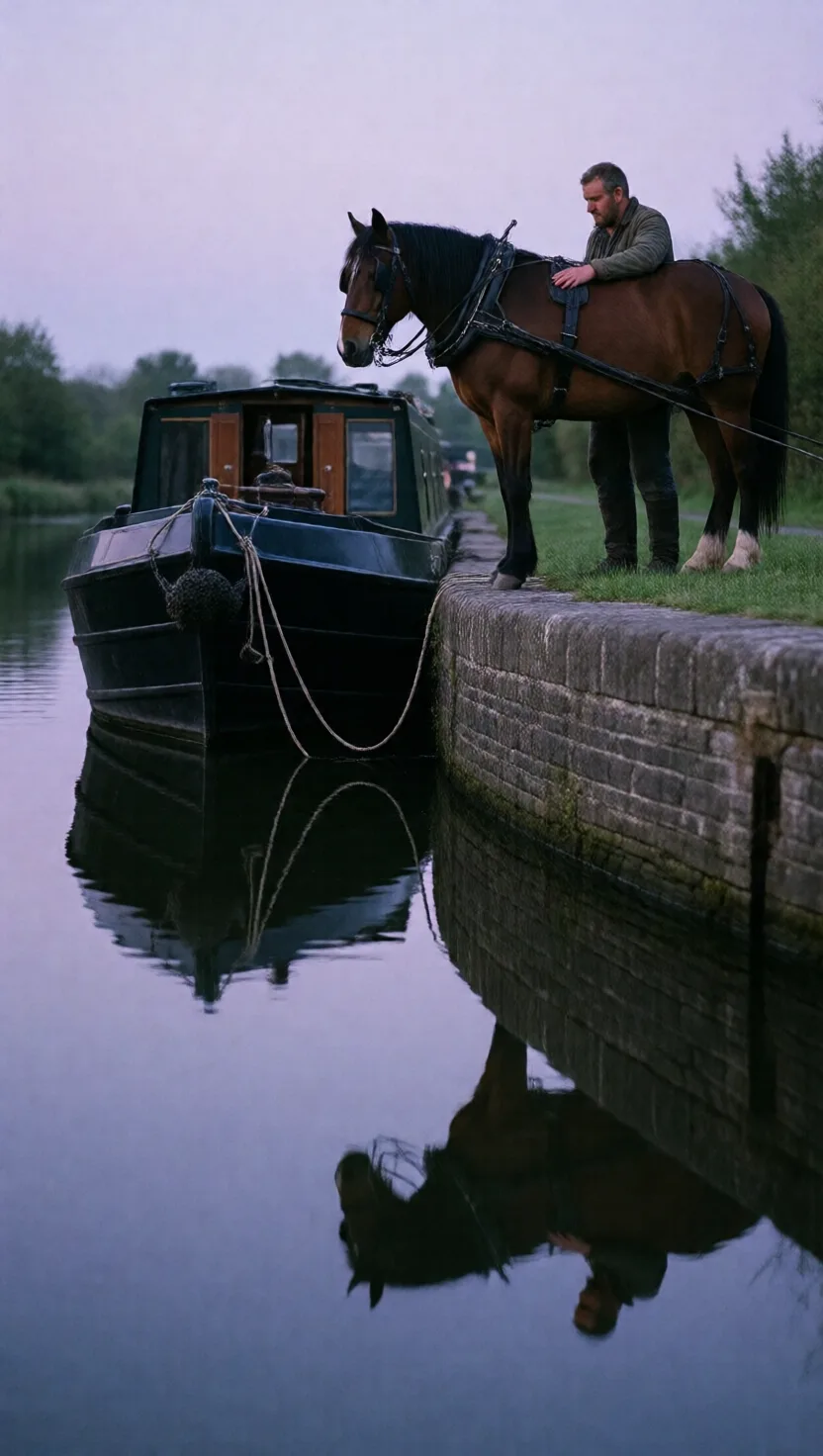
At the lock, the bargeman rests a hand on his horse's warm flank and thinks how little of any hard pull points where you truly mean to go. A day full of effort, yet only the part aligned with your direction carries you forward; the rest just presses on the walls. How much of what you pushed on this week ran along your life — and how much ran quietly across it?
tap →swipe ↑ for depthswipe ↓ to exit