The apprentice who watched the colors that lost.

SRC·131 Source
Two apprentices, one master, two very different seats

Two apprentices, one master, two very different seats

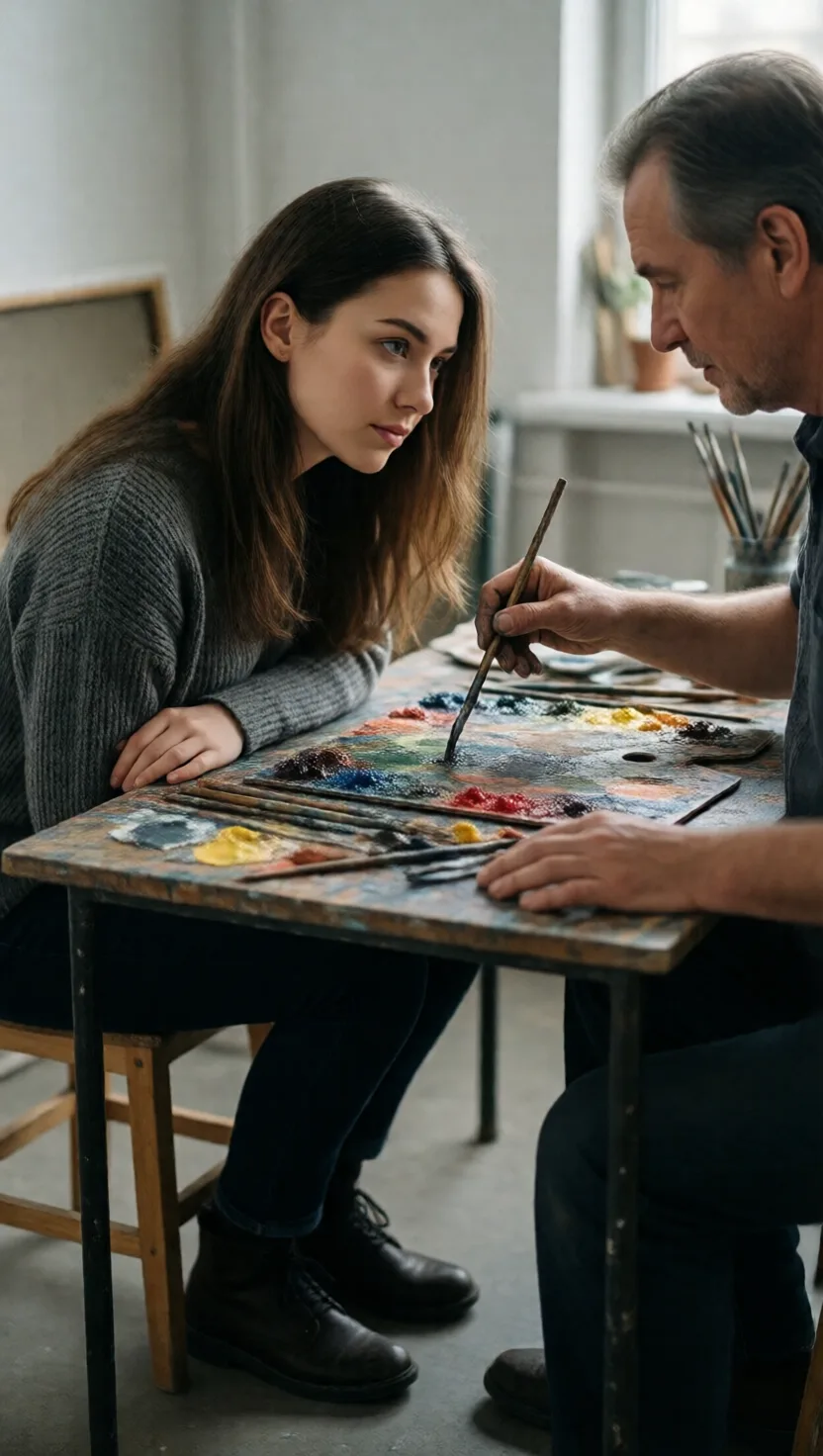
The portrait master takes two apprentices the same spring. To Tomas she gives what students dream of: one of her finished portraits each week, to copy until his hand obeys. To Noor she gives a low stool beside her palette table and a single instruction — watch me mix. Three years later, one of them paints with a judgment that took the master thirty years to earn. It is not the one holding the masterpieces.
A finished portrait shows only the winners

A finished portrait shows only the winners

Tomas studies hard and learns real things. But a finished portrait is all verdicts: the chosen blue, the settled line, every decision already crowned. He sees what she did, never what she almost did — each stroke looks inevitable, as if no other stroke had been possible. Copying answers, all he can measure is how far he lands from them. Meanwhile, on her stool, Noor is seeing something else entirely…
On the palette, the losing blue loses by a hair

On the palette, the losing blue loses by a hair

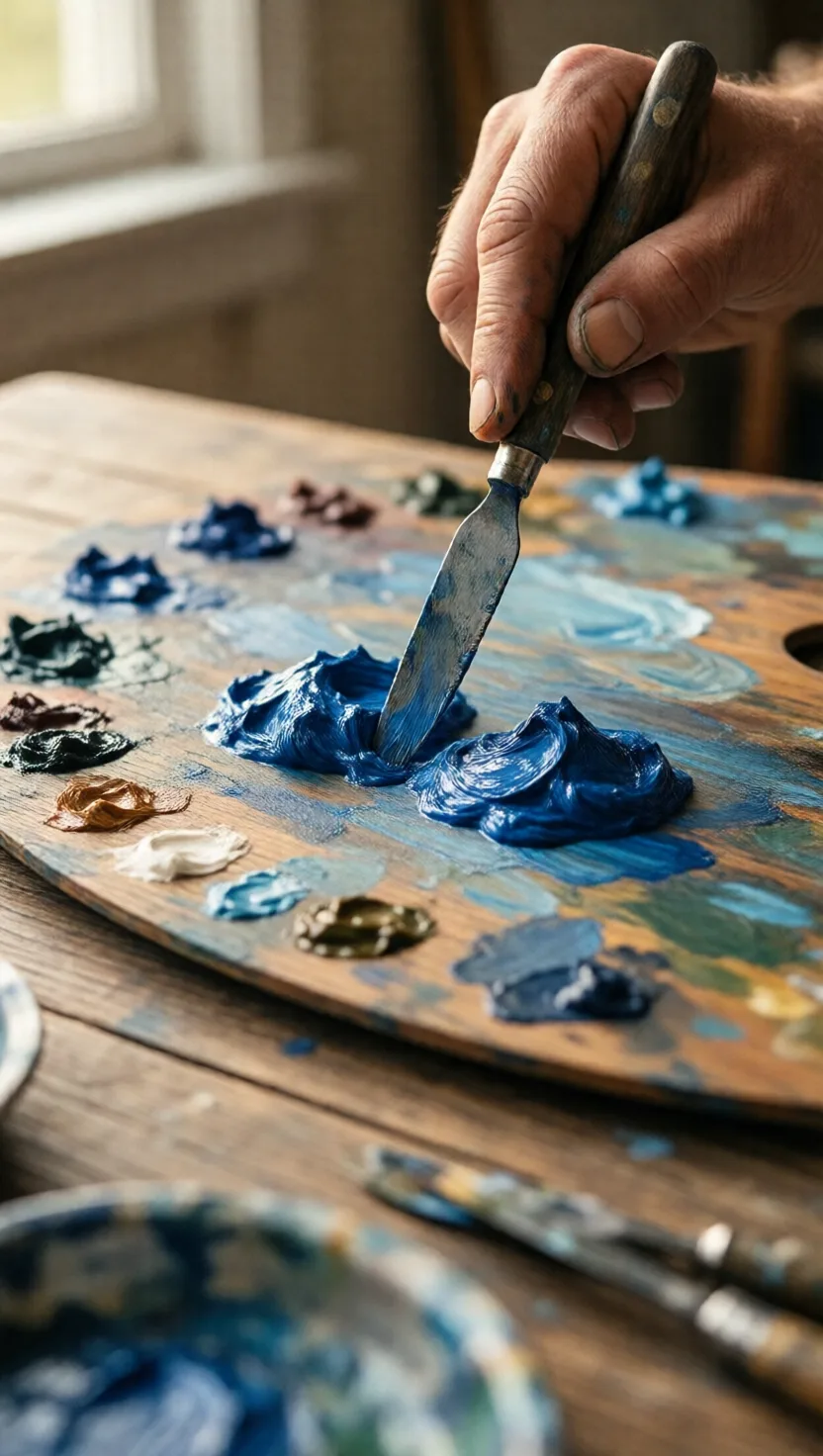
For the shadow of a coat, the master's knife hovers between two blues. The slate wins; the sea blue loses — barely — and Noor sees exactly how barely. A hundred choices a day, and every one quietly ranks the whole palette: this crimson nearly called, that yellow never considered for an instant. The finished portrait will keep none of it. Noor is inheriting the one thing the master cannot put on canvas…
A near-miss and a folly are different mistakes

A near-miss and a folly are different mistakes

The finished stroke says one thing: this. The hovering hand says far more: this — but that came close, and that other would be absurd. When Tomas mixes a wrong blue, he learns only that it is wrong. Noor knows how wrong — a near-winner or a folly, and in which direction the master's taste leans. She is learning the whole neighborhood of every choice, not just its address. And the master, noticing, begins to teach on purpose…
On teaching days, she lets her almosts show larger

On teaching days, she lets her almosts show larger

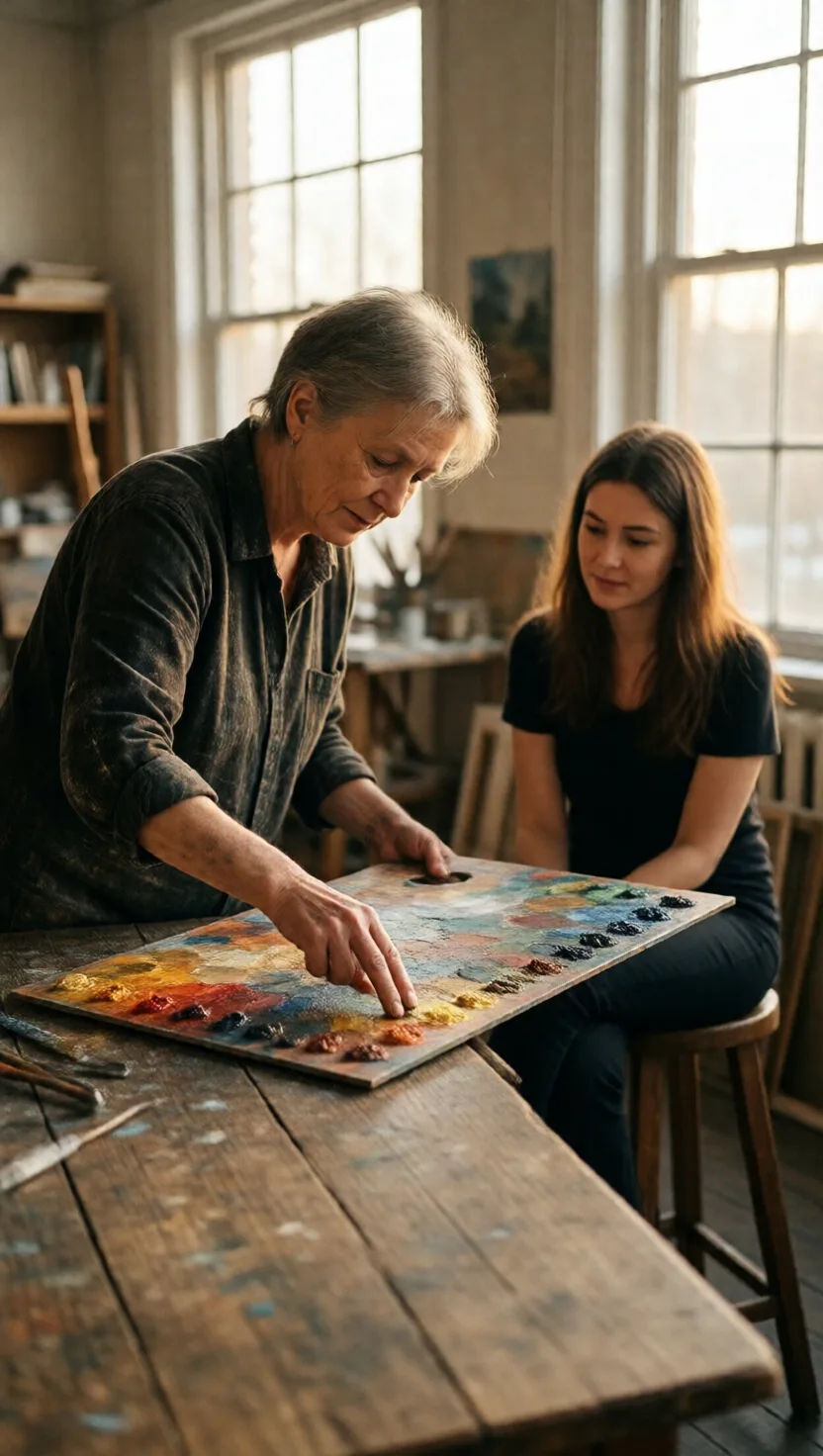
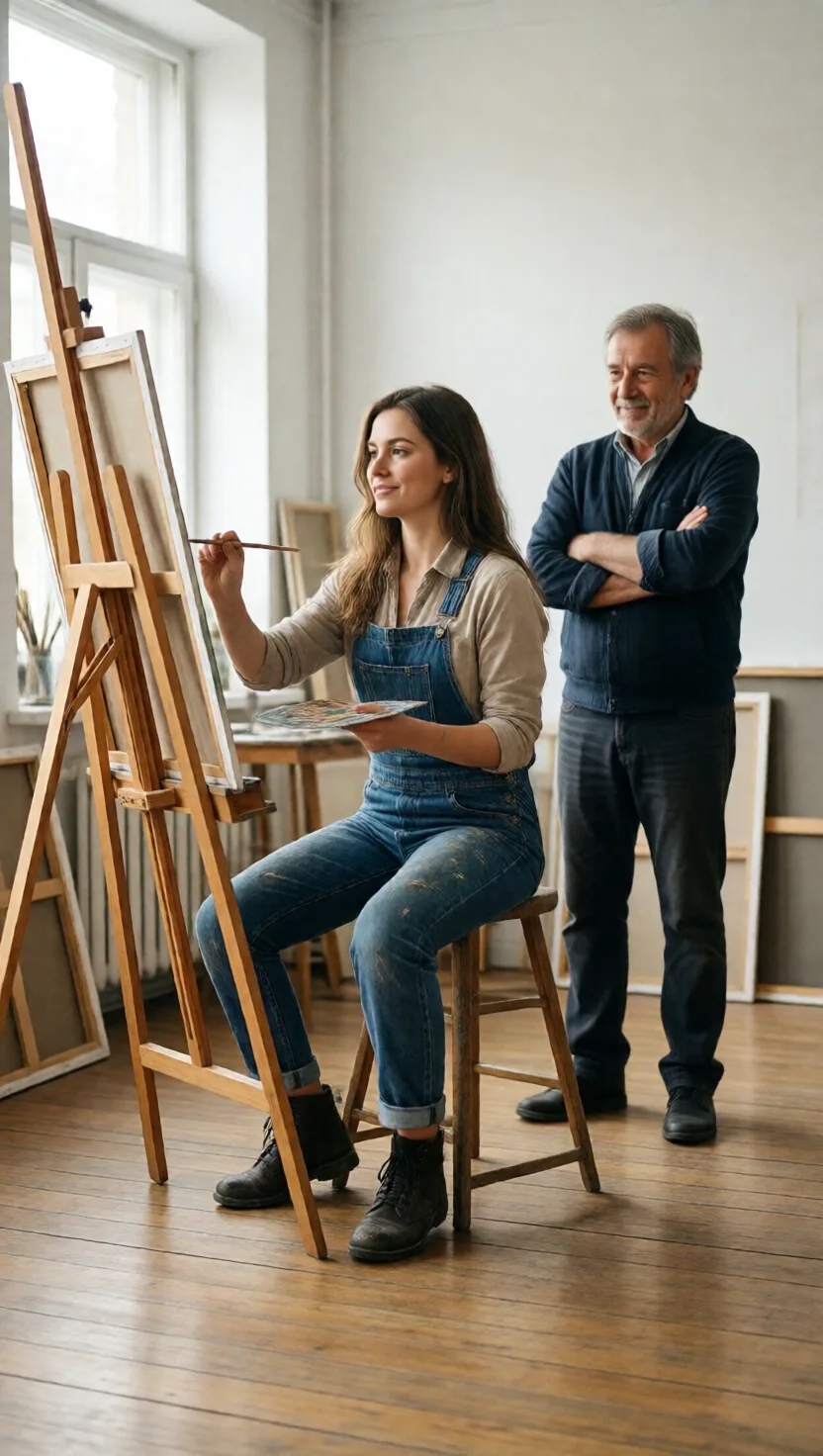
Once she sees what Noor is reading, the master leans into it: on teaching days she mixes slowly, hovers longer, and lays out even the shades she will discard, so that her faintest temptations become legible. She fakes nothing — she only turns up the warmth under her own hesitation until its whole shape can be seen. Three springs pass this way. Then the two apprentices set their easels side by side…
The stool by the palette has a name: distillation

The stool by the palette has a name: distillation

z=pstudentpteacher\nabla_z = p_{\text{student}} - p_{\text{teacher}}
Noor paints in three years what took the master thirty. Machines do the same: a small model can learn from a great one's answers alone — or sit by the palette and receive the whole weighing, every alternative ranked by how close it came. That is distillation, and the ranked almosts are its dark knowledge. The pupil's correction is the line below — her leanings minus the master's, wrong answers included. Yet her hands are not the master's…
🌱 Smaller hands cannot hold every almost

🌱 Smaller hands cannot hold every almost

Noor's hands are younger and plainer than the master's; some of what the master weighs, she will never quite reach. So what should a smaller painter do with a greater one's hesitations — spread herself thin honoring every almost, or pour her little capacity into the few strokes she can truly own? Both answers are honest, and they train different painters. Every student, human or machine, has to choose.
tap →swipe ↑ for depthswipe ↓ to exit