The chess teacher who covers every move yet to come.

SRC·129 Source
The best teacher in the city teaches under a cloth

The best teacher in the city teaches under a cloth

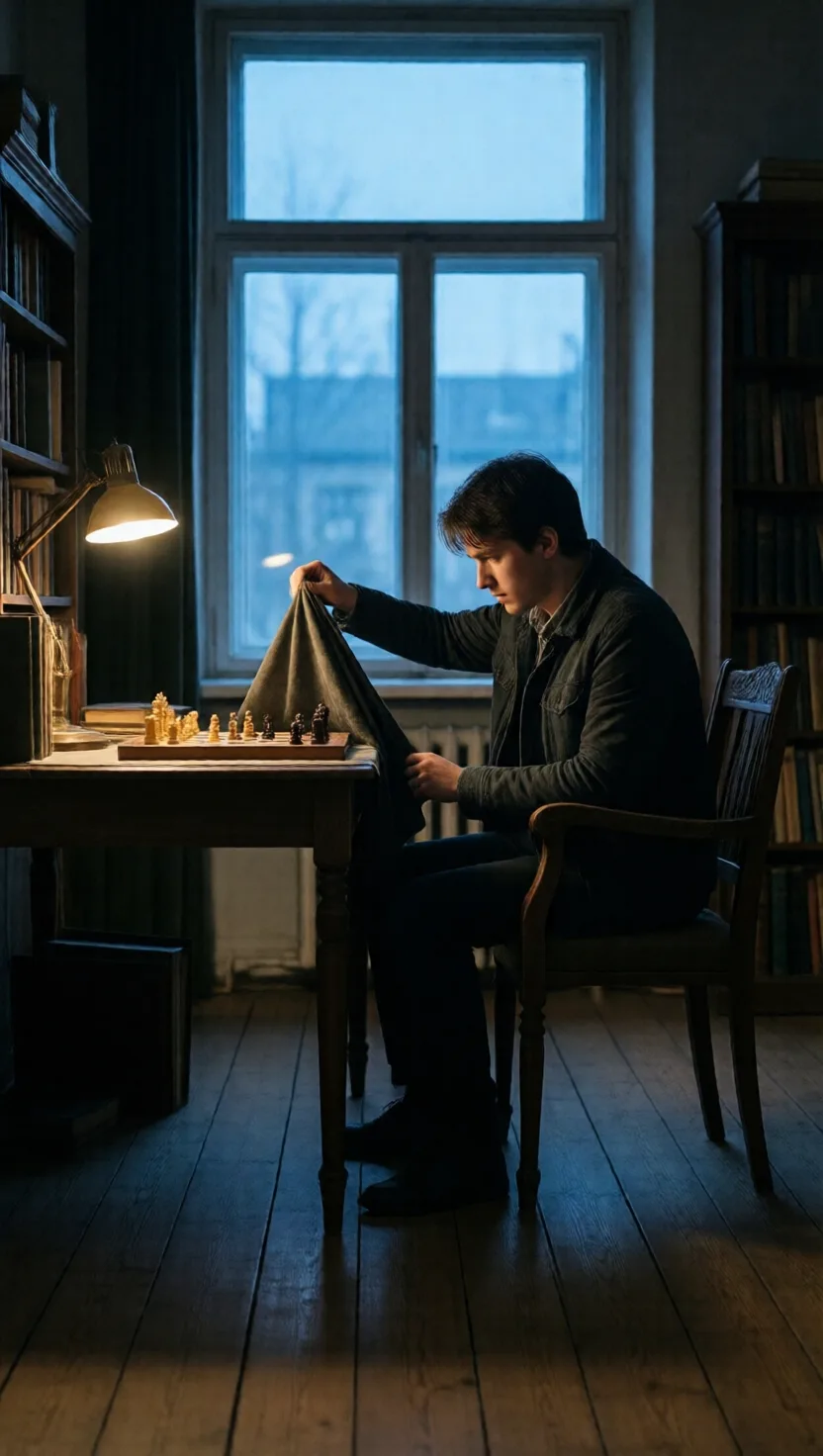
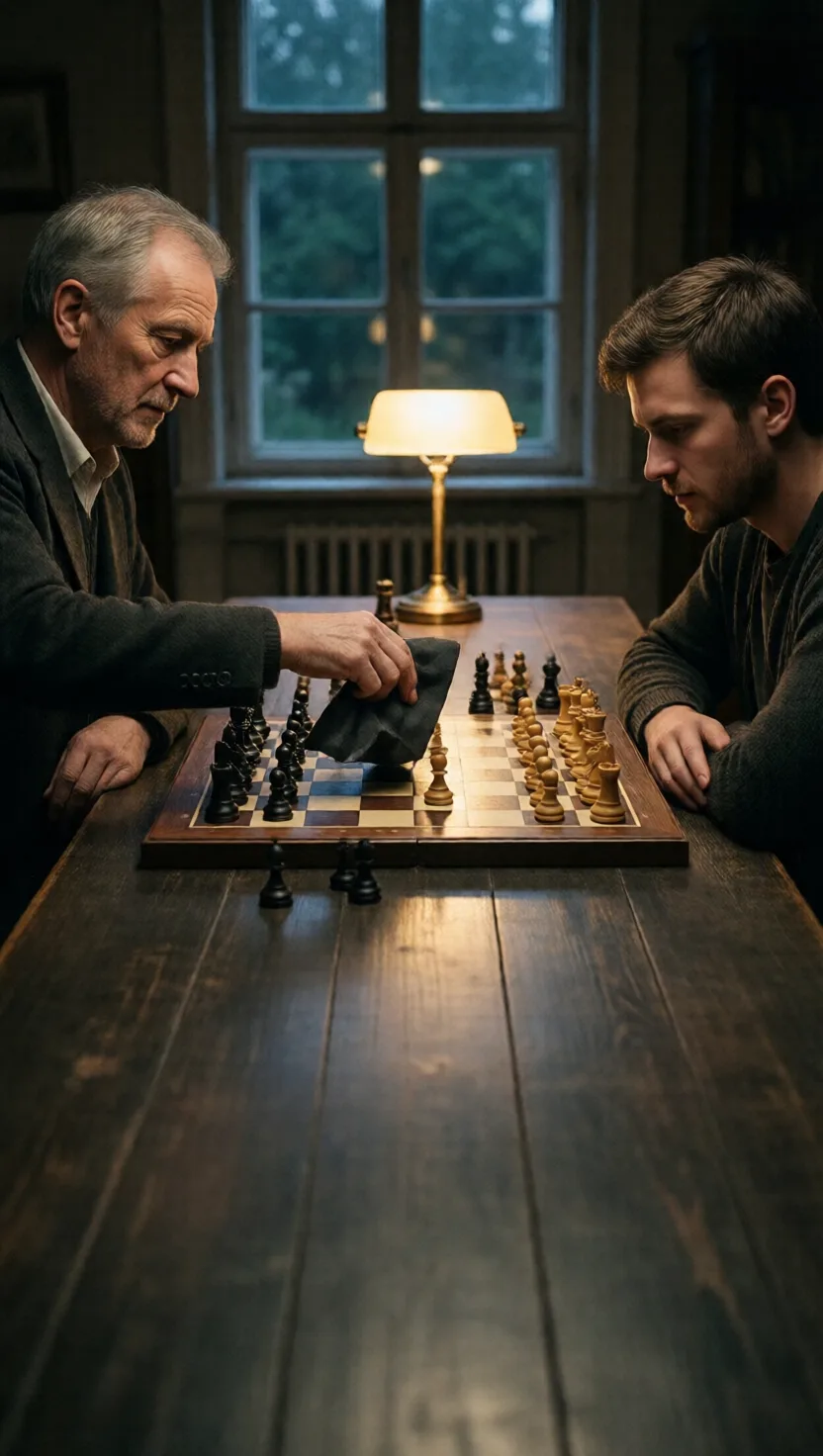
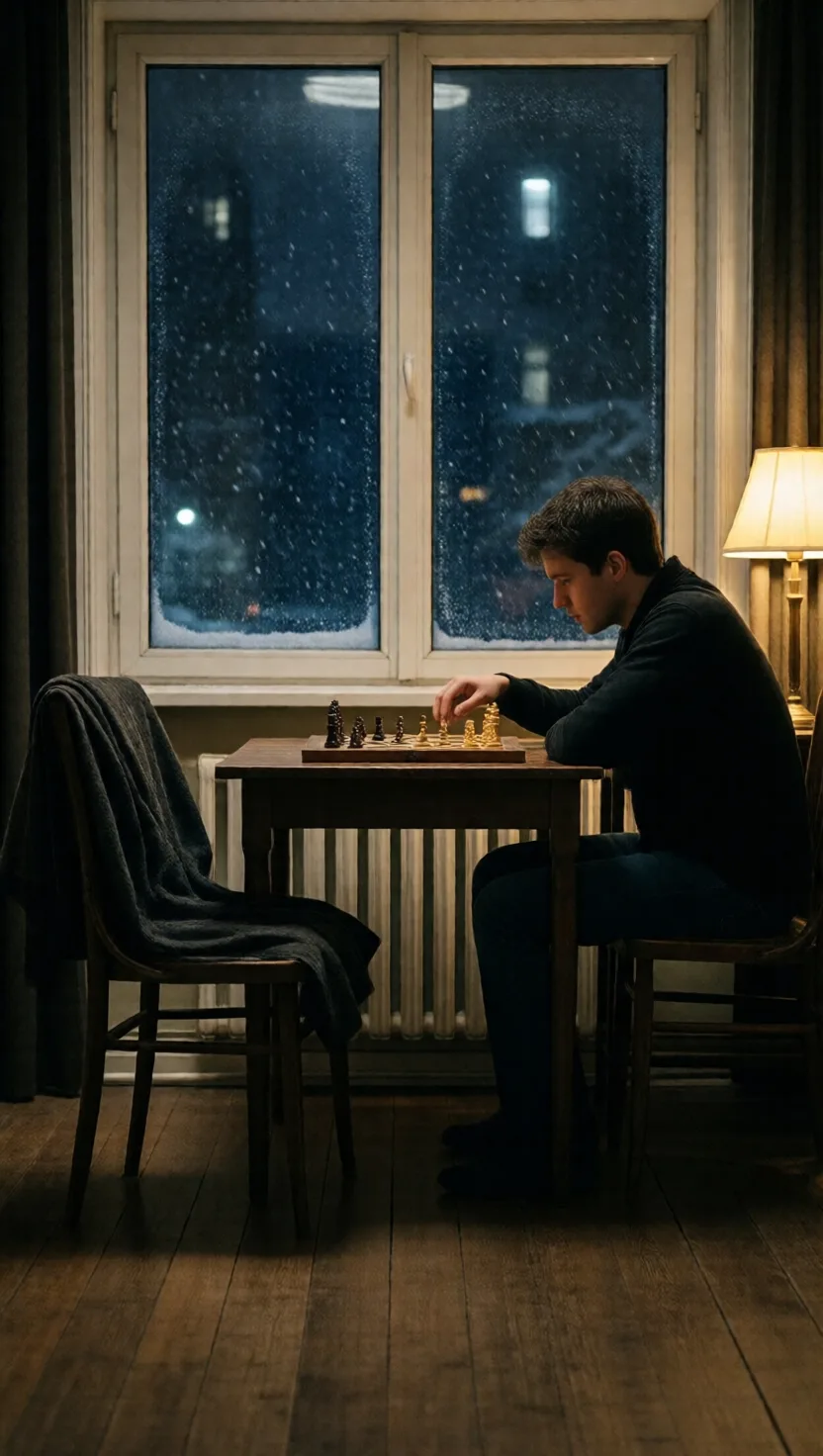
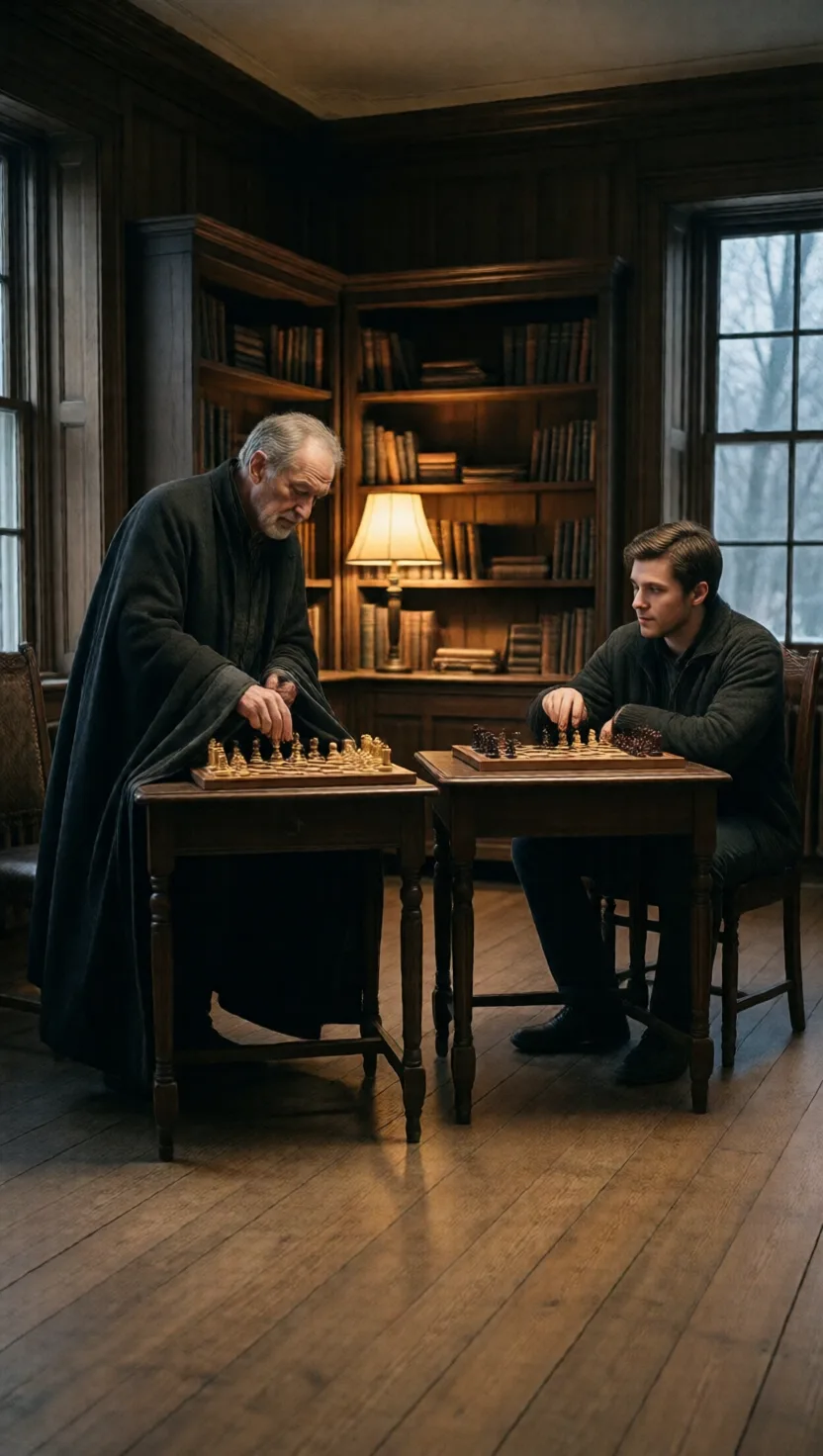
Andrei waited two winters for a seat in her study. On his first evening, the old teacher replays a game between two long-dead masters — but only its beginning. The rest of the game stands arranged on a side board, under a dark cloth. He may study everything the players had seen so far, and nothing after. Why would a teacher hide most of the lesson?
Guess the next move; then the cloth slides one square

Guess the next move; then the cloth slides one square

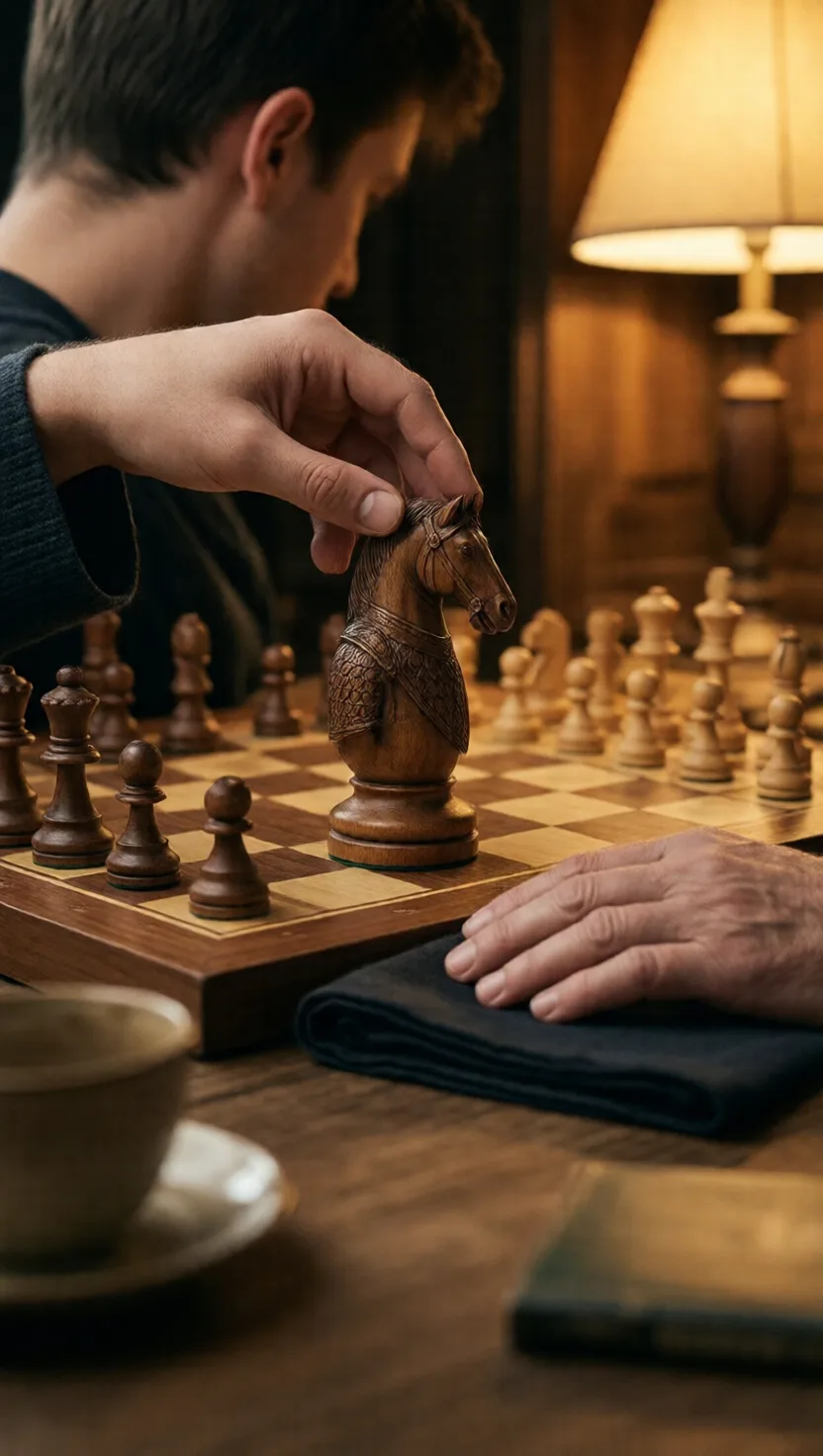
The rule of the room: from the position before him — the past and only the past — Andrei must predict the next move. Then the cloth slides, the masters' real move joins the visible past, and the question begins again. His wrong guesses sting; the game itself always continues from the truth, never from his mistakes. And one afternoon, left alone with the boards, he lifts the cloth.
He lifts the cloth, and brilliance comes cheap

He lifts the cloth, and brilliance comes cheap

With the future bare, he predicts every move perfectly all afternoon — of course he does; the answers sit in plain sight, and knowing them feels exactly like understanding them. The teacher says nothing. She resets the cloth. Years later he will call that his lost season: a test you can copy from never asks you anything. The cloth was not caution — it was the whole discipline. But surely it makes her teaching slow…?
Sixty questions from one pass of the cloth

Sixty questions from one pass of the cloth

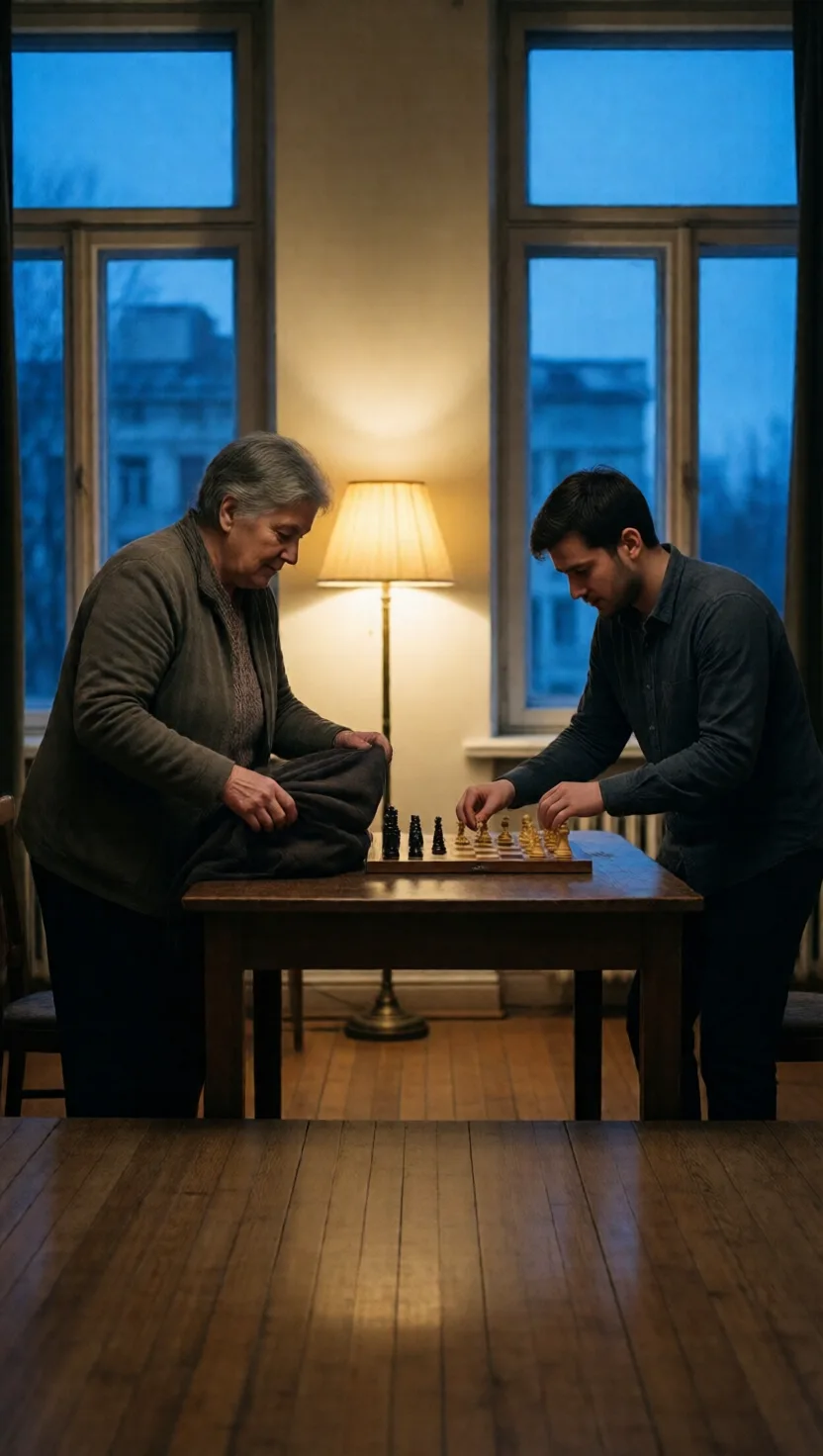
Slow? The opposite. A naive teacher would replay the game from the first move for every question — sixty replays for sixty positions, an evening gone. Hers is one pass: the full game laid out, the cloth's edge marking each question in turn, and since every answer may use only what lies behind the edge, one game holds sixty honest exams, graded in a single sitting. Training is brisk. Playing, he is about to learn, is another matter…
At the real board, nobody needs a cloth

At the real board, nobody needs a cloth

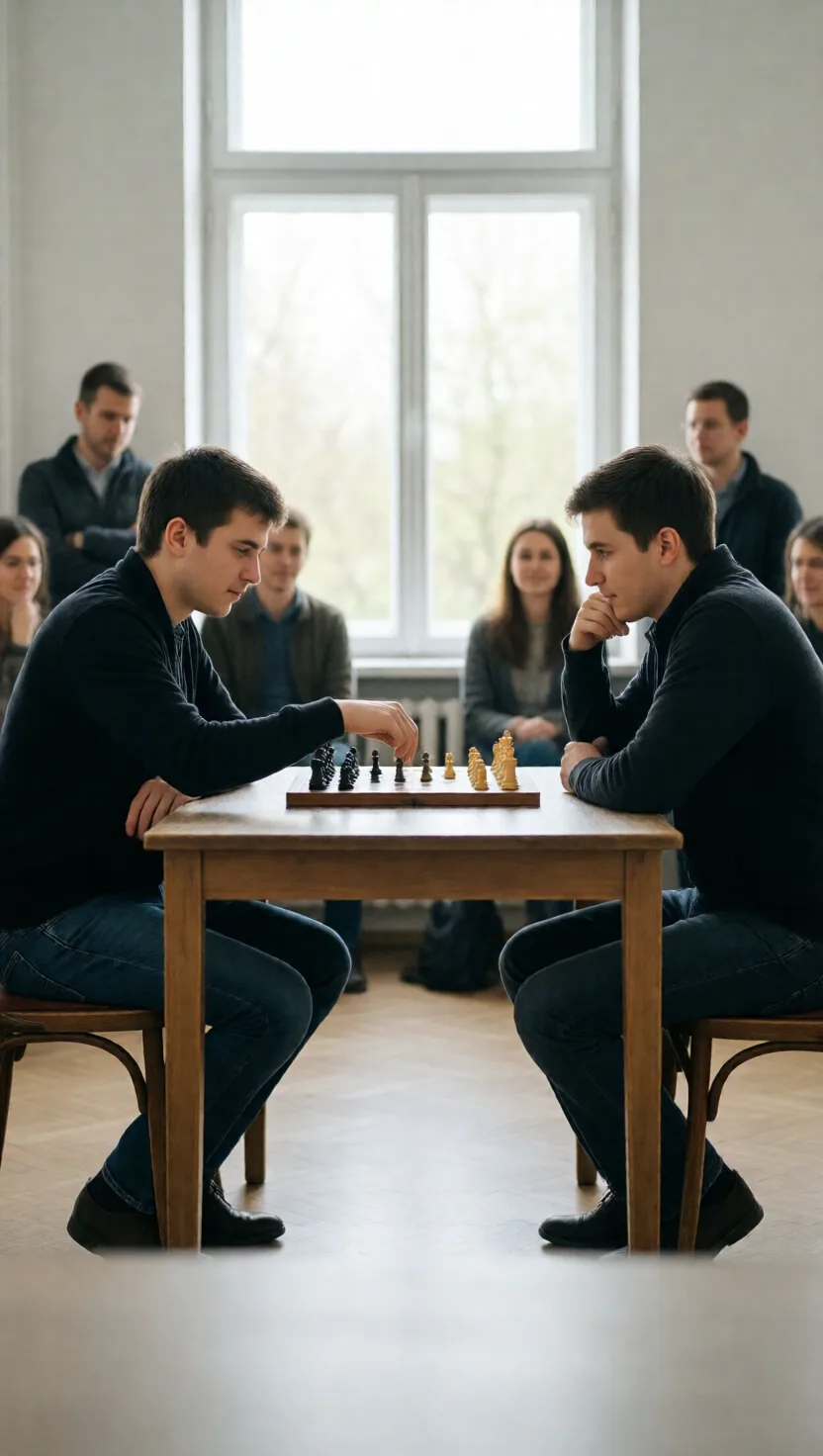
In spring she enters him in the city open. Across a real board he keeps waiting for the old covered feeling — and it never comes, because against a living opponent the future needs no cloth: it does not exist yet. Every game he will ever play offers exactly what the study offered — the past in full, the future dark. She had simply made practice match reality. All his training lacks now is its name…
The cloth has a name: the causal mask

The cloth has a name: the causal mask

scoreijfor j>i\text{score}_{ij} \leftarrow -\infty \quad \text{for } j > i
Language machines learn exactly as Andrei did: reading millions of texts, forced at every word to predict the next from the past alone. Training lays a causal mask over the future — every glance at a word yet to come is pushed to minus infinity, which the softmax turns into exactly zero attention — so one pass grades every position at once, and a peek can never teach. The line below is the cloth, in arithmetic. One gap in the training remains…
🌱 Trained on perfect pasts, playing on his own

🌱 Trained on perfect pasts, playing on his own

In the study, the cloth always slid to reveal a master's move — Andrei's errors were wiped away each turn, and he continued from flawless pasts. At the real board his mistakes stay on the board, and he must play on from positions no master ever left behind. What does a training built only of perfect pasts leave untaught? And how would you teach someone to continue from their own mistakes?
tap →swipe ↑ for depthswipe ↓ to exit