The musician trained by one guessing game.

SRC·115 Source
Nobody ever taught her music — only a game

Nobody ever taught her music — only a game

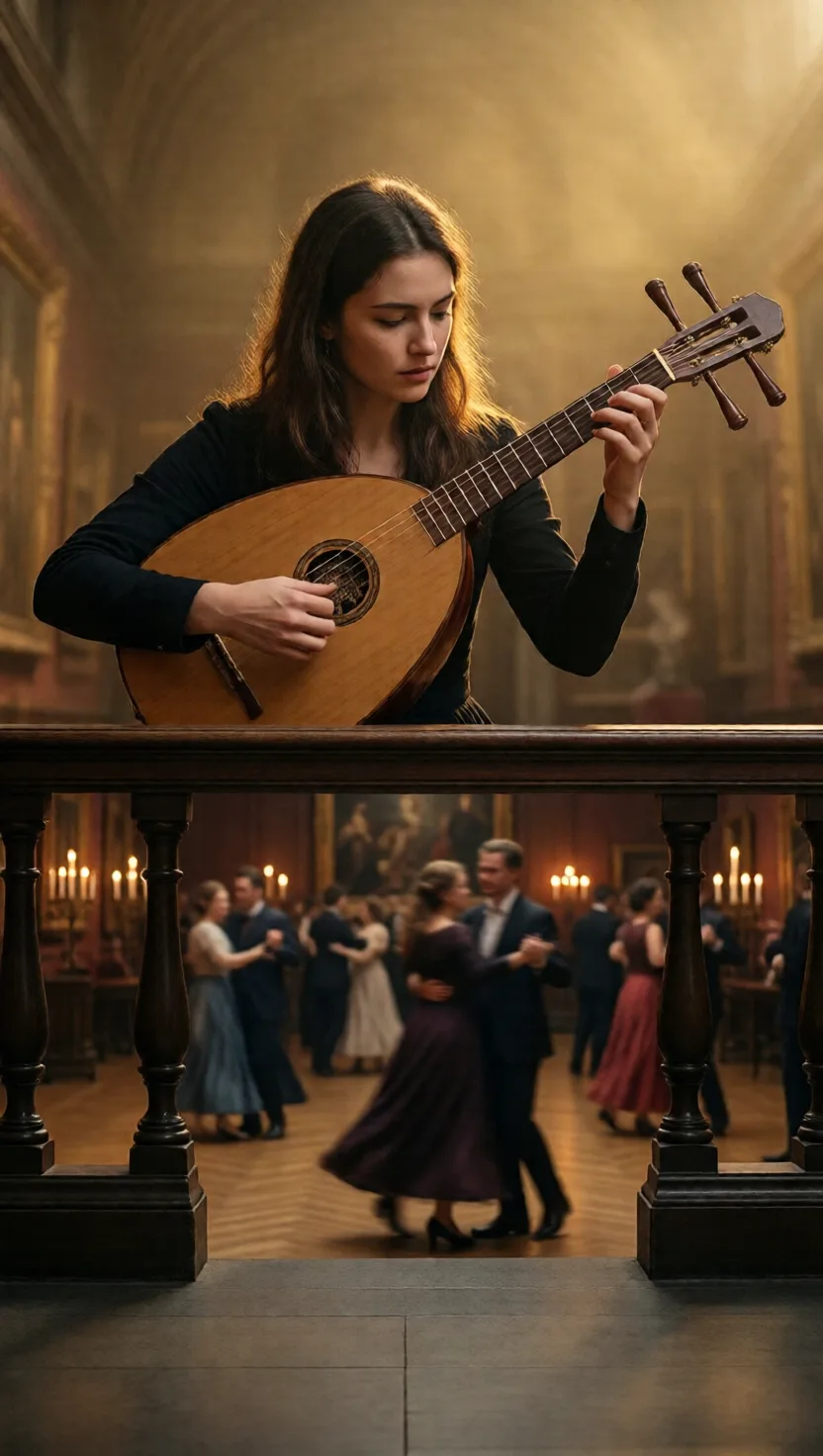
The finest musician at court was never taught a rule of music. As a girl, her master gave her one strange discipline: he played songs — hundreds, then thousands — and before each next note sounded, she had to guess it. Then the true note arrived and judged her. No names of chords, no laws of harmony. Only guess, hear, and be wrong. How could that game make this musician?
Her only score is how surprised she was

Her only score is how surprised she was

L=tlogq(xtx<t)L = -\sum_t \log q(x_t \mid x_{<t})
The game keeps one score, summed over every note of every song: how surprised she was by the note that actually came — that is all the equation says. A near miss, she adjusts a little; a shock, she adjusts hard. And no one has to do anything: nobody marks the songs, nobody explains them. The next note is its own answer key, so every song ever played is a free lesson. And the game is greedier than it sounds…
To guess one note, carry the whole song

To guess one note, carry the whole song

To guess the next note of a dance, she must hold its rhythm in her body. To guess where a hymn will land, she must feel its key pulling home. To guess a dead composer's next phrase, she must carry his habits like a second skin. No one states a single rule — the rules assemble themselves inside her, as expectations. Surely, though, the game stops at music. Then comes the banquet that proves otherwise.
The game quietly swallows the world

The game quietly swallows the world

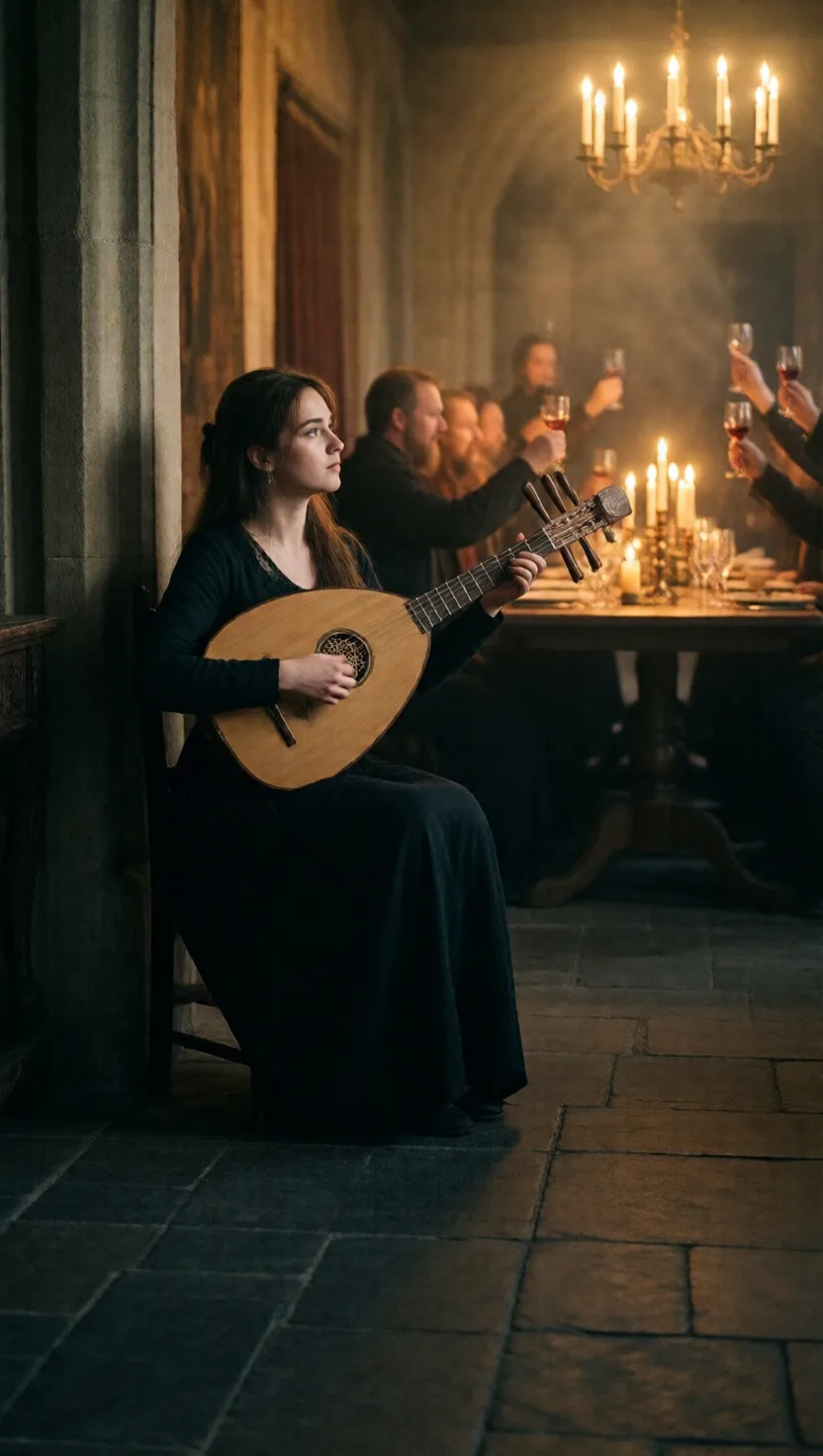
At the royal banquet she plays on and realizes what her guesses now contain: which dance follows which toast, that a widowed king's hall wants the slow descent, that the drinking song mocks the tax collector only in the third verse. To predict the next note, she has had to learn the world the songs live in — customs, histories, griefs — all smuggled in as better guesses. That night she finally sees how big the game really is.
A song is nothing but its next notes

A song is nothing but its next notes

P(x1,,xT)=tP(xtx<t)P(x_1, \ldots, x_T) = \prod_t P(x_t \mid x_{<t})
Here is the quiet enormity. A whole song is exactly this: each note, given all the notes before it — the equation, with nothing missing and nothing extra. It's not a trick or a shortcut; it's an identity. So whoever guesses every next note perfectly doesn't know a slice of the song. They know the whole song, dealt out one note at a time. Now replace songs with sentences…
The dumb game has a name: next-word prediction

The dumb game has a name: next-word prediction

This is how a language model is trained — no grammar lessons, no fact lists, only the musician's game played on oceans of text: guess the next word, be corrected by the word itself. The objective is called next-word prediction, and it sounds too dumb to work. But to keep winning that game on everything ever written, you must quietly learn grammar, facts, styles — the shape of thought itself. One question survives the triumph…
🌱 What can the game never teach?

🌱 What can the game never teach?

Years later, students beg her for the rules of harmony, and she has no rules to give — only a lifetime of corrected guesses. Walking home past dark windows, she wonders about the one thing the game never asked of her. 🌱 She has predicted ten thousand songs of grief, perfectly. Is that the same as grieving — and if not, what exactly is missing?
tap →swipe ↑ for depthswipe ↓ to exit