A hundred machines in a row couldn't bend one sheet of metal.

SRC·114 Source
Every machine in the shop, and not one curve

Every machine in the shop, and not one curve

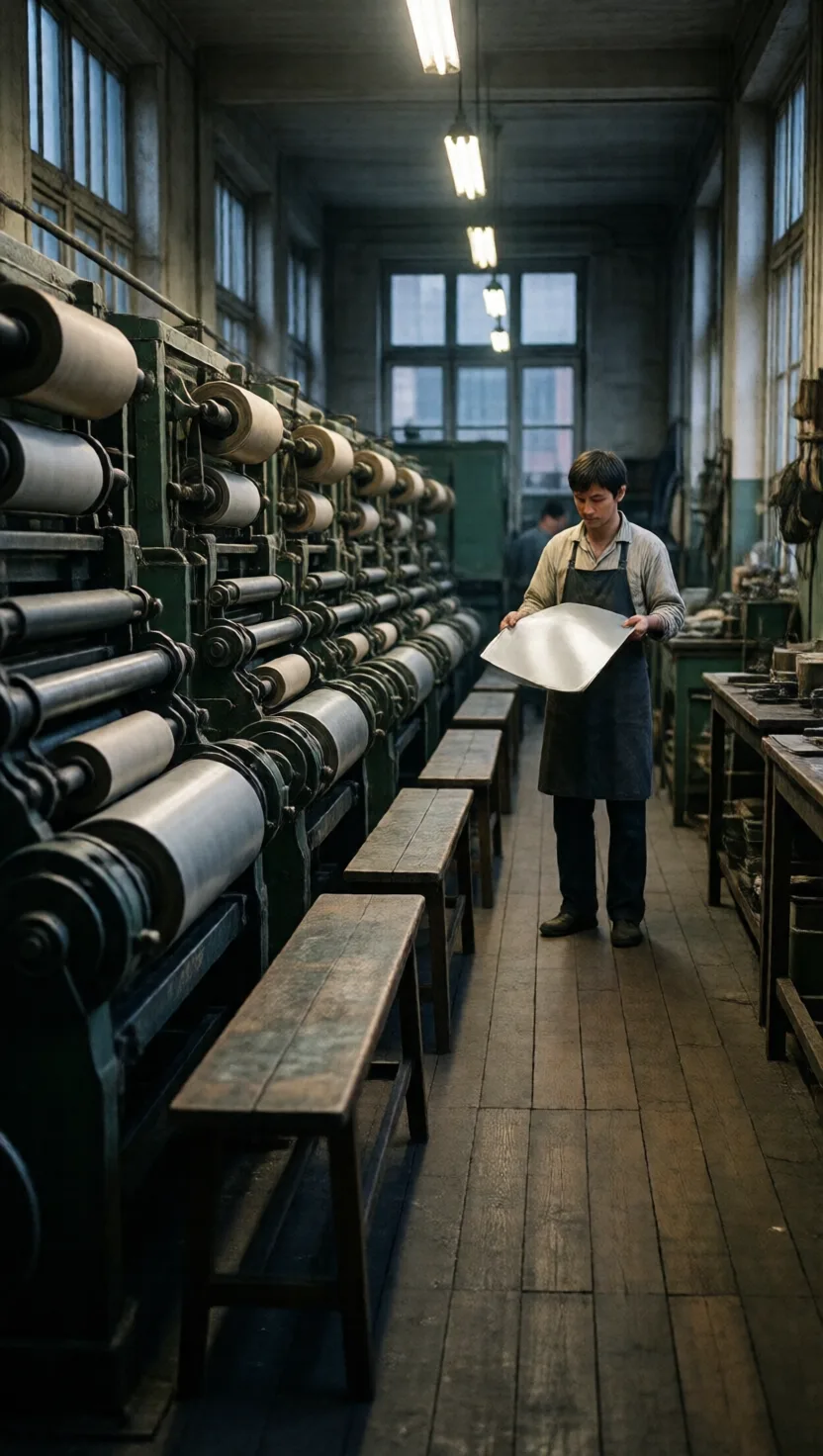
The apprentice wants one thing from the sheet-metal shop: a bowl. The machines reshape steel all day — rollers stretch, presses shear and skew. So he chains them all night, roller into press into roller, every order he can invent. Each sheet comes out different — and every one comes out flat. A whole shop of machines. Why won't they give up one simple curve?
Straight lines in, straight lines out

Straight lines in, straight lines out

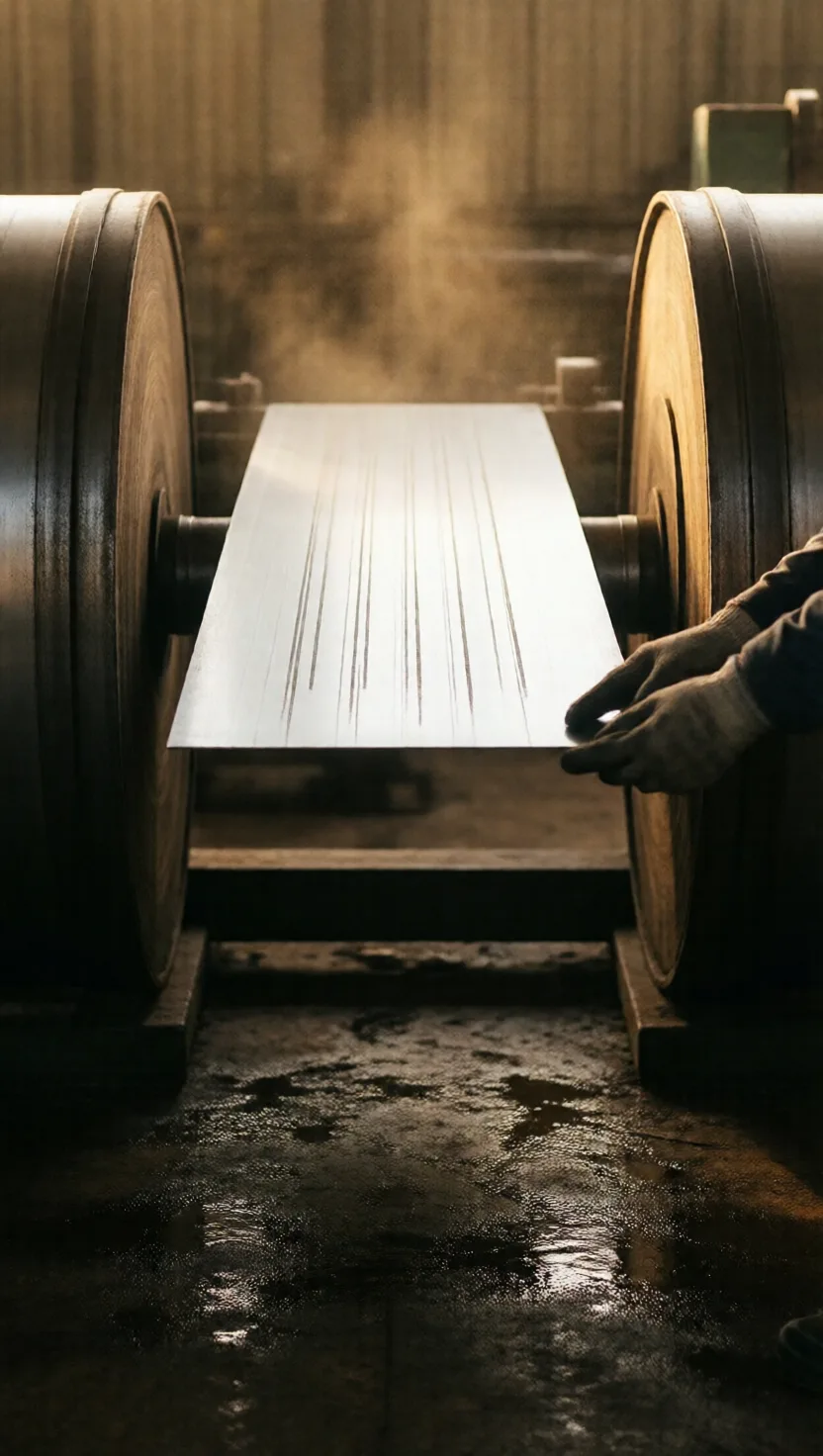
Watch any station work. Scribe a straight line across a blank and run it through: the line comes out moved, stretched, tilted — but still perfectly straight. Feed a shape twice as big, get a result twice as big. The machines never improvise. And lawful machines like these share one strange talent: any two of them, run in a row, can be replaced by one
A hundred stations fold into one

A hundred stations fold into one

W2(W1x)=(W2W1)xW_2(W_1 x) = (W_2 W_1)\,x
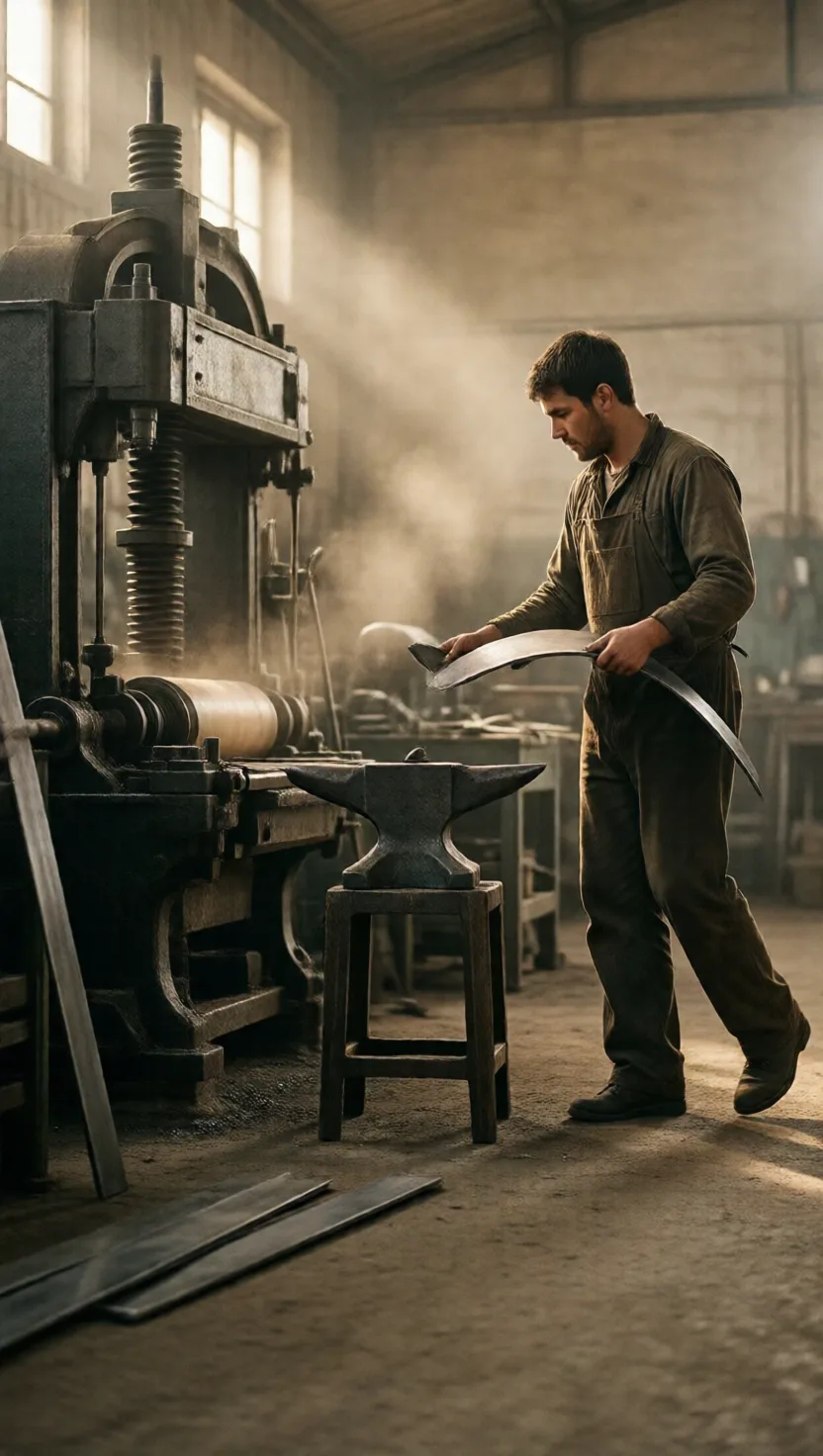
It's the foreman's oldest trick: build a single station that does two jobs in one pass. The equation says it plainly — send a sheet through two machines, and one combined machine was doing it all along. Chain a hundred: the line still folds into one, and one machine keeps flat things flat. The bowl was never in reach. Then the master walks over carrying no machine at all — only a hammer.
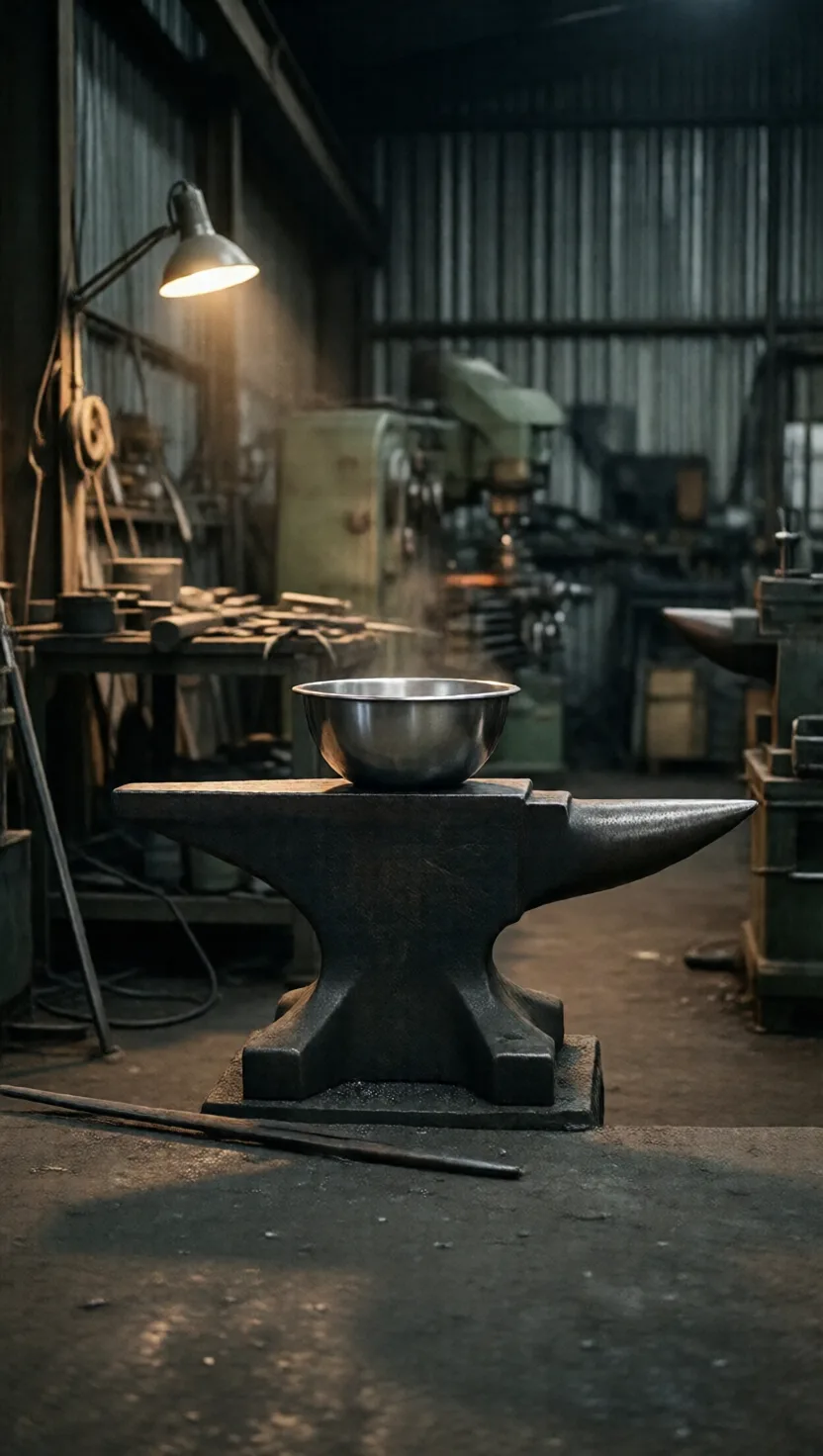
One strike over the anvil's curved horn

One strike over the anvil's curved horn

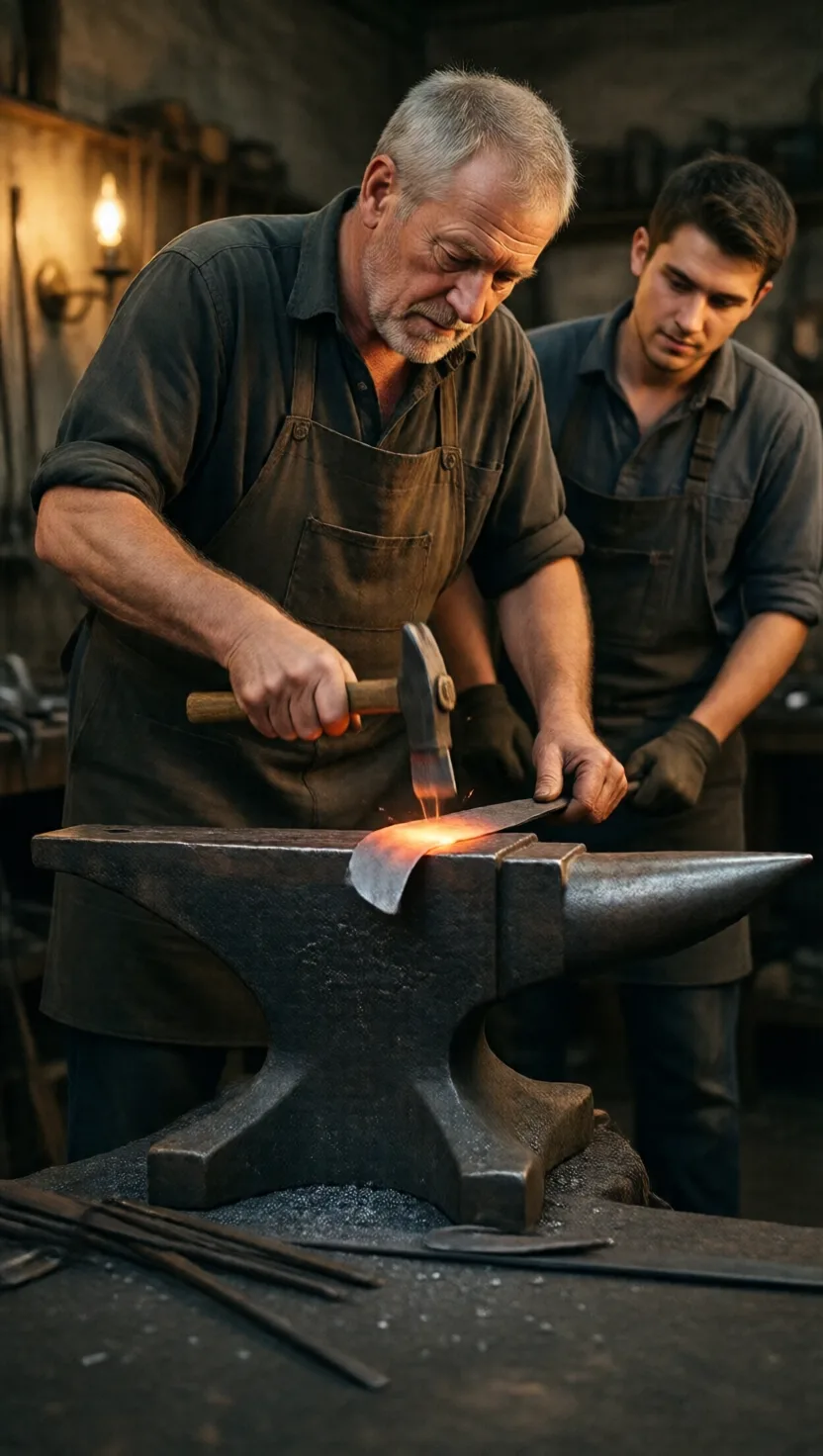
Between two stations the master sets an anvil, lays the sheet over its curved horn, and strikes once. The dent is nothing a roller could make: it treats the middle of the sheet differently from the edges, and doubling the blow does not double the shape. The law of proportion snaps. And the next roller receives something no machine here has ever seen — a sheet that isn't flat.
Now the chain compounds instead of collapsing

Now the chain compounds instead of collapsing

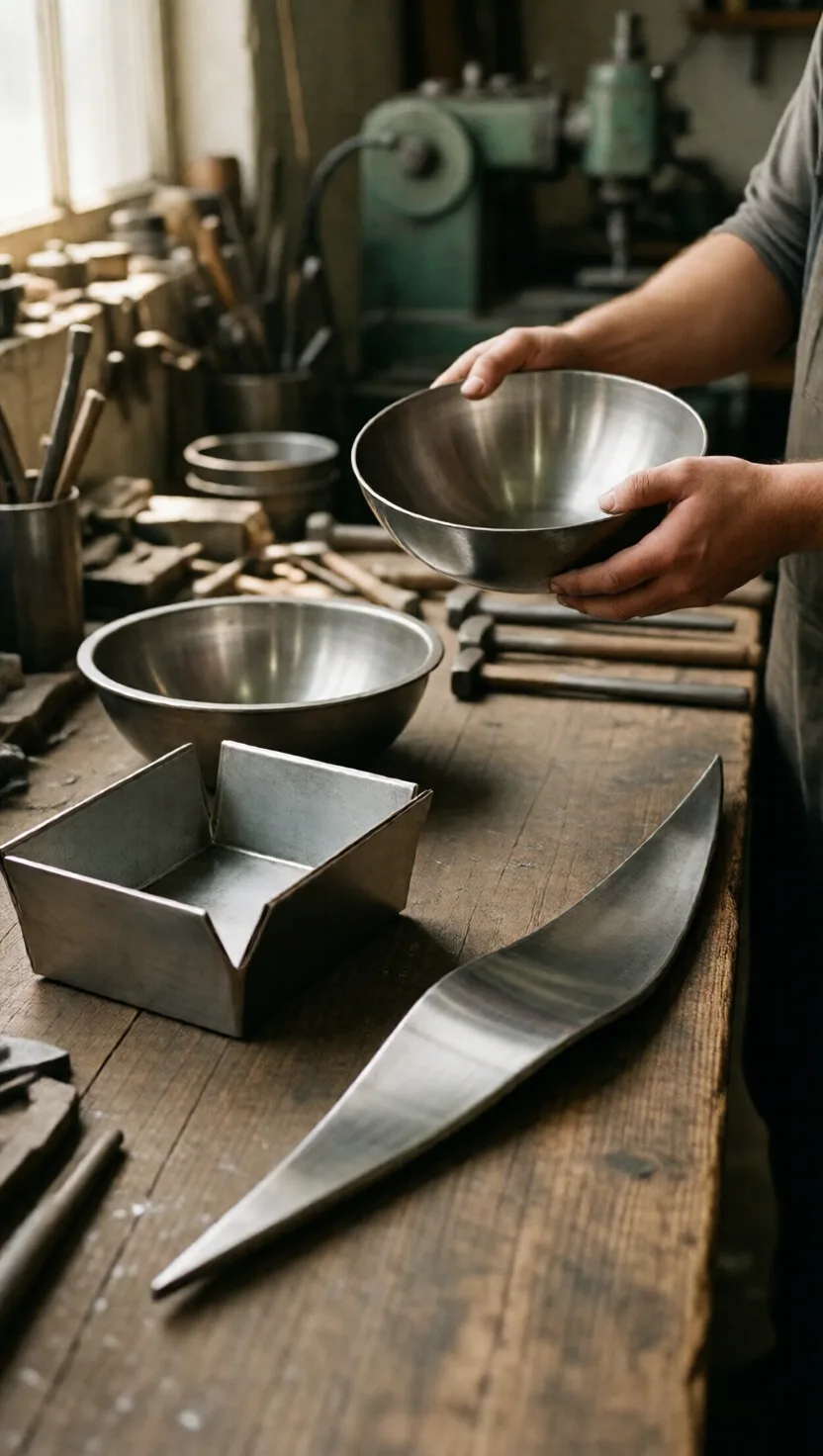
Roller, strike, press, strike, roller — with a bend between stations, the line stops folding into one. Each stage works on the curved thing the last stage made, and the shapes compound. Small kinks, stretched and stacked, add up to nearly any surface you can name: bowls, boxes, the swept back of a bird. Depth finally pays — and somewhere far from any workshop, engineers found the same law the hard way.
The bend between machines is the nonlinearity

The bend between machines is the nonlinearity

A neural network is this production line. Each layer is a lawful machine — a matrix, all stretch and shear — and chained bare, a deep network collapses into one shallow machine, exactly as the sheets stayed flat. So between layers, engineers insert one cheap bend: the nonlinearity. The crudest part of the whole design, and the entire reason depth pays. The apprentice, though, is still turning his bowl in his hands…
🌱 Where does the shape really live?

🌱 Where does the shape really live?

The shop is quiet. The apprentice turns his finished bowl in the lamplight and keeps wondering: the mighty machines did all the visible work, yet without the anvil's dumb little blow they could make nothing new. 🌱 So where does a shape really live — in the powerful, lawful stages, or in the small stubborn bends between them? And in everything you build step by step… what plays the anvil?
tap →swipe ↑ for depthswipe ↓ to exit