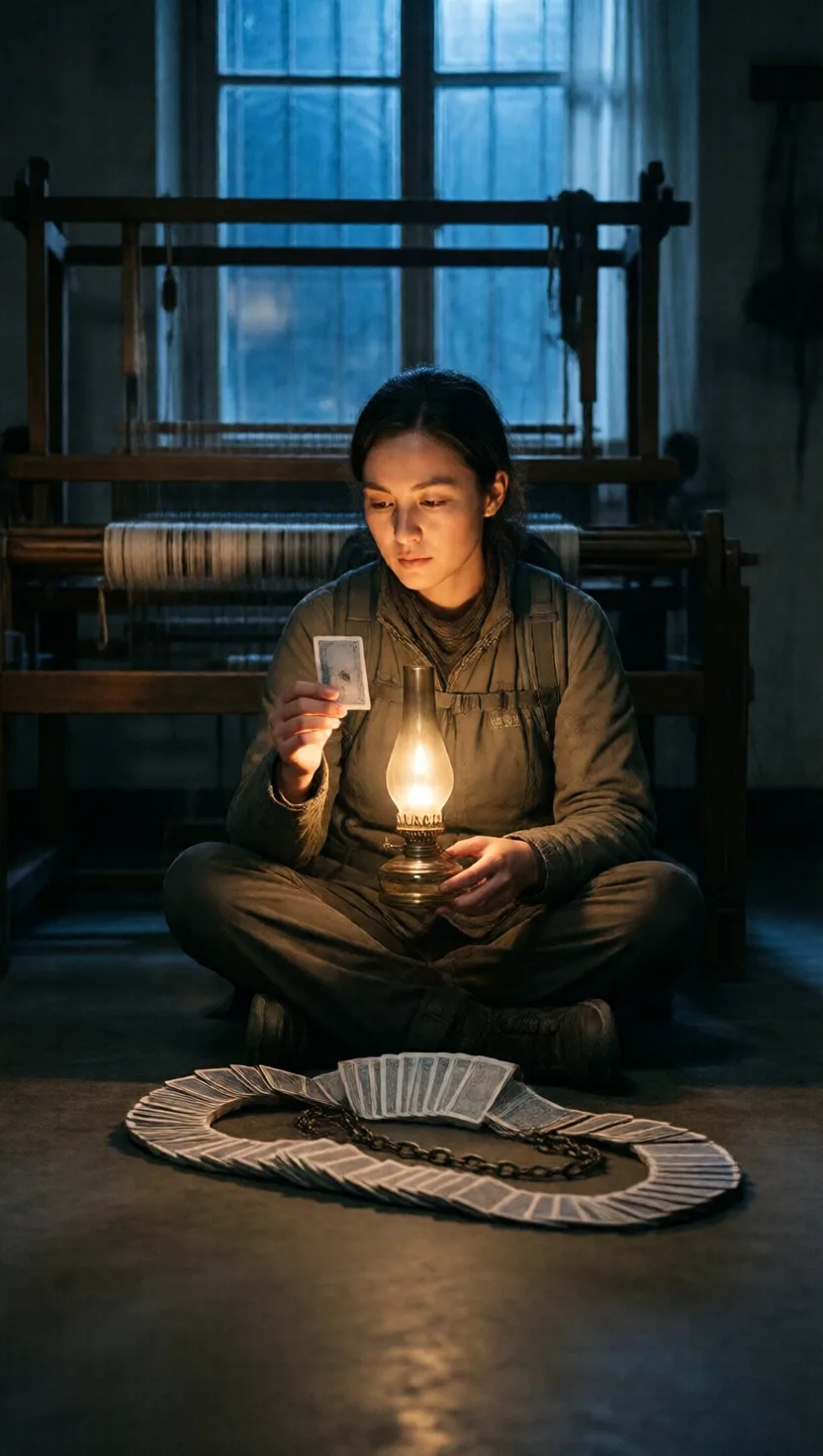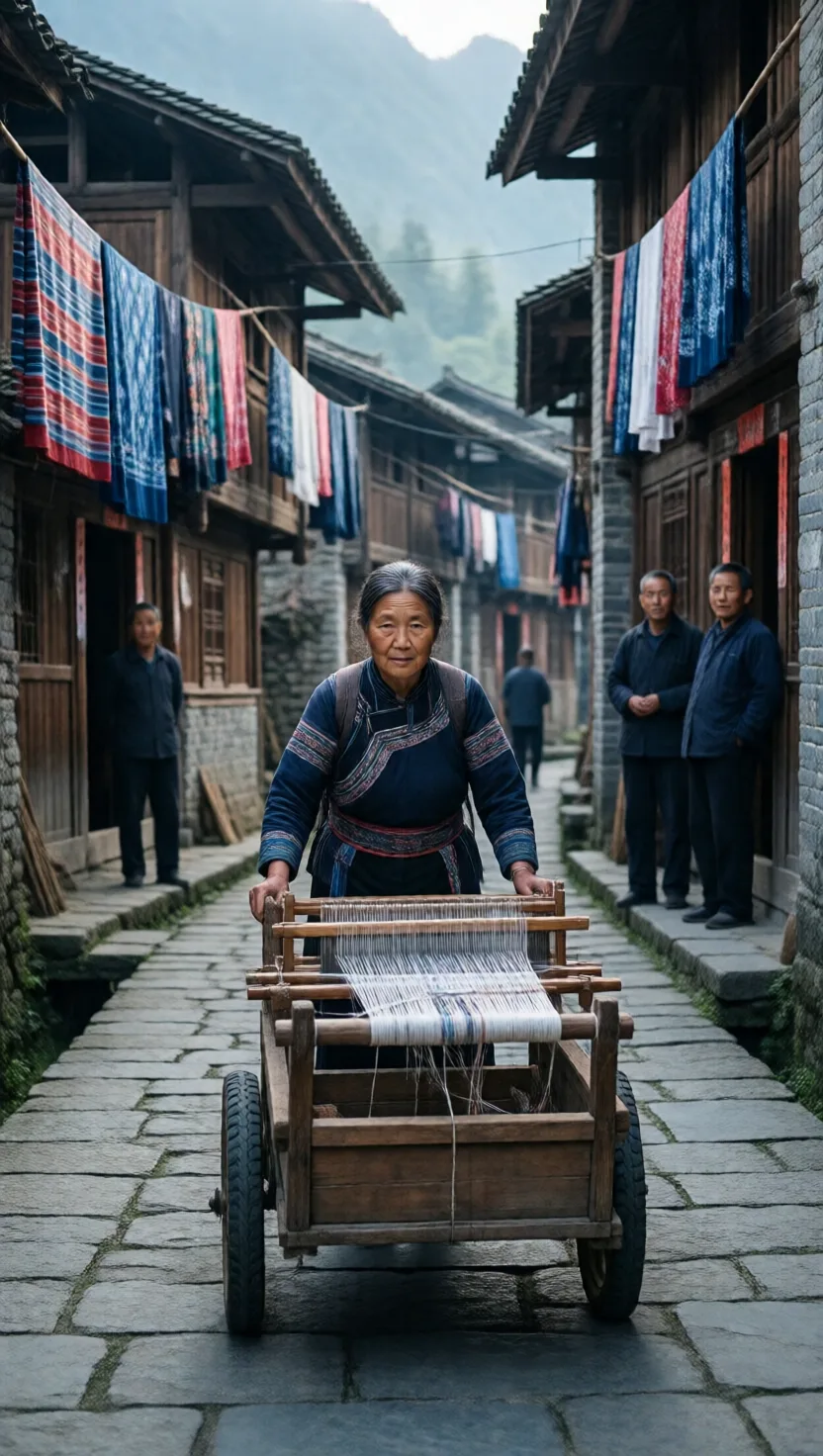
The valley where every pattern needed its own loom.

SRC·105 Source
One cart, one loom, and a claim nobody believes

One cart, one loom, and a claim nobody believes

In a weaving valley, common sense is law: one loom, one pattern. The stripe loom weaves stripes, the rose loom roses, the plaid loom plaid — and a new pattern means a year in the machine shop, building a new machine. Then a stranger arrives with a small cart carrying a single loom, and claims it can weave every pattern in the valley. The weavers laugh. She asks for thread.
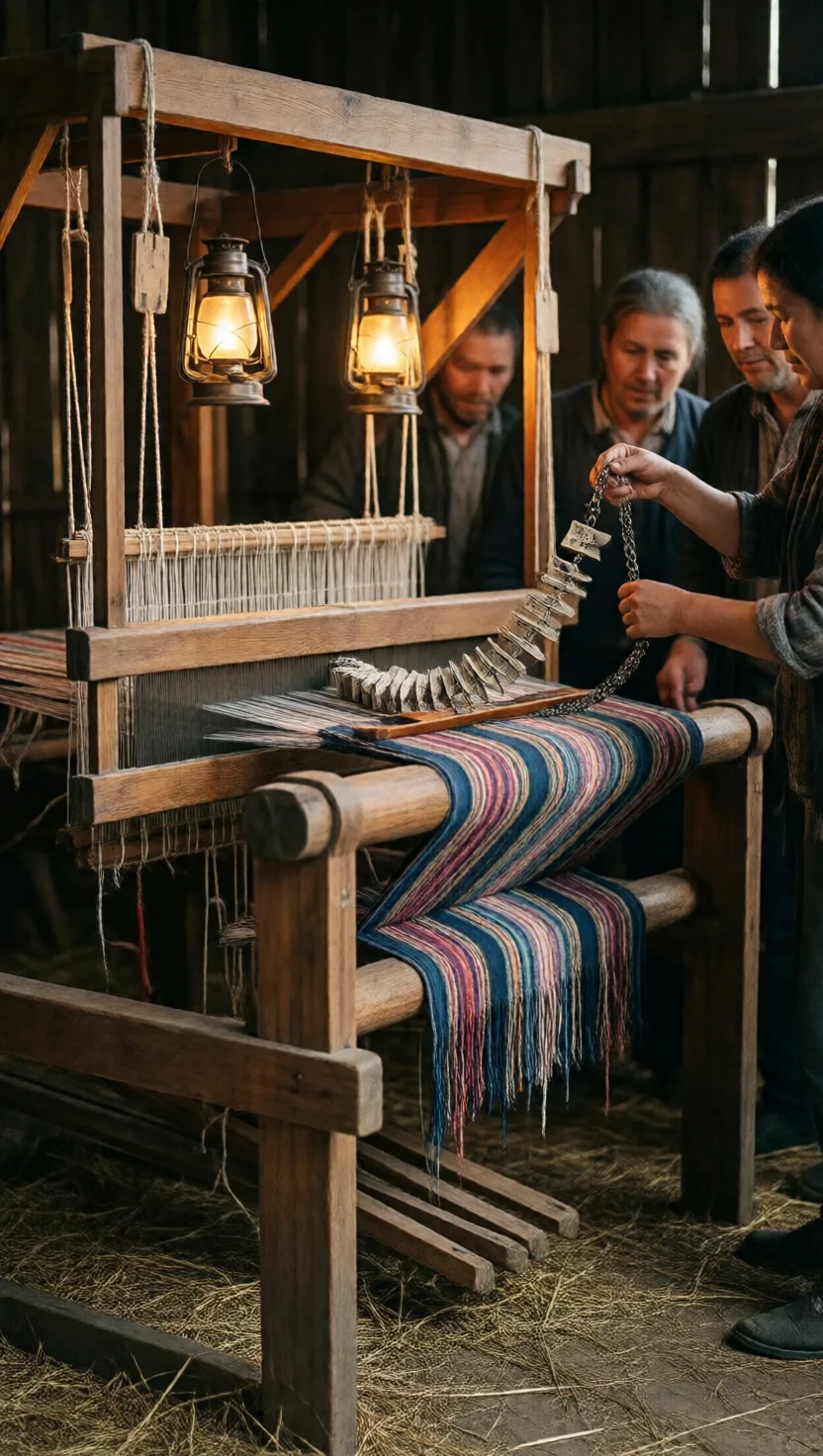
She swaps a chain of punched cards — the cloth changes

She swaps a chain of punched cards — the cloth changes

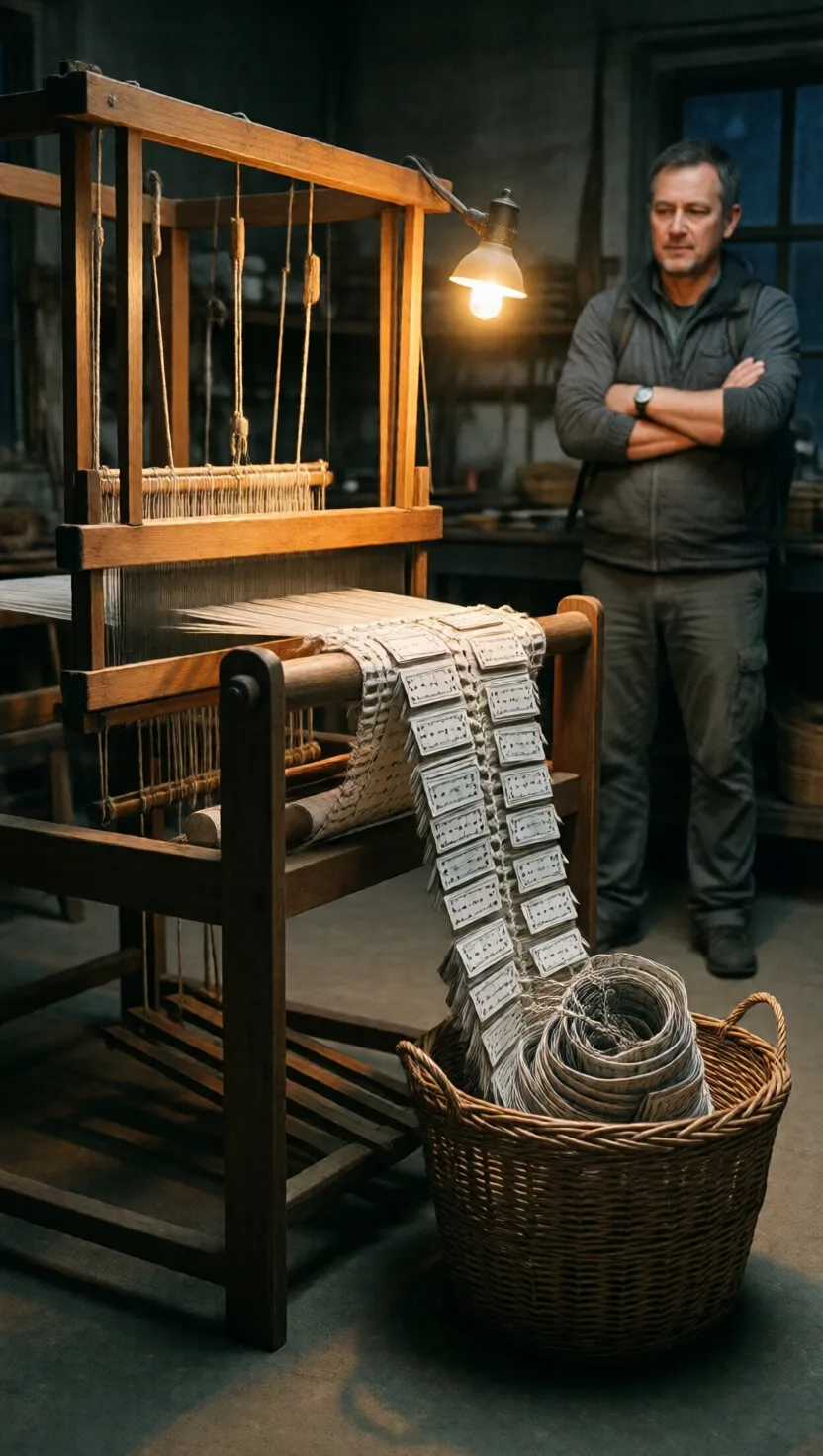
She threads the loom, then hangs a long chain of stiff cards over it, each card carrying nothing but a pattern of punched holes. The loom clicks through the chain and weaves perfect stripes. She lifts that chain off and hangs another — and the same loom, same gears, weaves roses. The pattern was never inside the machine. It rides on the cards. The elders step closer, hunting for the trick…
Inside, the loom is embarrassingly simple

Inside, the loom is embarrassingly simple

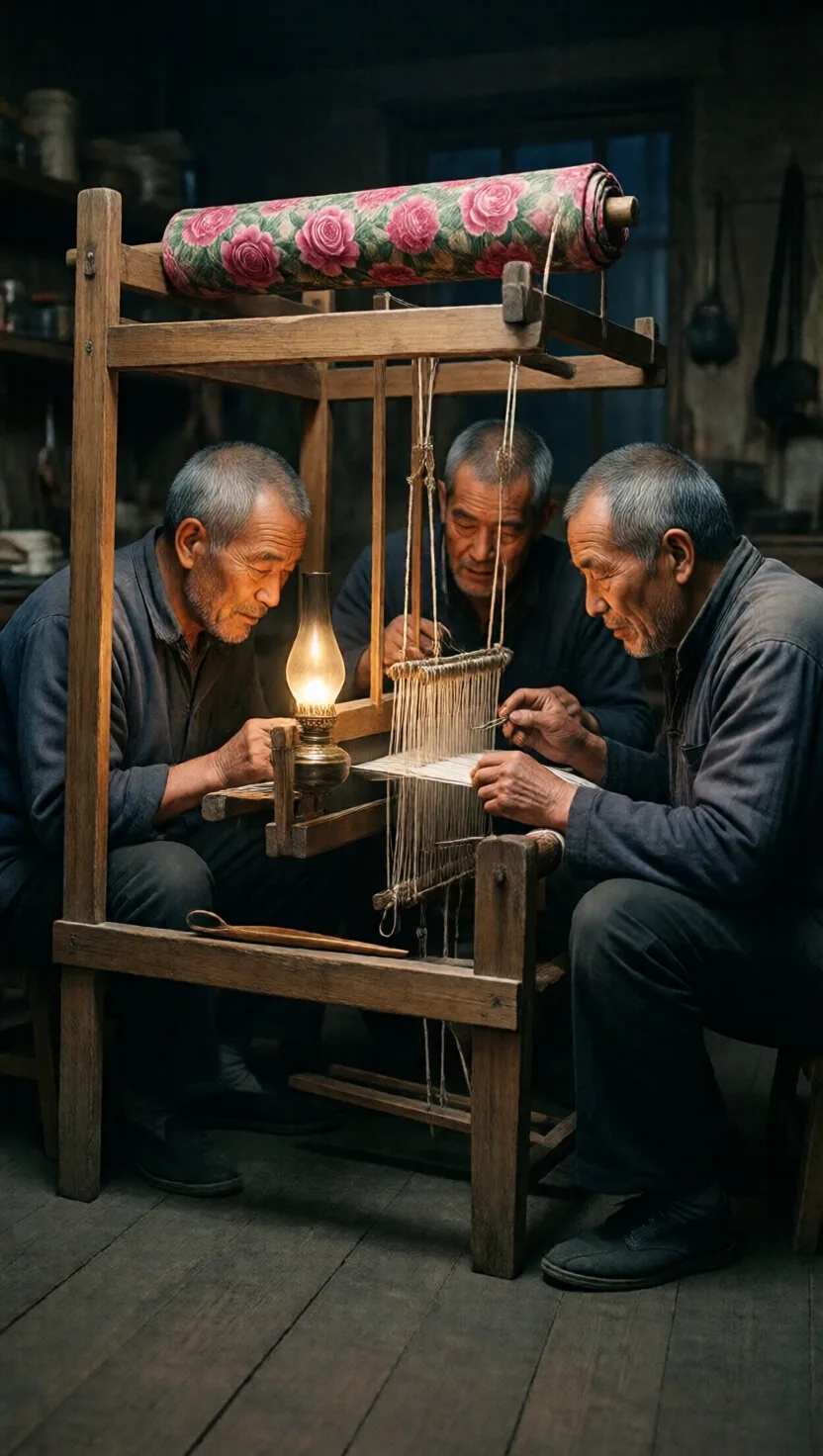
They inspect it by lamplight and find the disturbing part: this loom is simpler than theirs. It knows only a handful of moves — feel the holes on the current card, lift these threads or those, throw the shuttle, step to the next card. Every grand rose was thousands of those tiny moves, spelled out hole by hole. Then the eldest builder asks the sharp question: won't a grander pattern demand a grander loom?
A grander pattern needs only a longer chain

A grander pattern needs only a longer chain

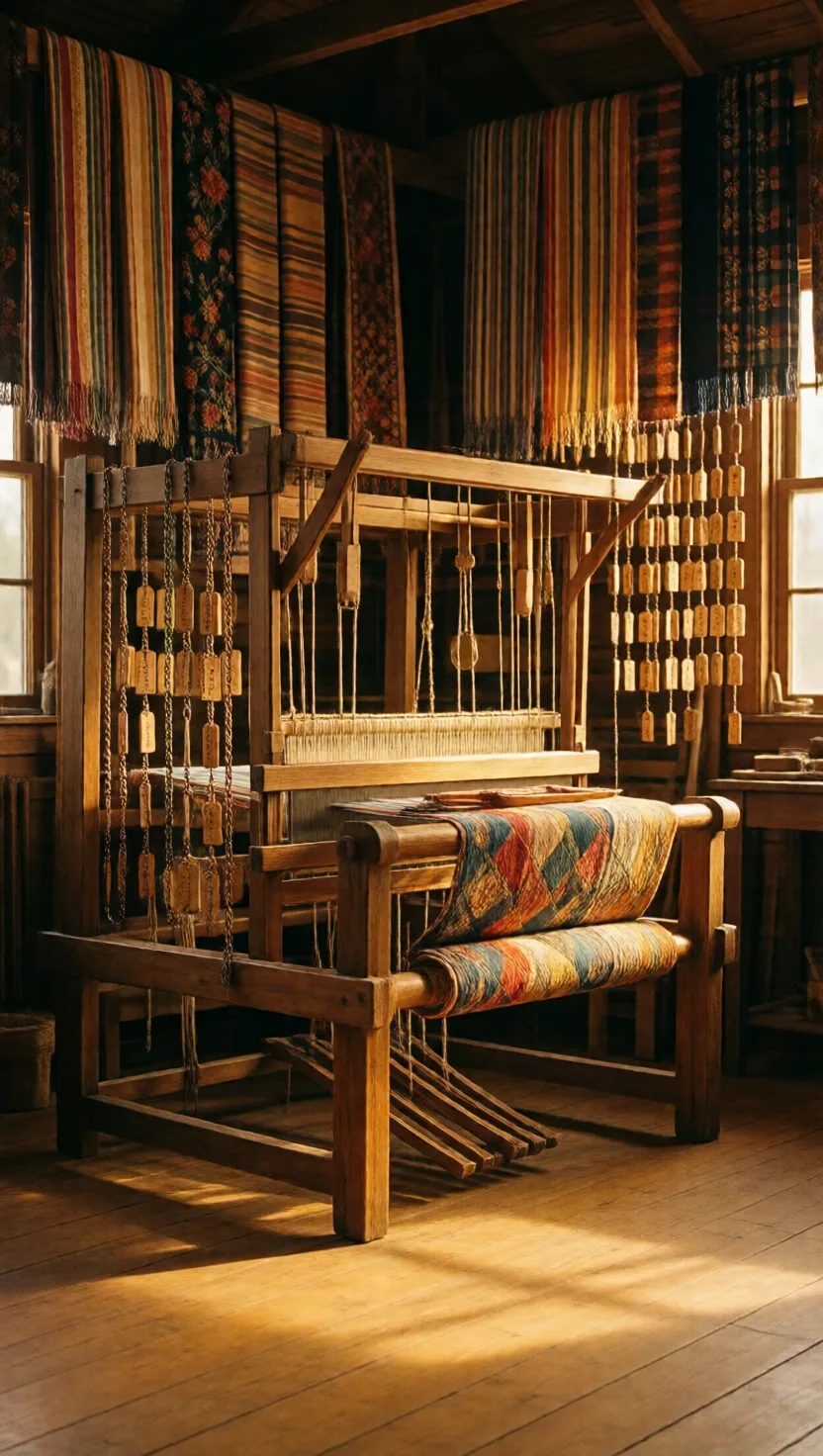
No, she says. A grander pattern needs a longer chain of cards — never a new loom. The machine is finished; from now on, only its instructions change. Within a season the valley's machine shop, decades of one-loom-per-pattern, quietly becomes a card-punching desk, and the proud special looms gather dust along the wall. Then, one evening, someone notices what her loom is busy making…
Tonight the loom is making cards — for itself

Tonight the loom is making cards — for itself

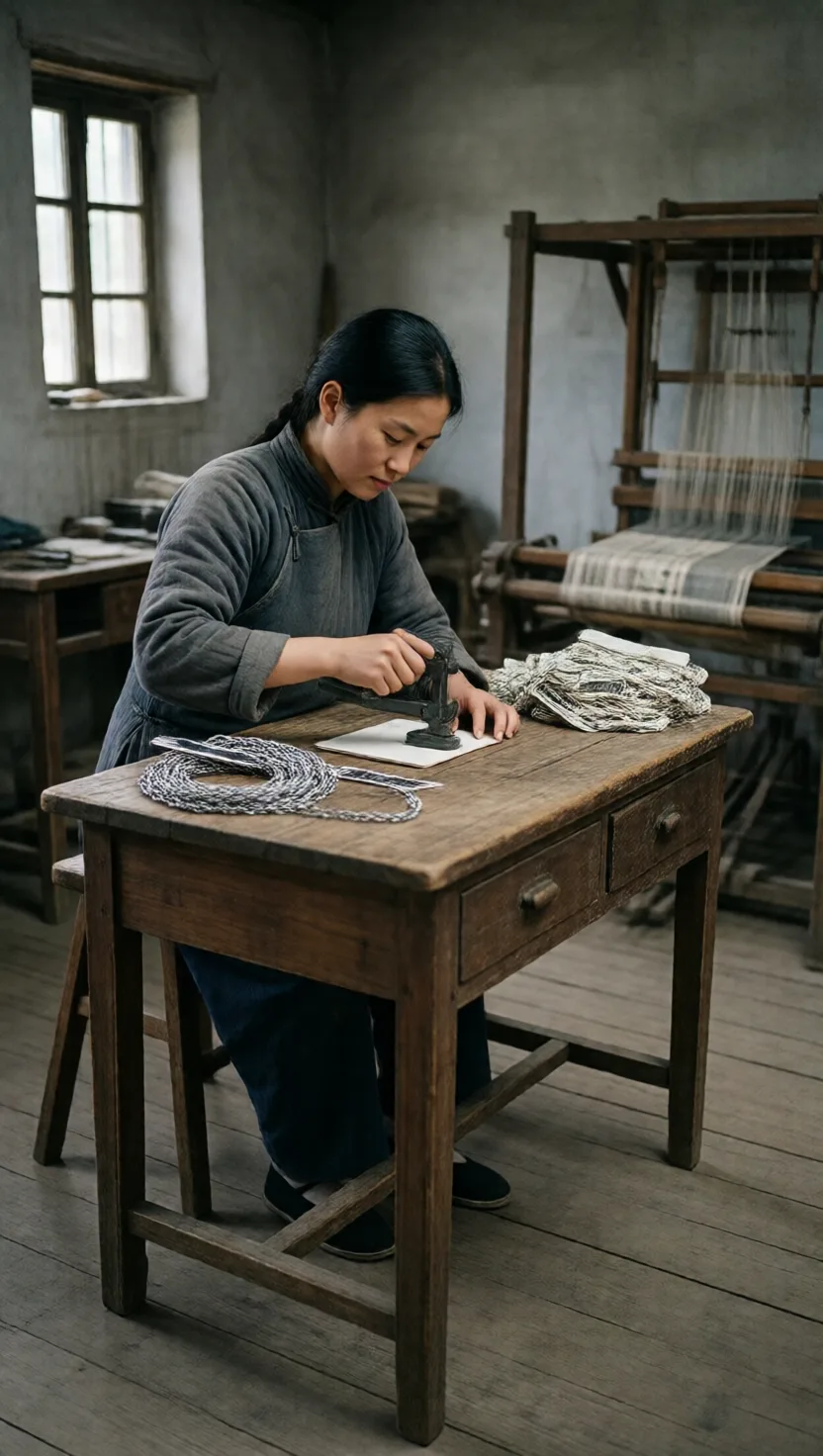
Cards are only holes — and holes are something a loom can punch. Tonight her loom is producing fresh cards: instructions it will read tomorrow. The elders feel the floor tilt. A whole loom's design can be spelled onto a chain — so this machine, fed the right cards, can become the stripe loom, the rose loom, any loom anyone will ever build. One machine, wearing other machines like costumes…
One machine that reads machines: the universal machine

One machine that reads machines: the universal machine

(state, symbol)    (write, move, next state)(\text{state},\ \text{symbol}) \;\to\; (\text{write},\ \text{move},\ \text{next state})
The valley had stumbled onto computer science's founding insight: a machine whose whole mind is one small rule table — read below: in this state, seeing this mark — write, move, change state — can take another machine's table as mere marks and become it. That is the universal machine. Your computer never grows new gears; every program is another chain of cards. The only question left is how fast — until one chain refuses to stop…
🌱 The question no chain of cards can answer

🌱 The question no chain of cards can answer

Some chains, the villagers find, loop forever — the loom clicks on and the cloth never finishes. So they ask the stranger for a judge: a chain that reads any other chain and foretells whether its weaving ever ends. She shakes her head — that chain, provably, cannot exist. 🌱 If even a machine that can become every machine holds questions it can never settle, which of the questions you ask each day has no card?
tap →swipe ↑ for depthswipe ↓ to exit