The perfumer who never corks a vial.

SRC·104 Source
Two noses, one formula — and only one perfume sings

Two noses, one formula — and only one perfume sings

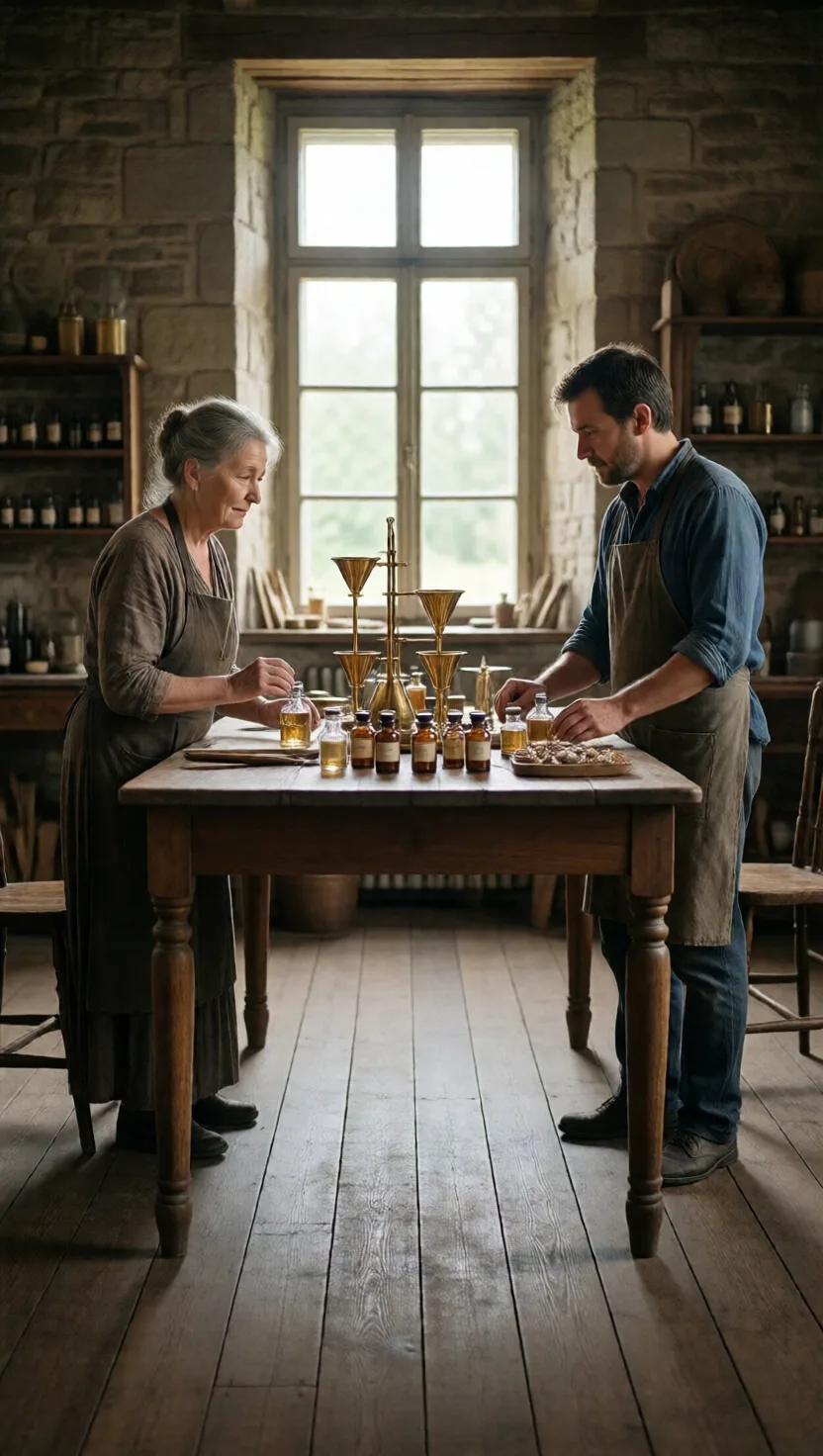
In a stone atelier, an old perfumer and her apprentice are building the same commissioned scent, drop by drop, from the same shelf of essences. He follows the formula faithfully. Yet by the fortieth note his blend turns flat and muddled, while hers keeps opening like a story. Same vials, same recipe — so what is she doing at that bench that he isn't?

The apprentice holds the whole blend as one impression

The apprentice holds the whole blend as one impression

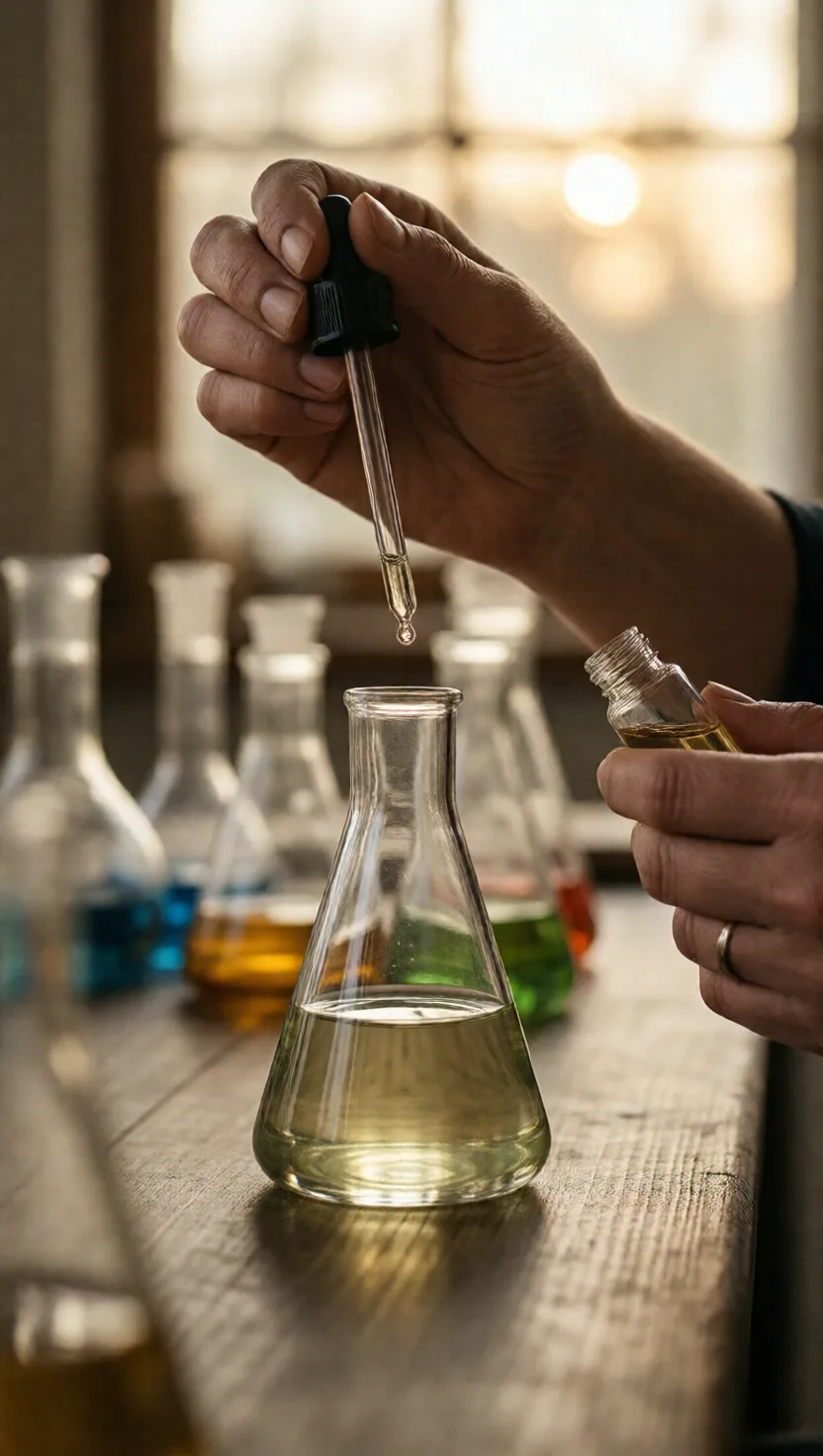
The apprentice works the old way: one deep smell of his flask, the whole blend held in his head as one impression, and the next drop chosen against it. Each addition overwrites that impression a little. It is fast, and his head never gets fuller. But the opening bergamot grows fainter in his mind with every hour — and by note sixty he cannot say what the beginning ever smelled like…
The longer the perfume, the worse his ending gets

The longer the perfume, the worse his ending gets

The commission is long, and its brief is cruel: the base must answer the opening — the last notes should echo the first like a rhyme. His single impression cannot hold it. Whatever the first vial gave has dissolved into a general haze, and the longer the composition runs, the worse the ending gets. Then he watches the master's bench and notices something strange: she never puts a vial away.
Sixty open vials, and she re-smells them all

Sixty open vials, and she re-smells them all

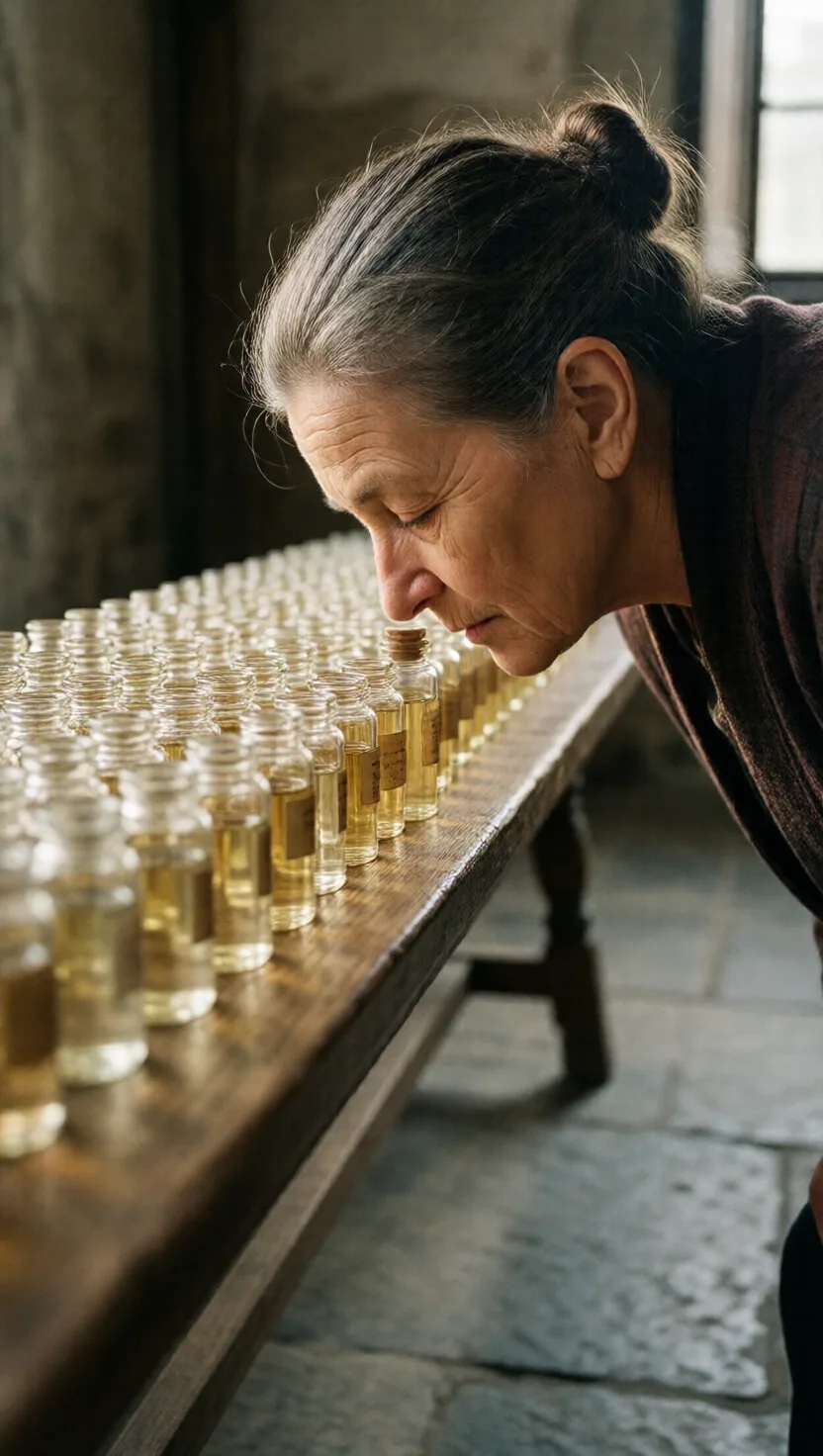
Every vial she has used in this perfume stands open on her bench, in one long row. Before each new drop she leans down the line and passes her nose over them all — quickly, but all of them. Nothing is discarded, so nothing has to be remembered: any moment of the perfume's past can simply be revisited. But sixty open vials should blur into one grey smell. Why don't they?
The question in her hand decides which vials pull

The question in her hand decides which vials pull

Because she does not smell them equally. The question in her hand — what must this next drop sit against? — makes a few vials pull hard and lets the rest barely whisper. For this drop, yesterday's rose matters most; for the next one, the smoke. The weighting is fixed nowhere: it is chosen fresh at every single drop, by the present interrogating the whole past. Her ritual only needs a name…
Machines learned her ritual — its name is attention

Machines learned her ritual — its name is attention

ct=sαt,shsc_t = \sum_{s} \alpha_{t,s}\, h_s
Sequence models once worked like the apprentice: one fixed-size memory, overwritten step by step, long beginnings fading. The cure was her bench. Keep every past moment's trace; at each step, let the present score them all for relevance and blend them by those scores — below, the context is a weighted mix of all stored moments, weights chosen fresh now. That ritual is attention. And its price stands on her bench…
🌱 The bench that grows with every note

🌱 The bench that grows with every note

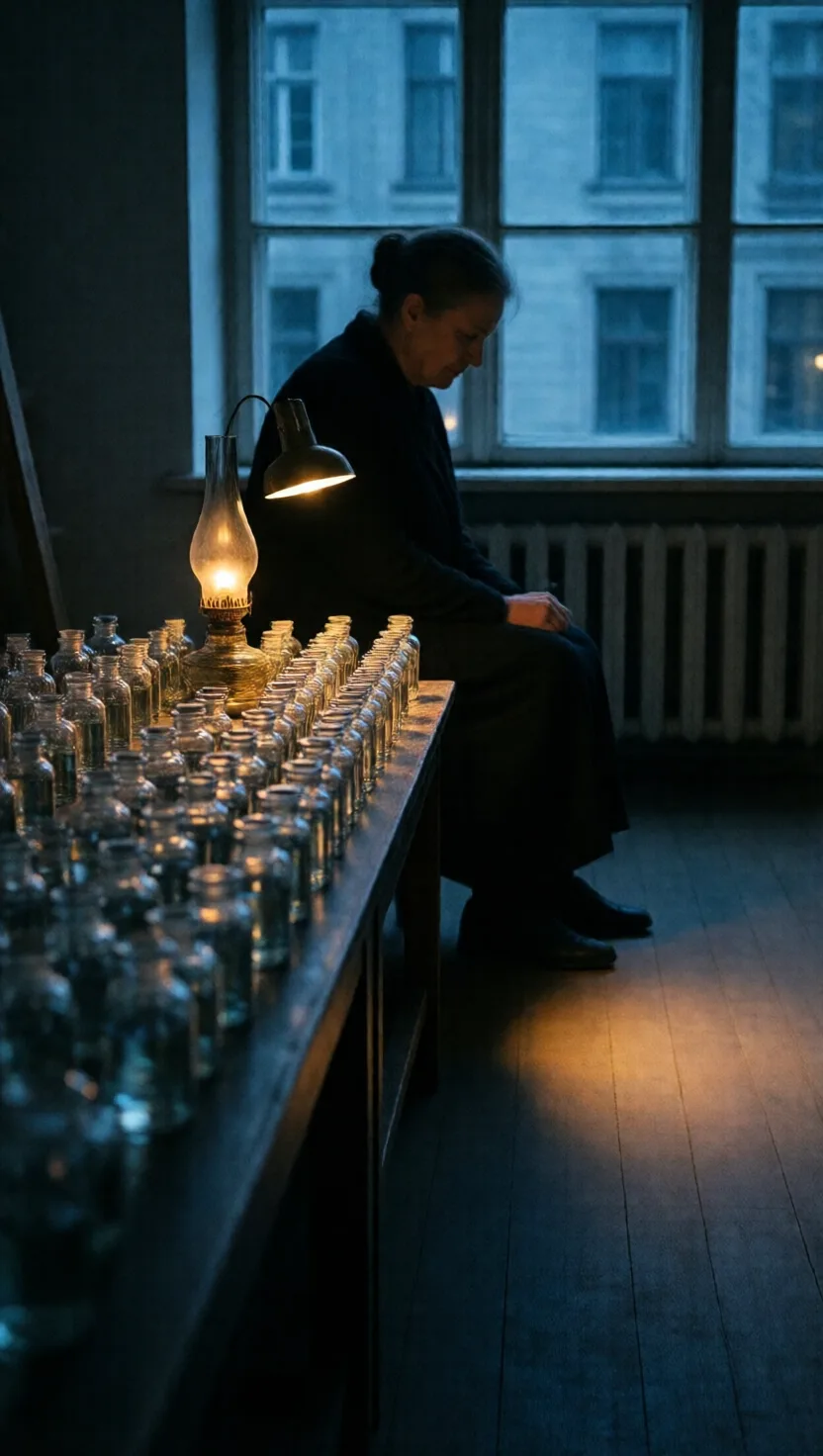
At midnight she counts the cost of her way. The bench grows with the perfume — sixty vials, then a hundred — and each drop's ritual of re-smelling takes a little longer than the last. The apprentice's single impression costs the same at note five and note five hundred. 🌱 When is a fading memory the wiser tool — and could a nose learn which vials it may safely cork?
tap →swipe ↑ for depthswipe ↓ to exit