Eight things glowing inside a common stone

DC·218 Deep Cuts
A moonstone's glow is hidden layers, not colour

A moonstone's glow is hidden layers, not colour

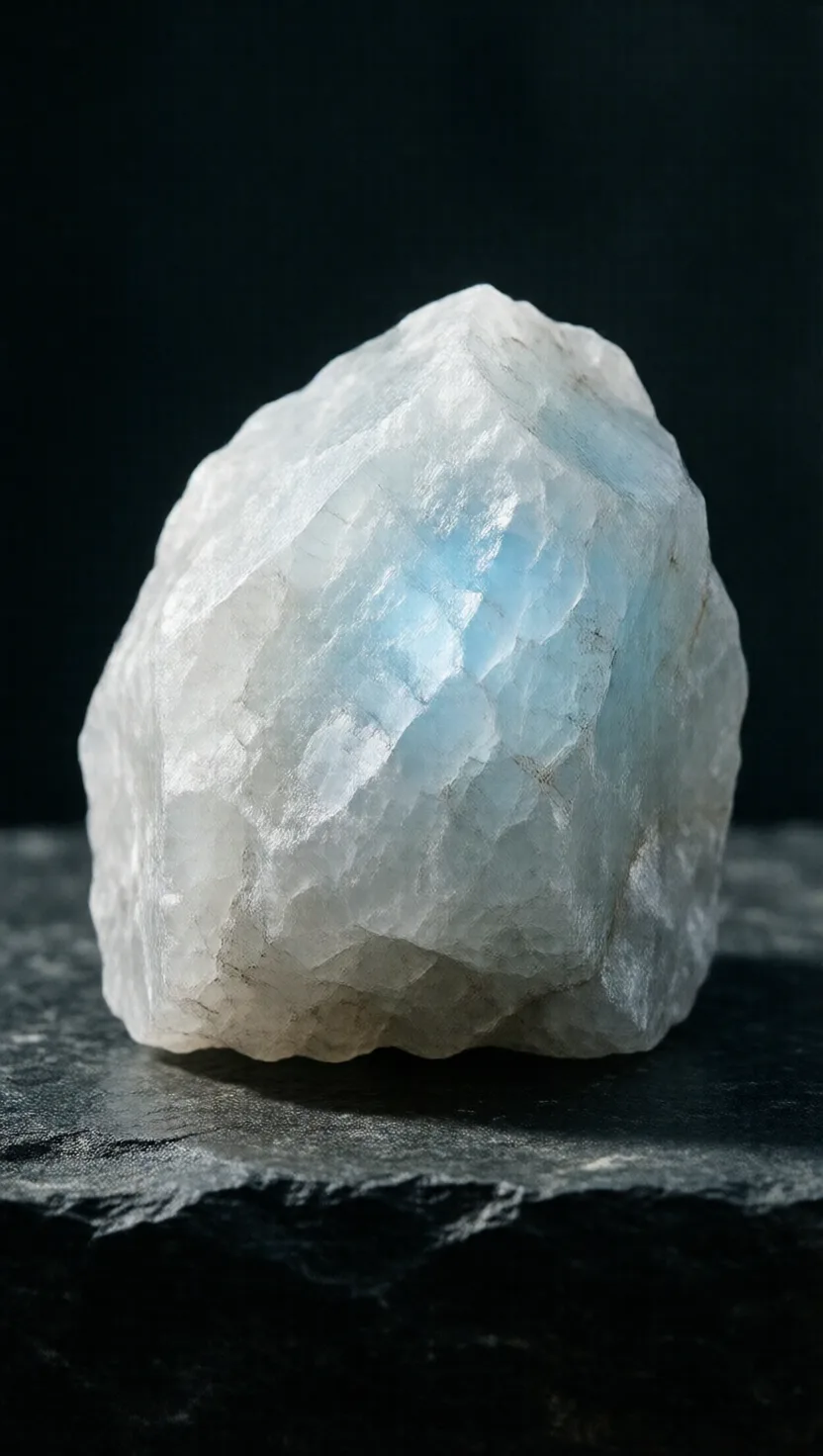
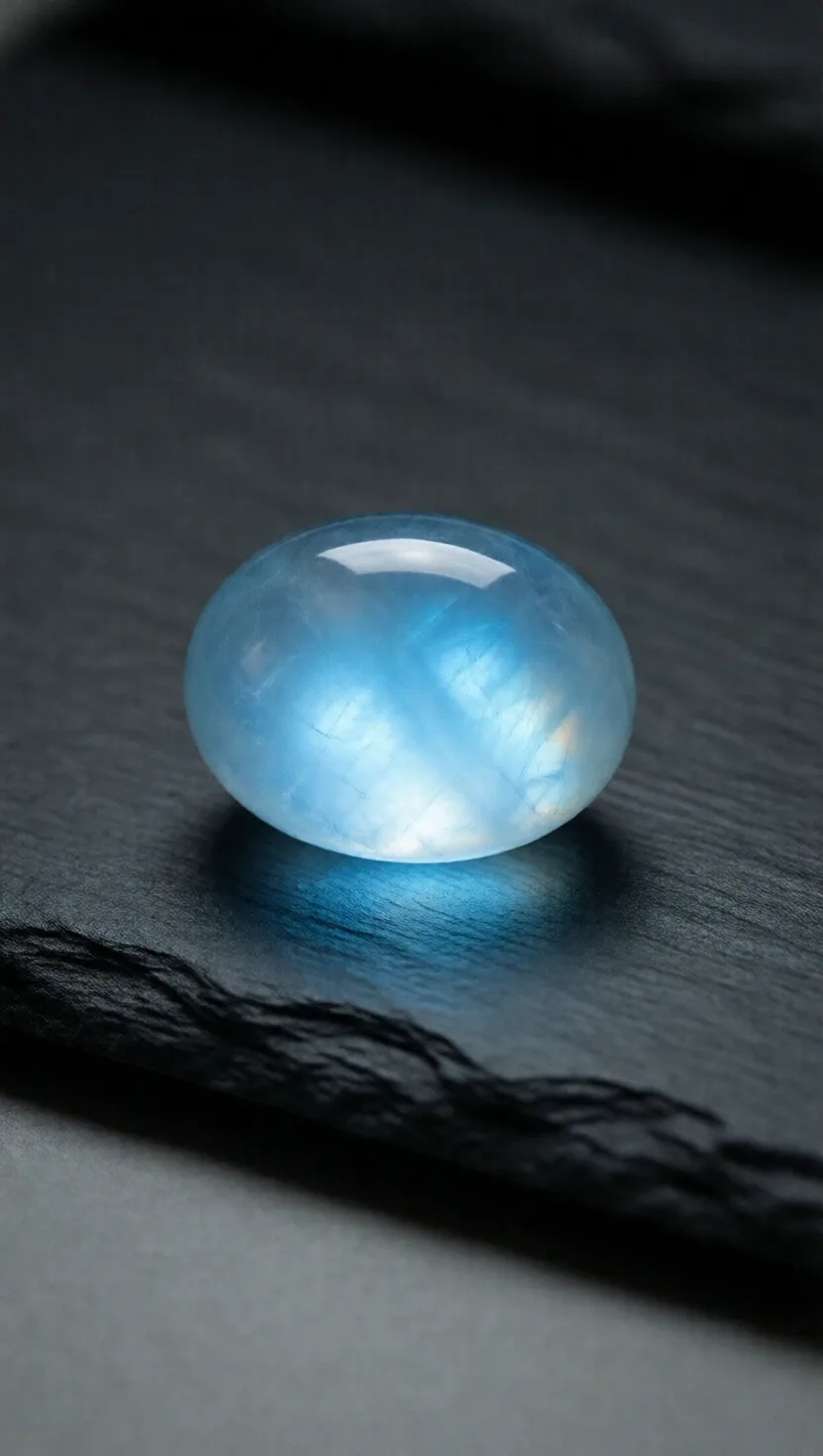
The soft floating blue light that drifts across a moonstone is not a pigment and not a reflection. The stone is built from two kinds of feldspar stacked in microscopically thin alternating layers. When light enters, it scatters off those layers and the longer it lingers, the more the blue is spread back out toward your eye, seeming to hover just beneath the surface and shift as you tilt the gem. Geologists call the effect adularescence.
One dull grey mineral makes up half the planet

One dull grey mineral makes up half the planet

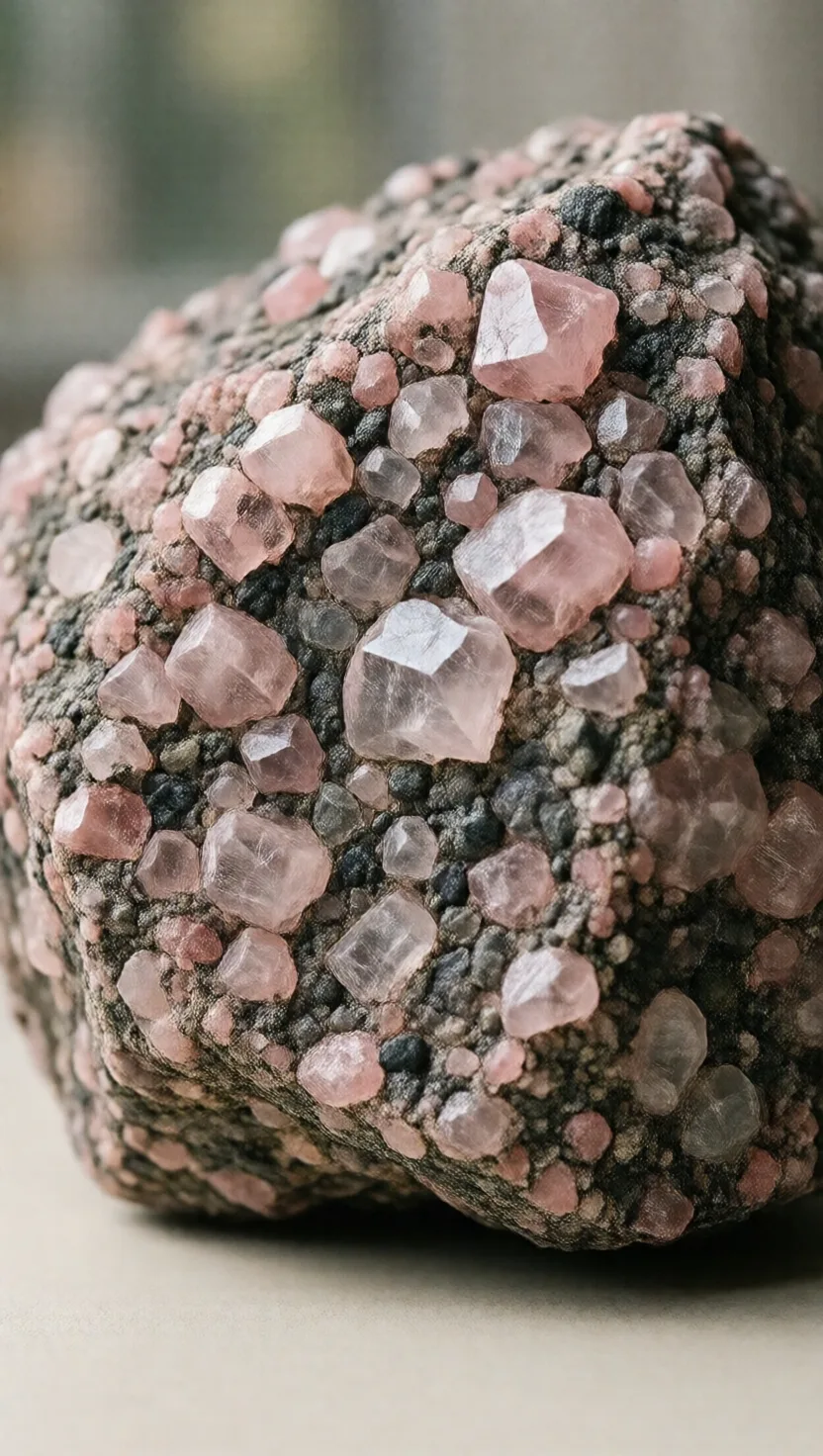
The most common mineral group in Earth's crust is one most people have never named: feldspar. It makes up roughly 60 percent of the crust by volume, the bulk of the granite under our feet and the pale grains in countless rocks. Every gemstone in this set, from moonstone to labradorite to sunstone, is simply a variety of this same ordinary, planet-building material, caught in a form that happens to catch the light.
This grey rock flashes peacock colours when turned

This grey rock flashes peacock colours when turned

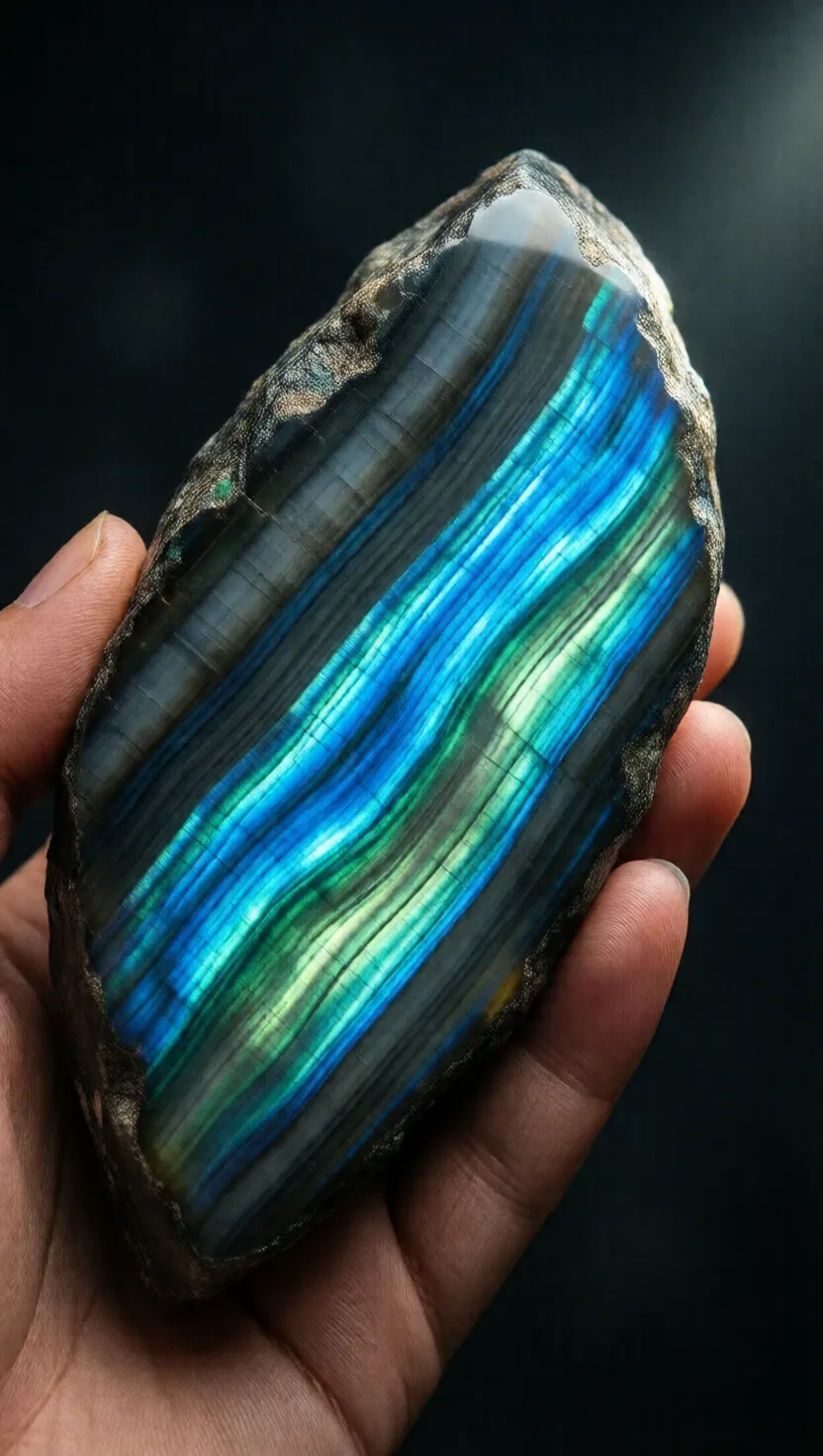
Labradorite looks like a dull grey stone until the light hits it at the right angle, and then it erupts in sweeping flashes of blue, green, gold, and violet. The fire comes from light bouncing and interfering between fine internal layers of slightly different feldspar, so the colour you see depends entirely on the angle. The richest stones, full-spectrum and named spectrolite, were found in Finland. Tilt it away and the glory vanishes back into grey.
The glitter in sunstone is buried metal

The glitter in sunstone is buried metal

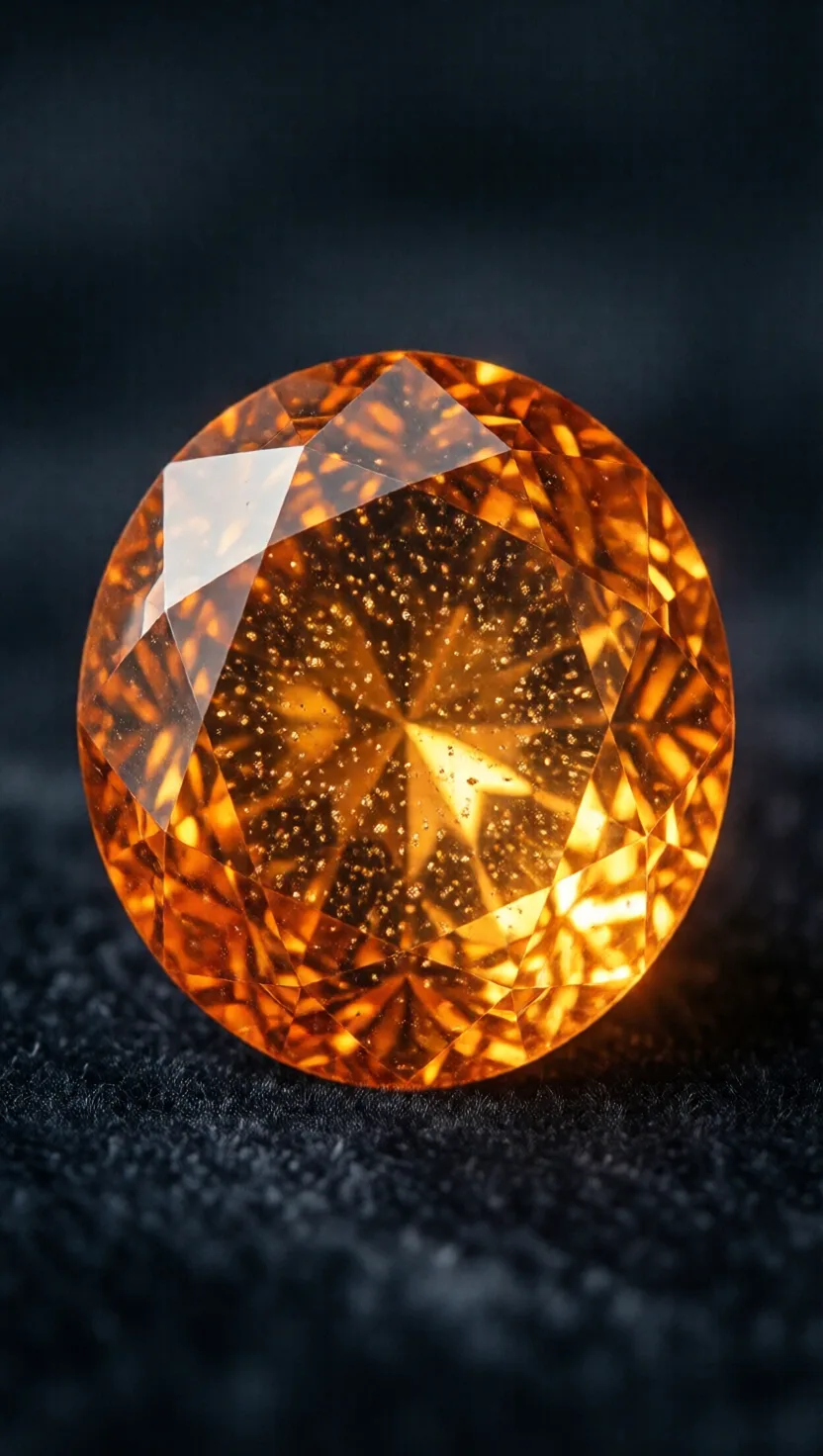
Sunstone sparkles with a warm coppery shimmer, and the secret is literally metal. As the molten feldspar cooled, it grew countless flat, microscopic flakes of copper or iron oxide, all lined up on the same planes. Light glances off these tiny mirrors and throws back a glittering spangled sheen called aventurescence. In Oregon, sunstones even hold enough copper to glow red or green, the metal frozen mid-crystal like sunken confetti.
The Moon's pale highlands are this gem's cousin

The Moon's pale highlands are this gem's cousin

When you look at the bright regions of the Moon, you are looking at almost pure feldspar. The lunar highlands are made of anorthosite, a rock built overwhelmingly from plagioclase feldspar, the same family as moonstone and labradorite. It formed when light feldspar crystals floated to the top of a global ocean of magma early in the Moon's life, creating a pale crust. The Moon's face, fittingly, is largely feldspar.
Most rainbow moonstone is secretly something else

Most rainbow moonstone is secretly something else

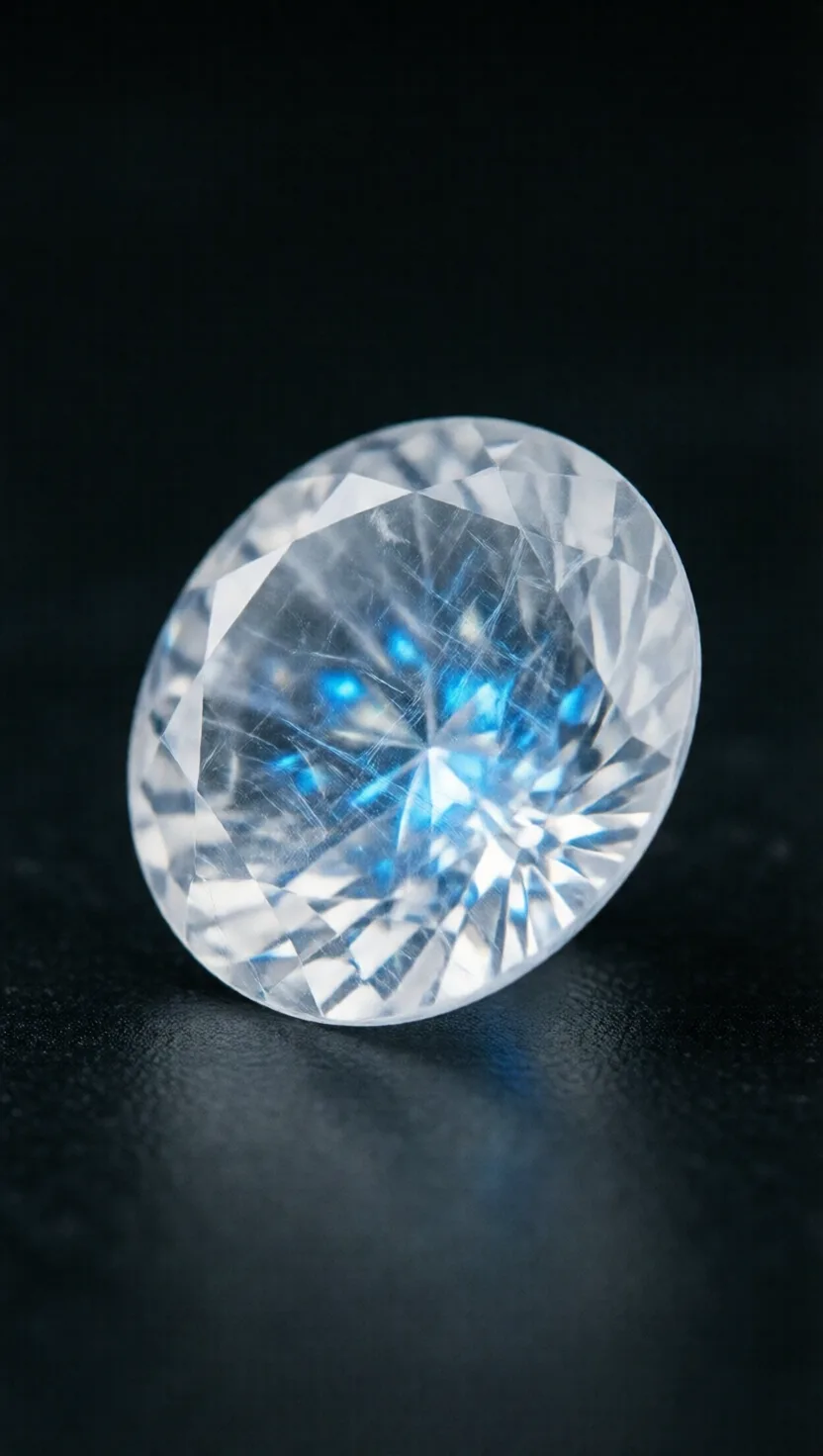
The popular gem sold as rainbow moonstone, a clear white stone shooting flashes of blue, is usually not moonstone at all. Gemologically it is a colourless variety of labradorite, showing the same angle-dependent play of light as its grey cousin rather than the soft floating glow of true moonstone. The trade name stuck because it sells, but the two glows come from related yet distinct feldspars. A beautiful, well-worn misnomer.
This blue-green gem owes its colour to lead

This blue-green gem owes its colour to lead

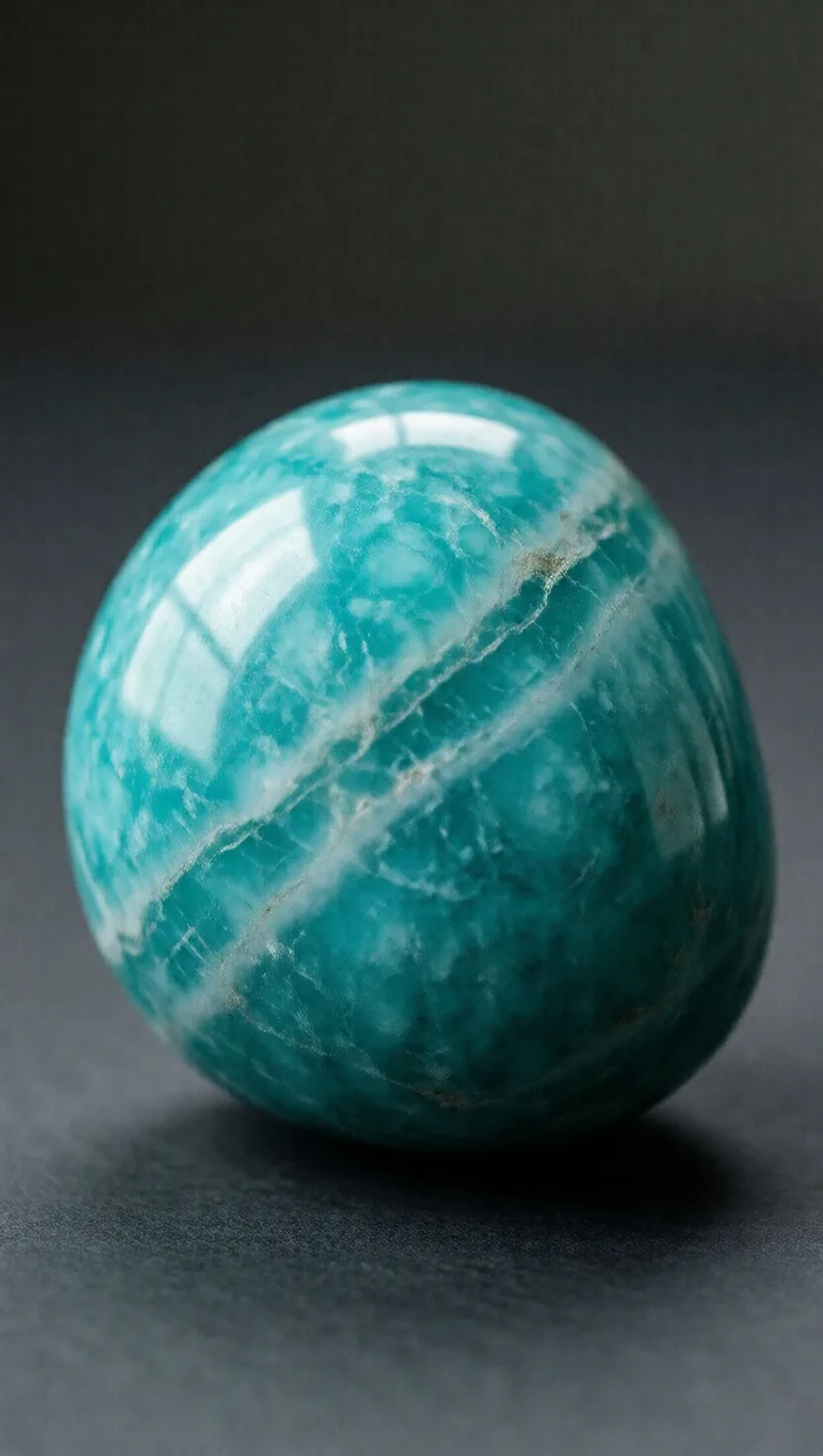
Amazonite is a vivid blue-green stone, and for a long time nobody knew why it was coloured at all. The answer turned out to be traces of lead locked in the feldspar's structure, working together with tiny amounts of water. Light striking those built-in impurities is selectively absorbed, leaving the cool turquoise hue behind. Despite the name, the gem was never found near the Amazon River; the label is yet another mineral misnomer.
Every clay pot began as this crumbling crystal

Every clay pot began as this crumbling crystal

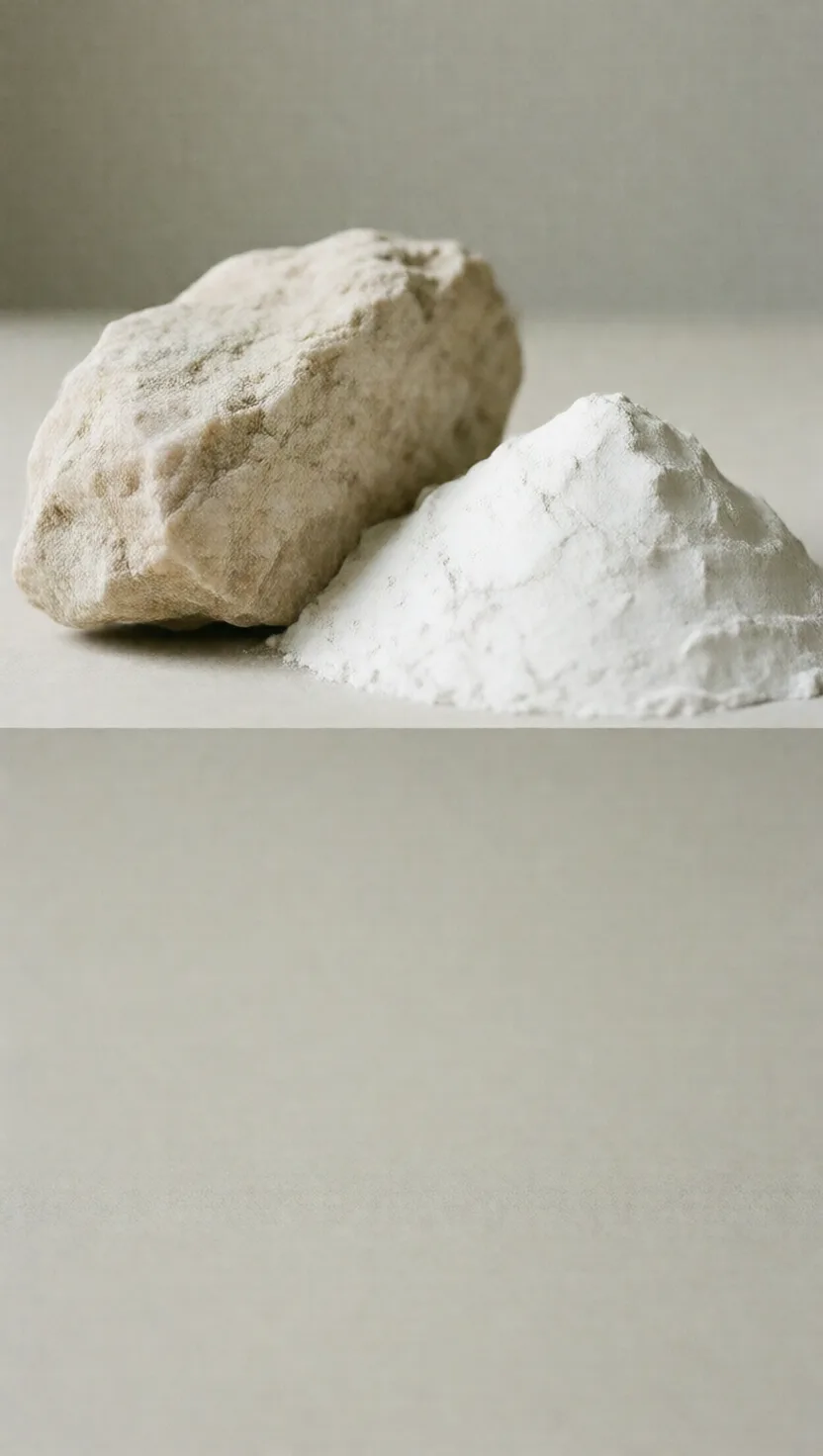
Feldspar may look permanent, but exposed to rain and air over ages it slowly breaks down, its structure rearranging into soft clay minerals such as kaolinite. That weathered feldspar is the raw clay of the world: the white kaolin behind fine porcelain, the mud of riverbanks, the body of every fired pot. The same mineral that glitters as a gem in one form quietly becomes, in another, the earth we shape with our hands.
tap →swipe ↑ for depthswipe ↓ to exit