Eight things hiding in a soap film

DC·217 Deep Cuts
A bubble's wall is thinner than light's wavelength

A bubble's wall is thinner than light's wavelength

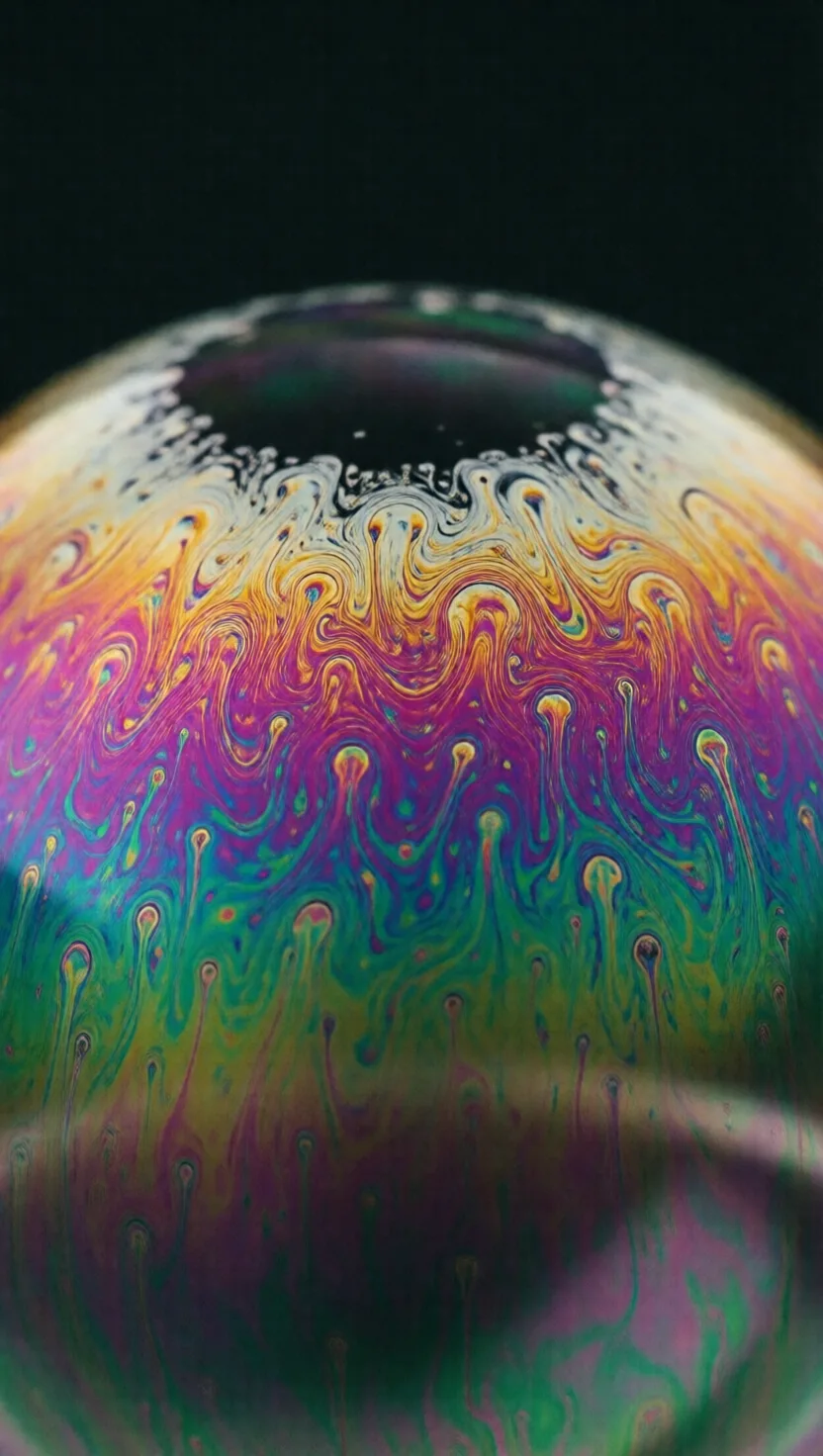
The colours swimming across a soap bubble are not dye. They come from light bouncing off both the outer and inner faces of the film and interfering with itself, and the shade depends entirely on the film's thickness. As gravity drains the liquid downward, the top thins until it is only ten to twenty nanometres across, far thinner than a wave of visible light. There the reflections cancel completely and a black patch appears, the silent warning that the bubble is about to burst.
A bubble is the laziest shape in nature

A bubble is the laziest shape in nature

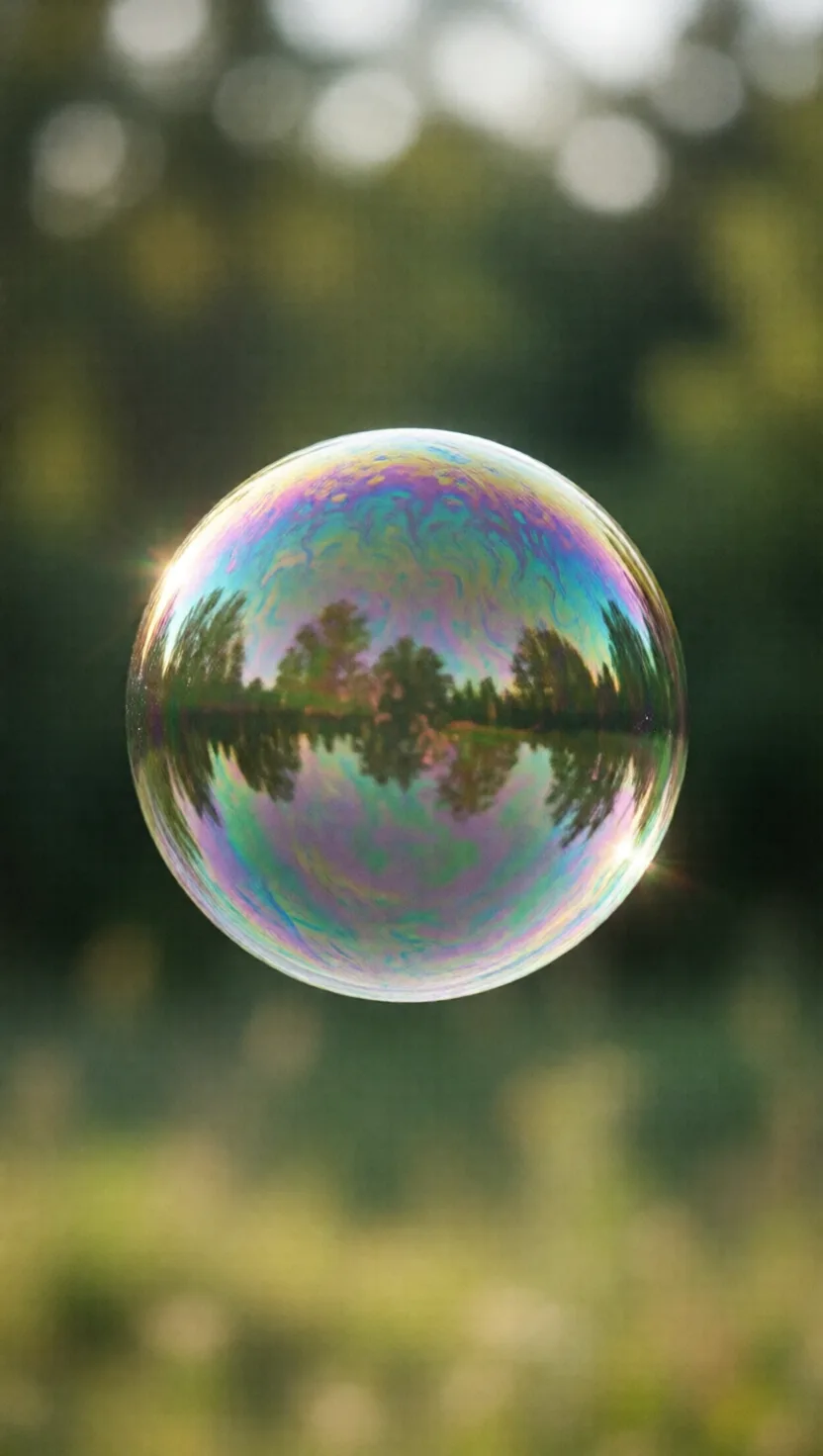
A free-floating bubble is always a sphere, and there is a deep reason. The film holds energy in proportion to its surface area, and like everything in nature it settles into the lowest-energy state it can find. For any fixed amount of trapped air, the sphere is the one shape with the least possible surface area, so surface tension squeezes the film down to that perfect ball. Mathematicians proved the same truth abstractly; a bubble simply solves it instantly.
Foam obeys a strict 120-degree rule

Foam obeys a strict 120-degree rule

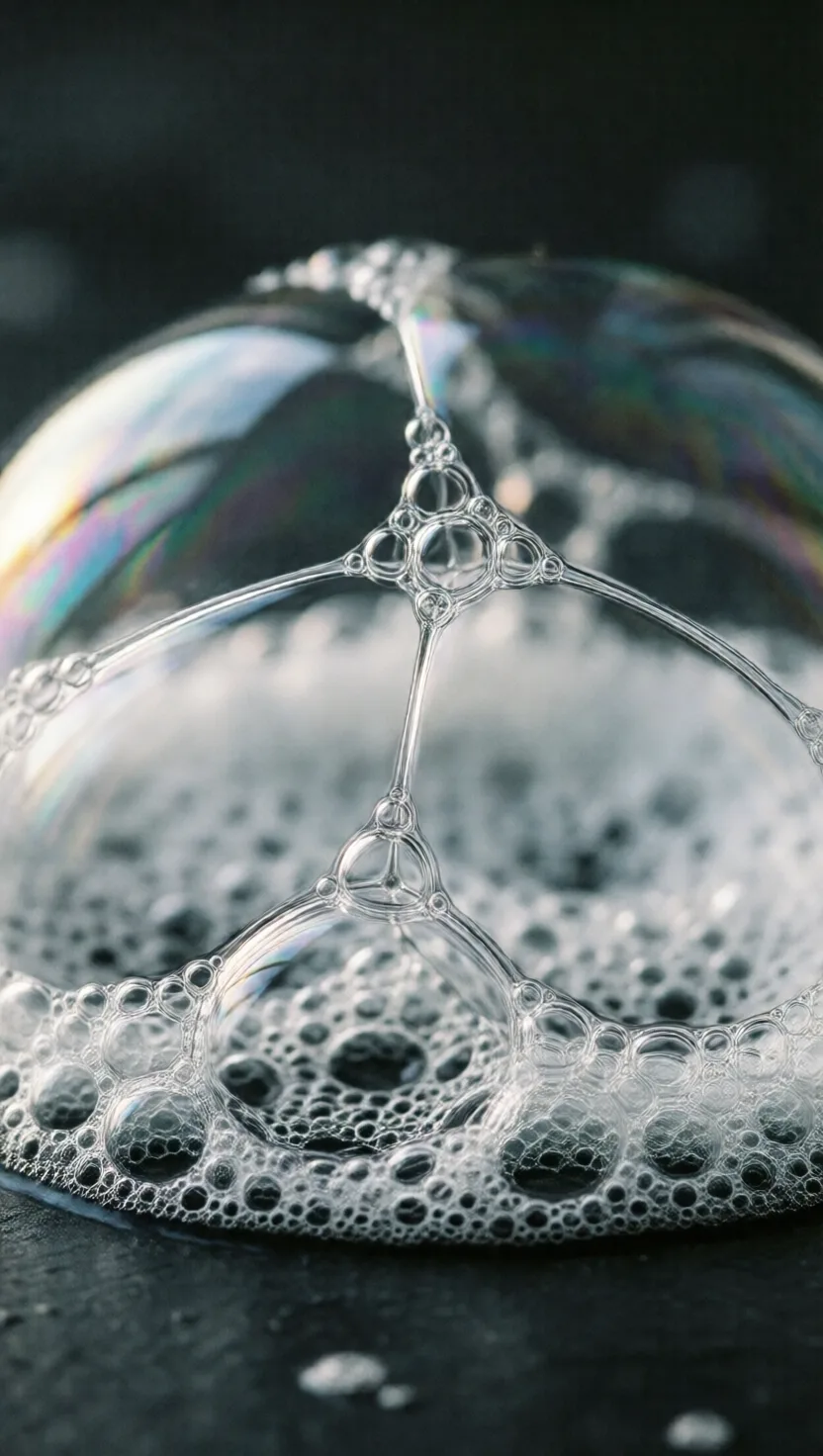
Pile up bubbles and the walls do not meet randomly. Soap films always join exactly three at a time along an edge, and those three meet at precisely 120 degrees. Where edges themselves cross, they come together in fours at about 109.5 degrees, the same angle that points to the corners of a tetrahedron. A Belgian physicist worked these laws out in the 1800s, and every head of foam on Earth still obeys them.
Dip a wire cube and the film does math

Dip a wire cube and the film does math

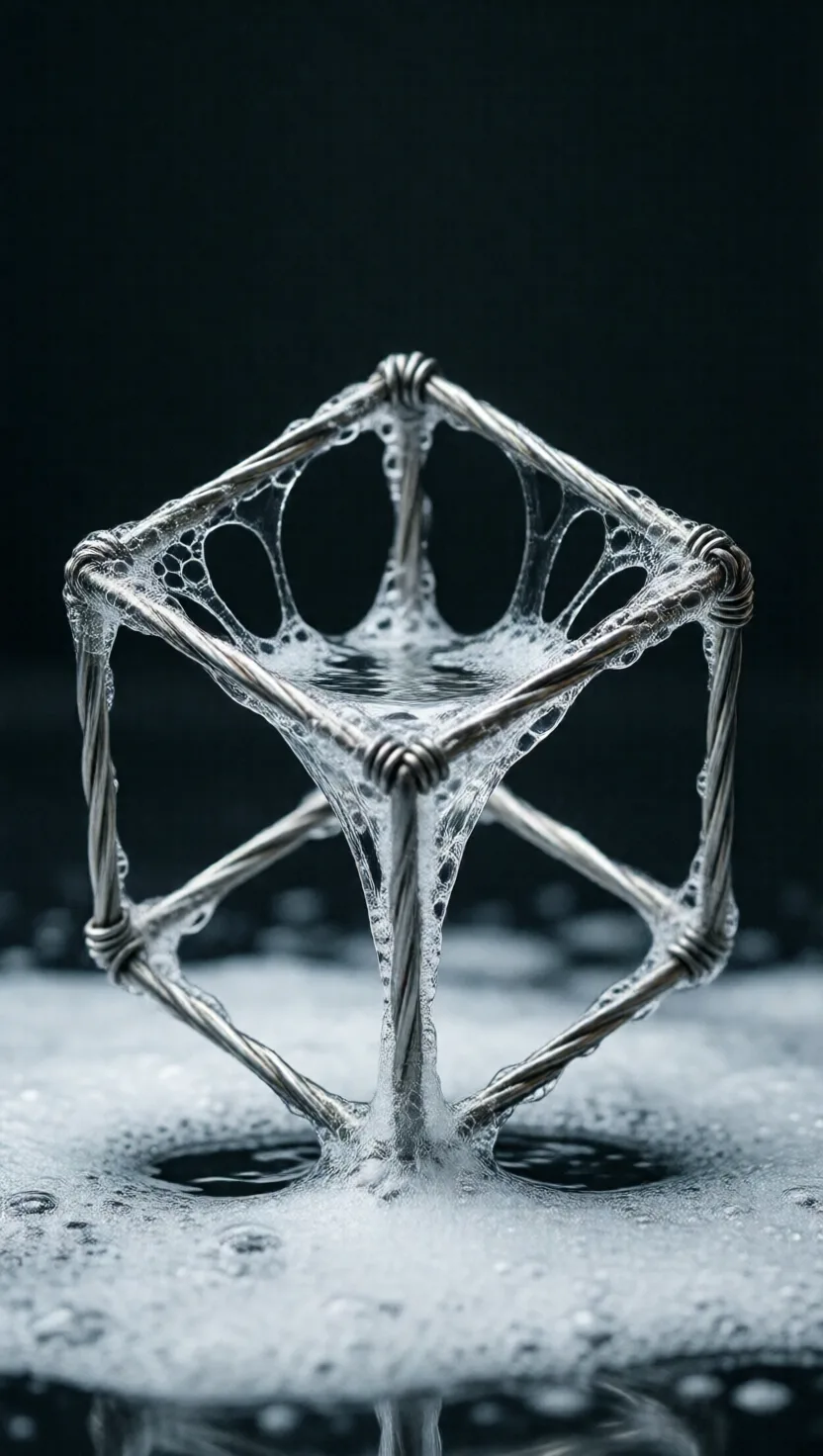
Stretch a soap film across a bent wire frame and it instantly pulls itself into the smallest surface that can span those edges, because surface tension always shrinks the film to minimum area. Engineers exploit this: dip a frame of pins between two plates and the film snaps into the shortest possible network linking them, solving in a heartbeat a problem that can take computers real effort. The film is a tiny, wet analogue computer.
Soap cuts water's skin to a third

Soap cuts water's skin to a third

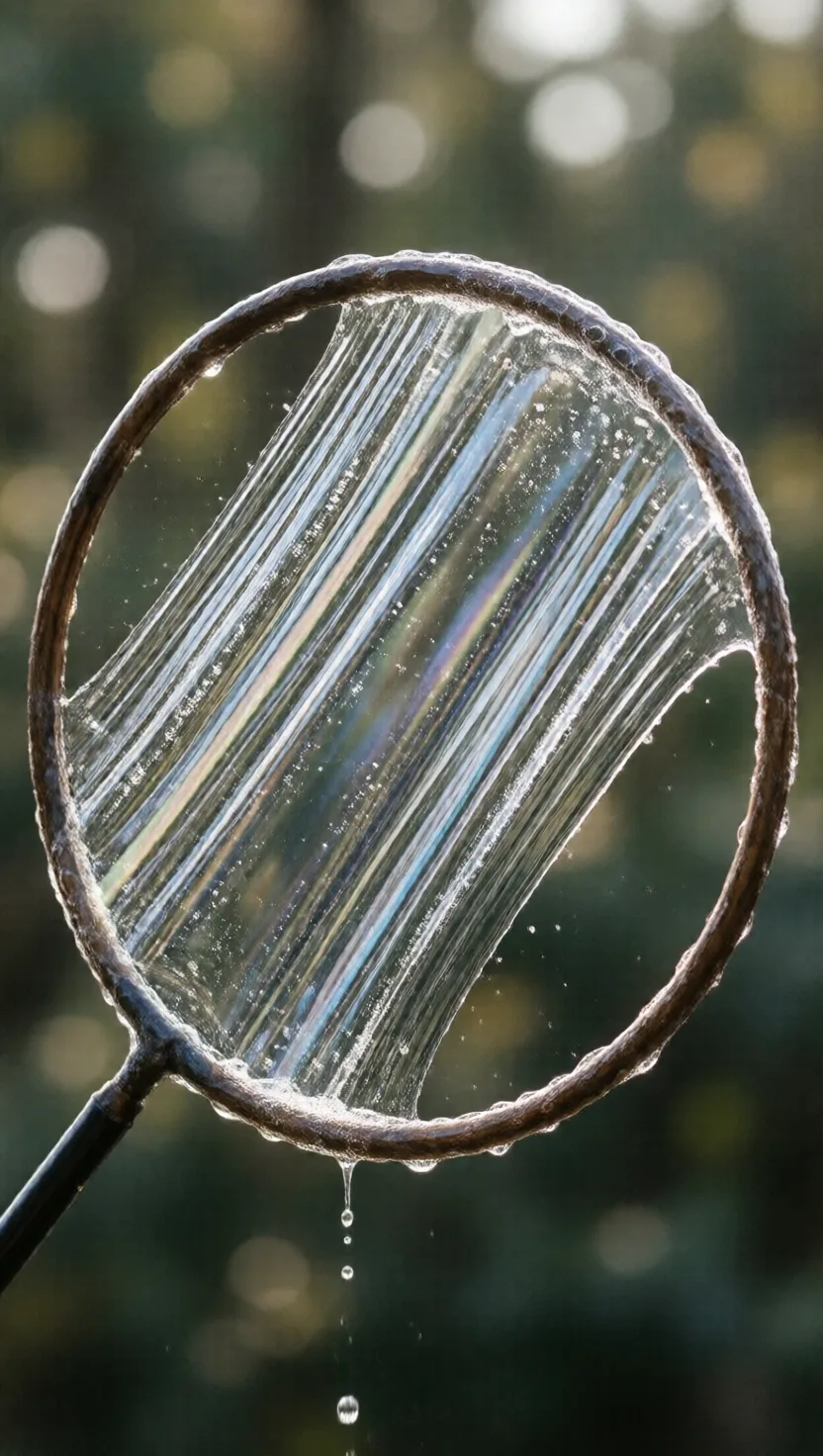
Water has a surprisingly tough surface, a tension of about 72 millinewtons per metre that lets insects stand on ponds. Soap molecules are built with a water-loving head and a water-fearing tail, so they crowd to the surface and jam apart the water molecules that were clinging together. That drops the surface tension to roughly 25 to 30 millinewtons per metre, about a third of its bare value, which is exactly why soapy water can stretch into a film thin enough to make a bubble.
A bubble can freeze into a glass dome of ferns

A bubble can freeze into a glass dome of ferns

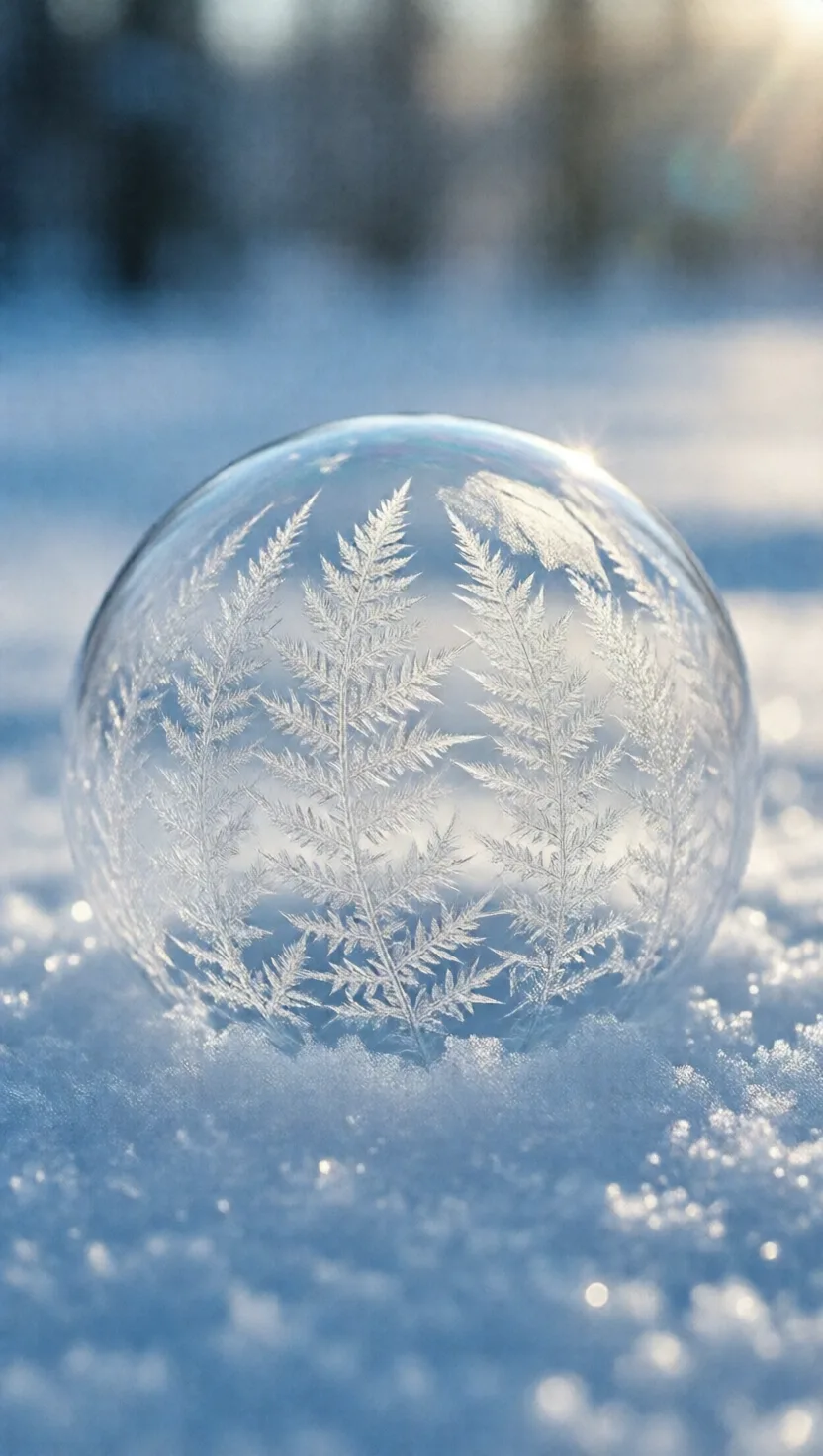
Blow a bubble in deep cold and it does not simply pop. Ice begins to nucleate at the base and races up the film in glittering fern-shaped crystals that swirl as they grow. Researchers found a tiny snow-globe effect at work: flecks of ice break loose and drift inside the film, carried by gentle currents driven by temperature differences across the surface. In seconds the whole sphere stiffens into a frosted glass dome.
A bursting bubble outruns your eye

A bursting bubble outruns your eye

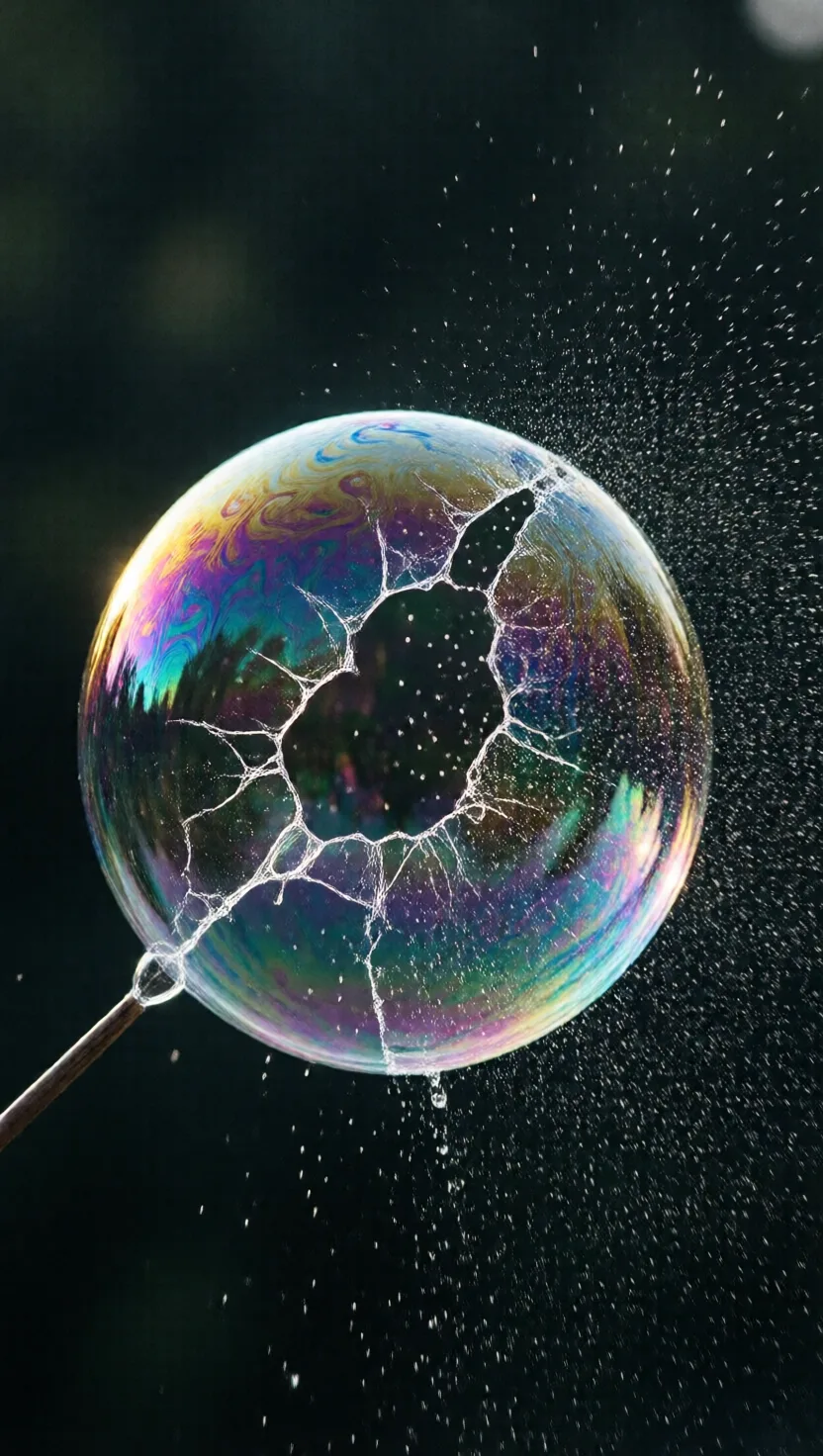
When a bubble pops, the film does not shatter so much as unzip. A hole appears and its rim retracts outward at several metres per second, governed by a tidy law that pits surface tension against the inertia of the liquid the rim sweeps up. The thinner the film, the faster the edge flees. The entire collapse is over in a few milliseconds, gathering the film into a ring of tiny flung droplets long before you can register that it has gone.
There are bubbles that sink instead of float

There are bubbles that sink instead of float

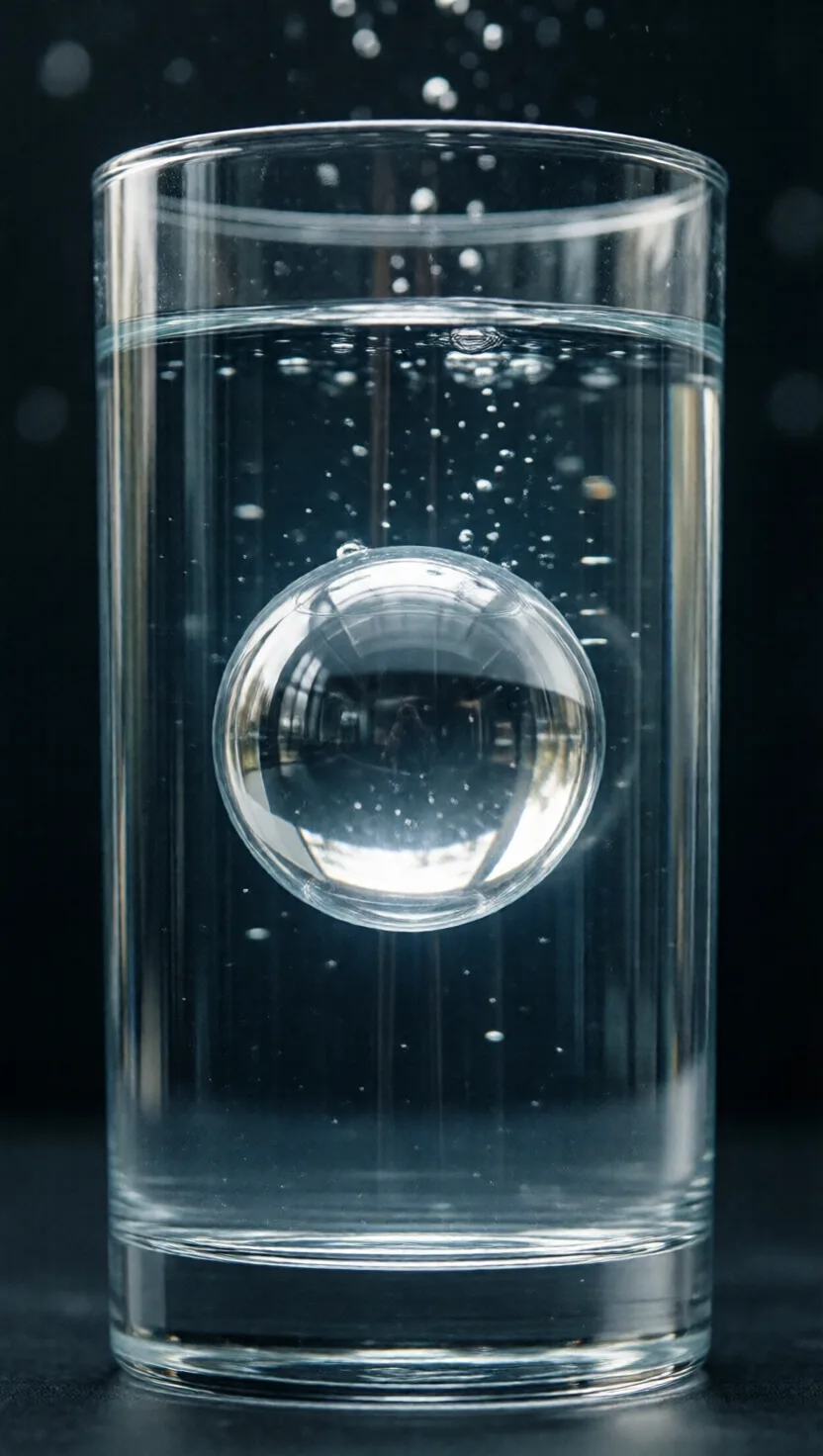
Turn a bubble inside out and you get an antibubble: not a skin of liquid wrapping air, but a droplet of liquid wrapped in a thin shell of air, sitting submerged in more liquid. Because it is almost entirely water with only a wisp of trapped air, it does not rise; it hangs or sinks, shining like a tiny silver ball as light glances off its air shell. When the film finally drains, it quietly merges back into the liquid around it.
tap →swipe ↑ for depthswipe ↓ to exit