Eight things the sky does with light and water

DC·185 Deep Cuts
A rainbow is a full circle you can't reach

A rainbow is a full circle you can't reach

A rainbow isn't an arc fixed in the sky, it's a circle of light always centred on the point exactly opposite the sun, and always about 42 degrees out from that centre. The ground cuts the circle into an arc; from a high plane you can see the whole ring. And because it depends on where you stand, it has no fixed place, walk toward it and it walks away, keeping the same distance forever.
The dark sky between two rainbows

The dark sky between two rainbows

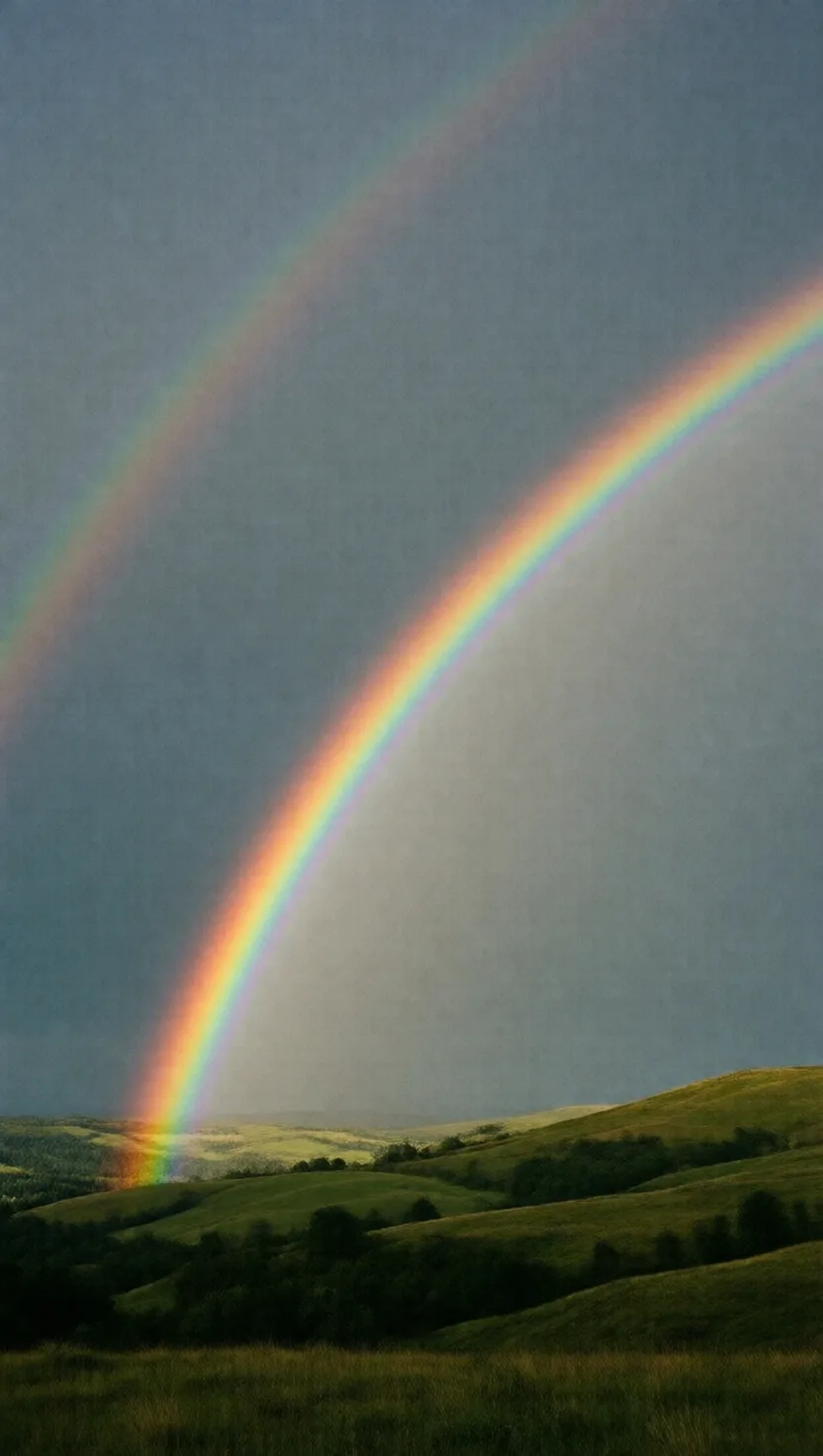
When a second, fainter rainbow appears outside the first, look at the sky between them: it is noticeably darker than the sky beyond. Raindrops send the primary bow's light inward and the secondary bow's light outward, but almost none into the gap between, so that band of sky is starved of light. It was described around 200 AD and still carries the name of the man who noticed it, Alexander of Aphrodisias.
The faint stripes that proved light is a wave

The faint stripes that proved light is a wave

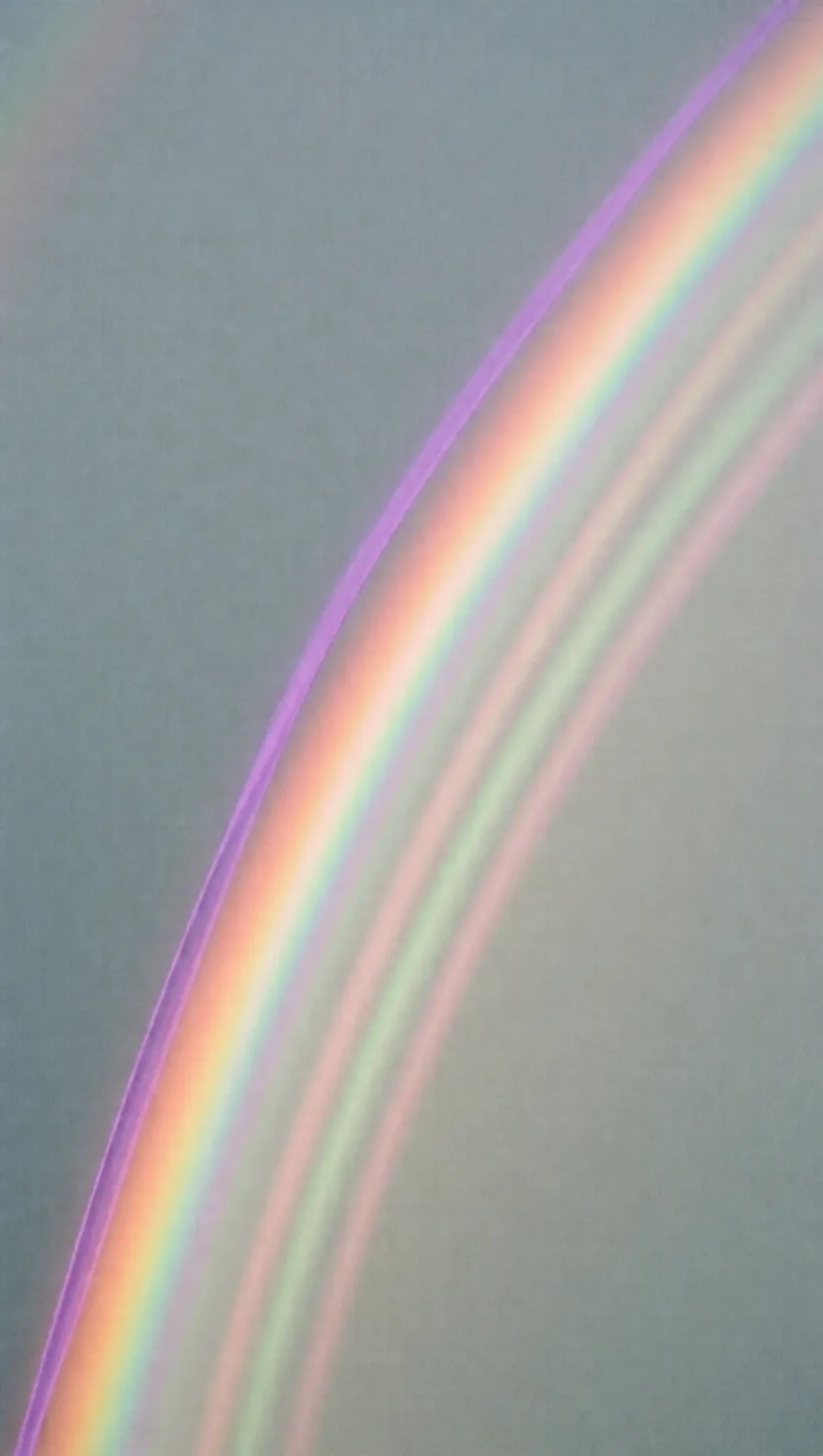
Beneath a rainbow's violet edge you sometimes see extra fringes, soft bands of pink and green that don't belong to the usual order. They appear only when raindrops are all nearly the same tiny size, and they form because light waves taking slightly different paths through a drop interfere, reinforcing in places and cancelling in others. In 1804 these faint stripes gave Thomas Young his first evidence that light travels as a wave.
Rainbow rings around your own shadow

Rainbow rings around your own shadow

From a mountaintop or a plane window, look at your shadow cast on cloud or mist below: it may be ringed with concentric bands of coloured light, red on the outside and blue within. This is a glory, sunlight that enters tiny, equal-sized droplets, bounces off their far sides, and comes almost straight back toward you, bending around each drop. On a peak, the magnified shadow inside it is called a Brocken spectre.
A ring around the sun warns of rain

A ring around the sun warns of rain

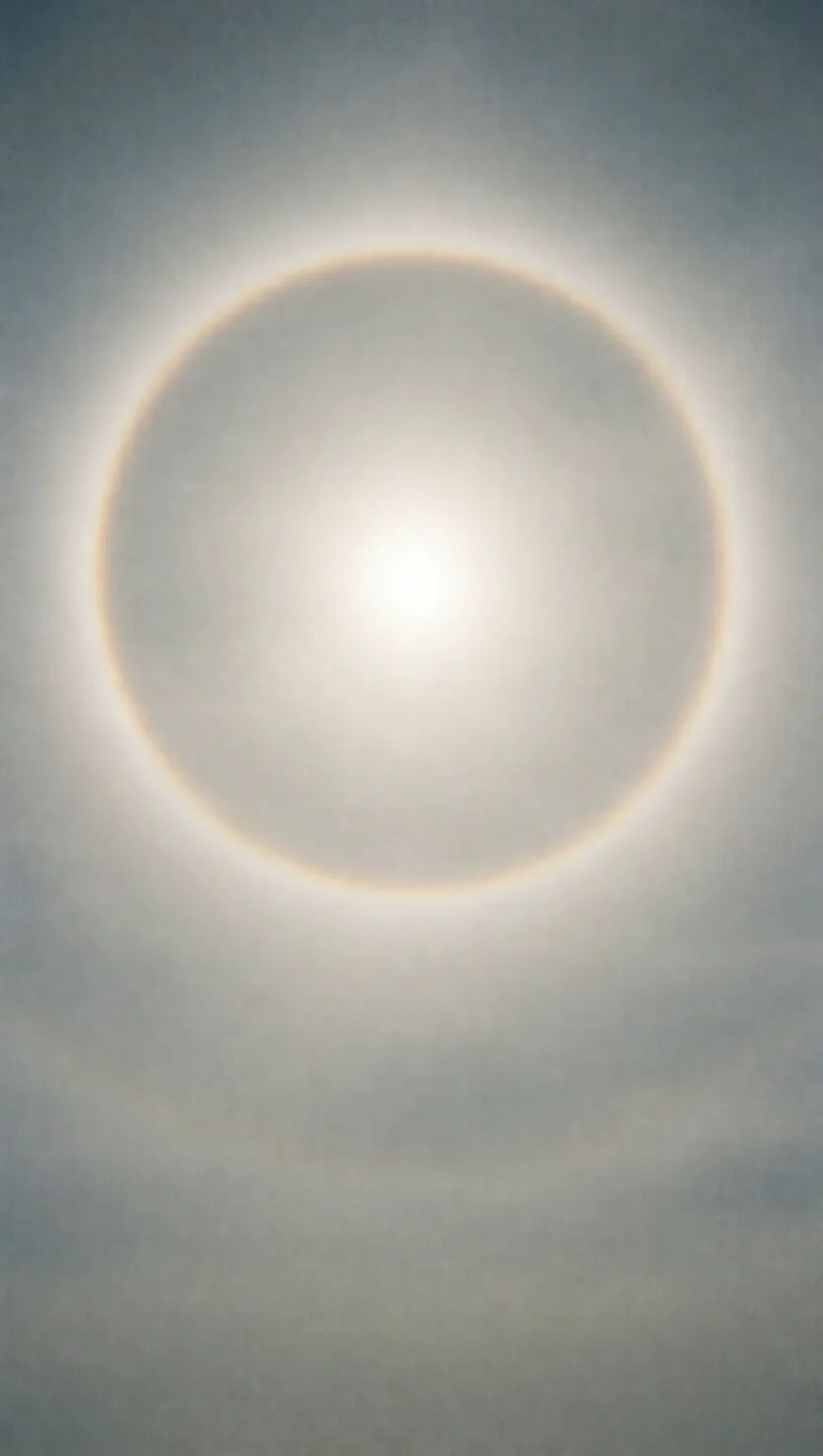
A pale luminous ring circling the sun or moon is the 22-degree halo, made by millions of six-sided ice crystals drifting in high, thin cloud. Each crystal bends light like a tiny prism, and the geometry sends most of it out at 22 degrees, drawing a ring of that exact radius. Those high clouds often ride ahead of a warm front, which is why a ring around the sun has long been read as a sign of coming rain.
The two false suns beside the sun

The two false suns beside the sun

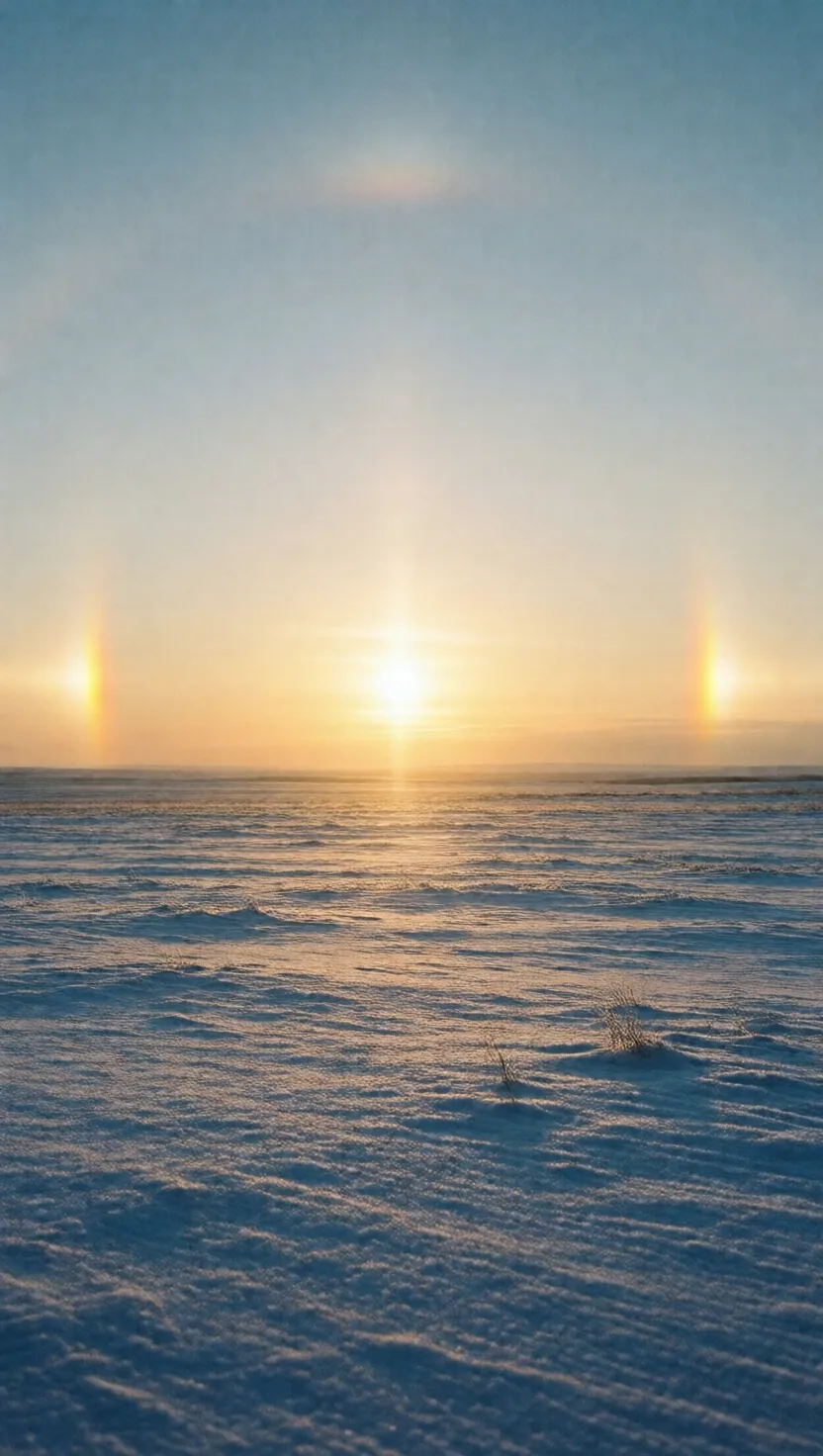
On cold clear days a pair of bright, faintly coloured spots can flank the sun, one to each side, level with it and about 22 degrees away. These are sun dogs, made by flat, plate-shaped ice crystals drifting down through the air like tiny falling leaves, all lying nearly horizontal. Each acts as a prism, and together they paint two mock suns, red on the side facing the sun, fading to pale blue.
The ghostly white rainbow in fog

The ghostly white rainbow in fog

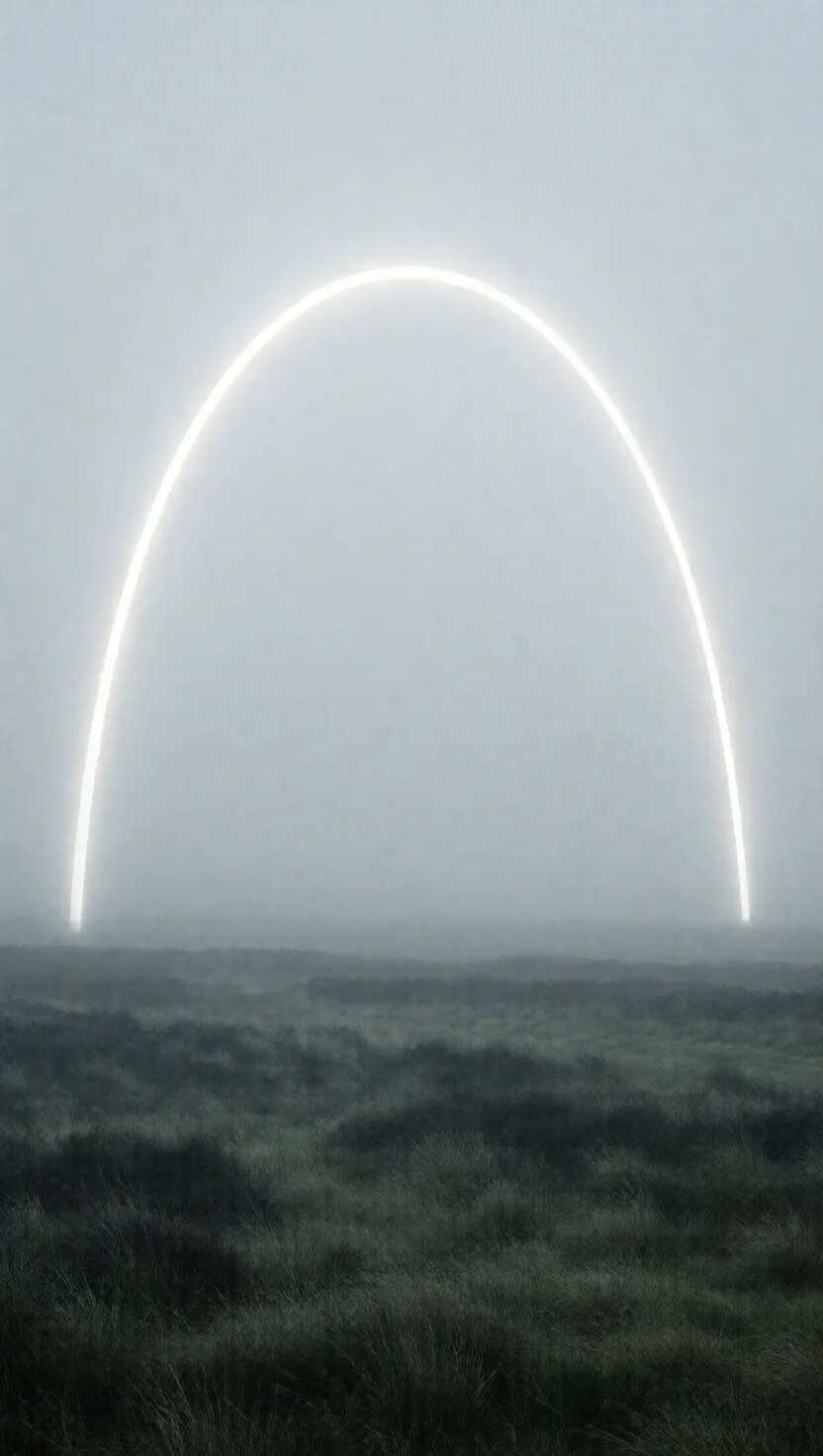
A fogbow looks like a rainbow drained of colour, a broad, pale arch of near-white light in fog or mist. The cause is size: fog droplets are tiny, often under a twentieth of a millimetre, too small to split sunlight cleanly. Instead of refracting into sharp colours, the light diffracts and smears the bands together, leaving a faint, wide bow that glows almost ghostly white.
The all-red rainbow of sunset

The all-red rainbow of sunset

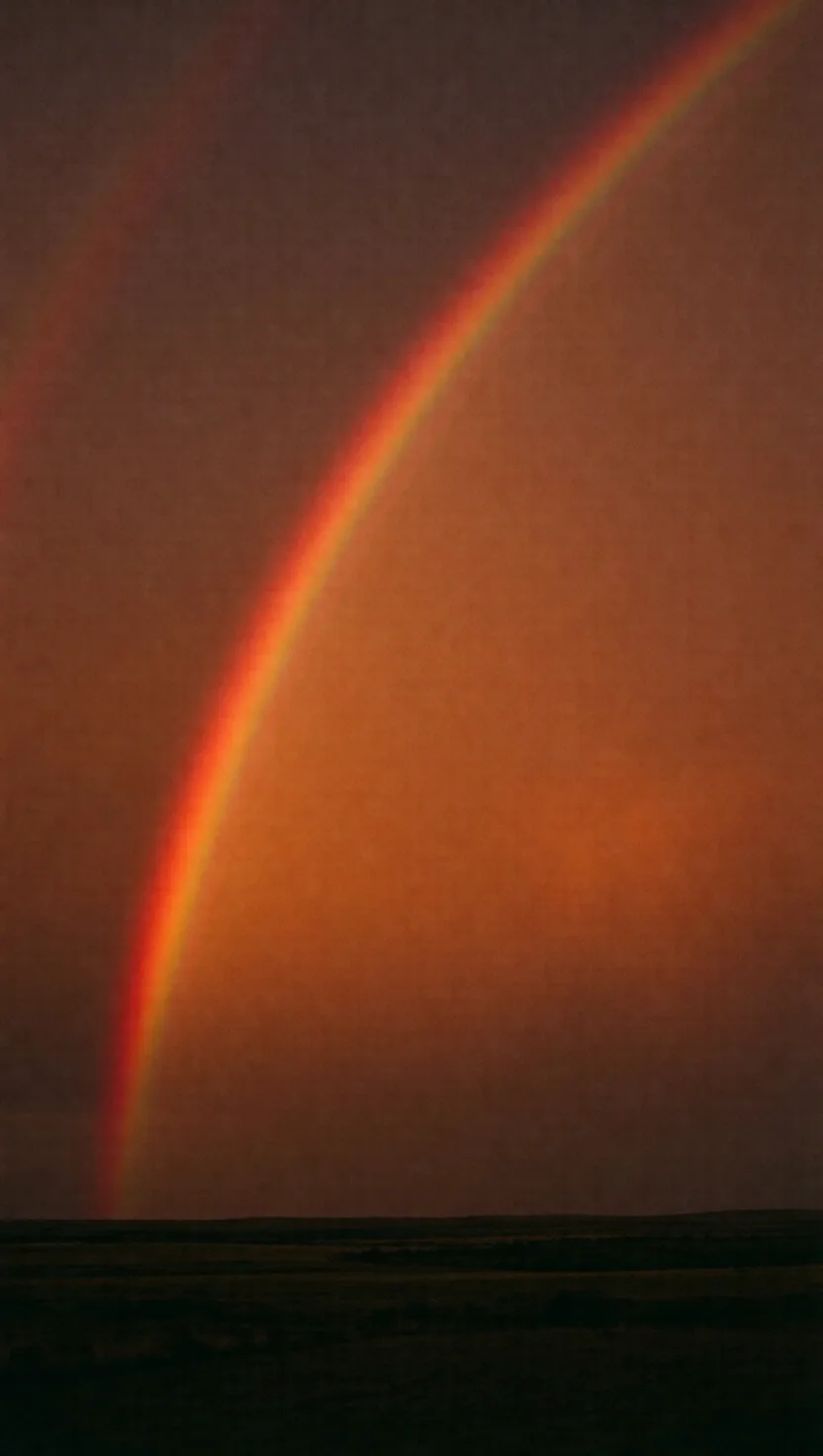
At sunrise or sunset, with the sun nearly on the horizon, a rainbow can turn a single deep red. The sunlight has skimmed a long path through the atmosphere, which scatters away the blue, green, and yellow before the light ever reaches the raindrops, leaving only red to be bent into a bow. Narrow and short-lived, a monochrome red rainbow appears only when the sun sits within a couple of degrees of the horizon.
tap →swipe ↑ for depthswipe ↓ to exit