Eight things a ring of teeth can do

DC·114 Deep Cuts
A 2,000-year-old bronze box did astronomy with gears

A 2,000-year-old bronze box did astronomy with gears

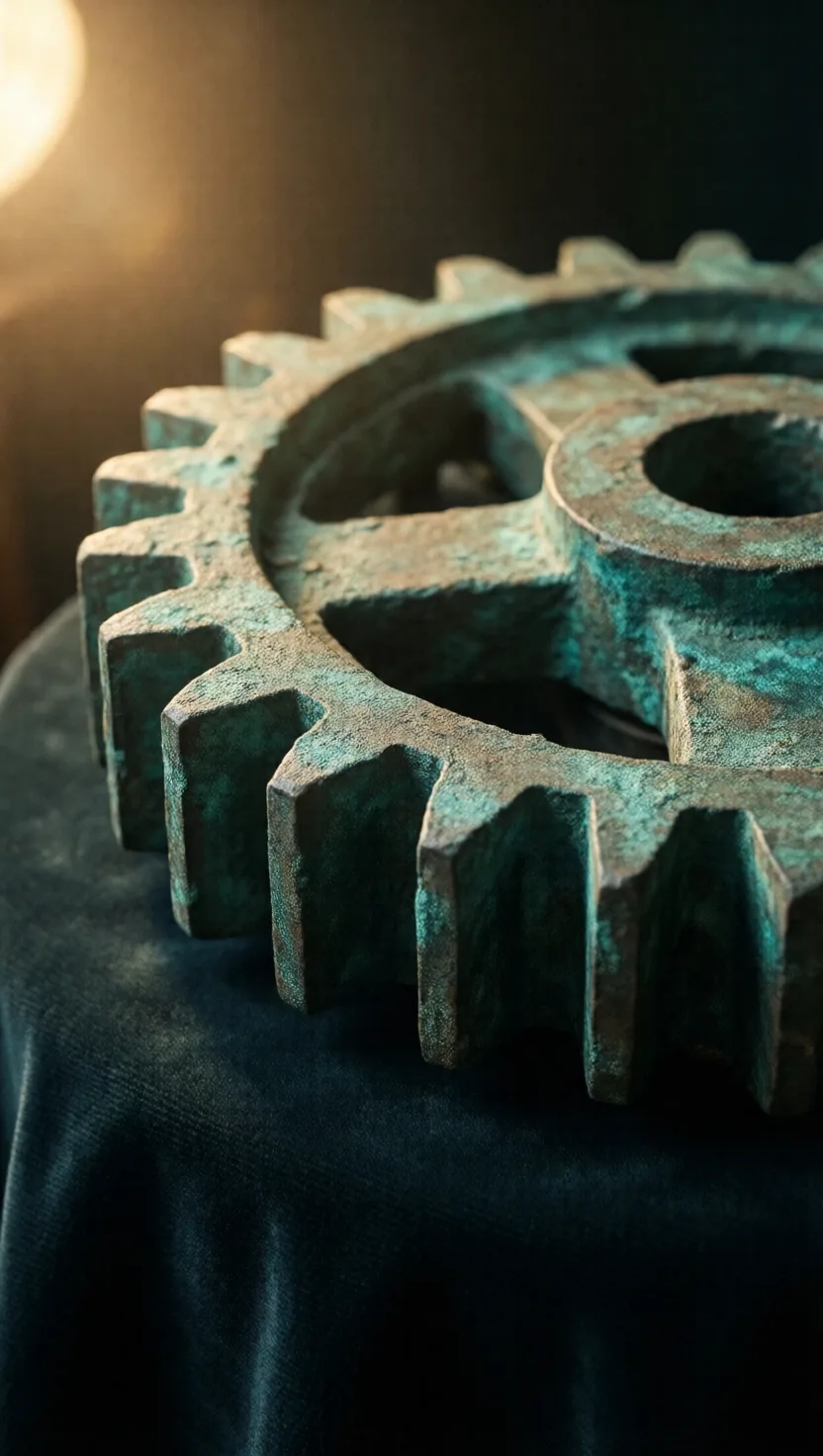
Recovered from a shipwreck off Antikythera, this hand-cranked bronze device is the oldest known geared machine. Behind its dials sit at least 30 surviving gears, and reconstructions suggest more. A spiral dial spanning 223 lunar months let it forecast eclipses years ahead, while another tracked the four-year cycle of athletic games. Built around 100 BC, nothing of comparable gearing complexity is known again for roughly 1,400 years.

One insect grows real meshing gears, then sheds them

One insect grows real meshing gears, then sheds them

The nymph of a small planthopper has a strip of interlocking gear teeth at the top of each hind leg, with 10 to 12 tapered teeth along a strip about 400 micrometers long. The gears lock the two legs together so they fire within a fraction of a millisecond of each other, launching the jump straight instead of into a spin. Described by Burrows and Sutton in Science in 2013, these are the first true functional gears found in nature, and they vanish at the final molt into adulthood.
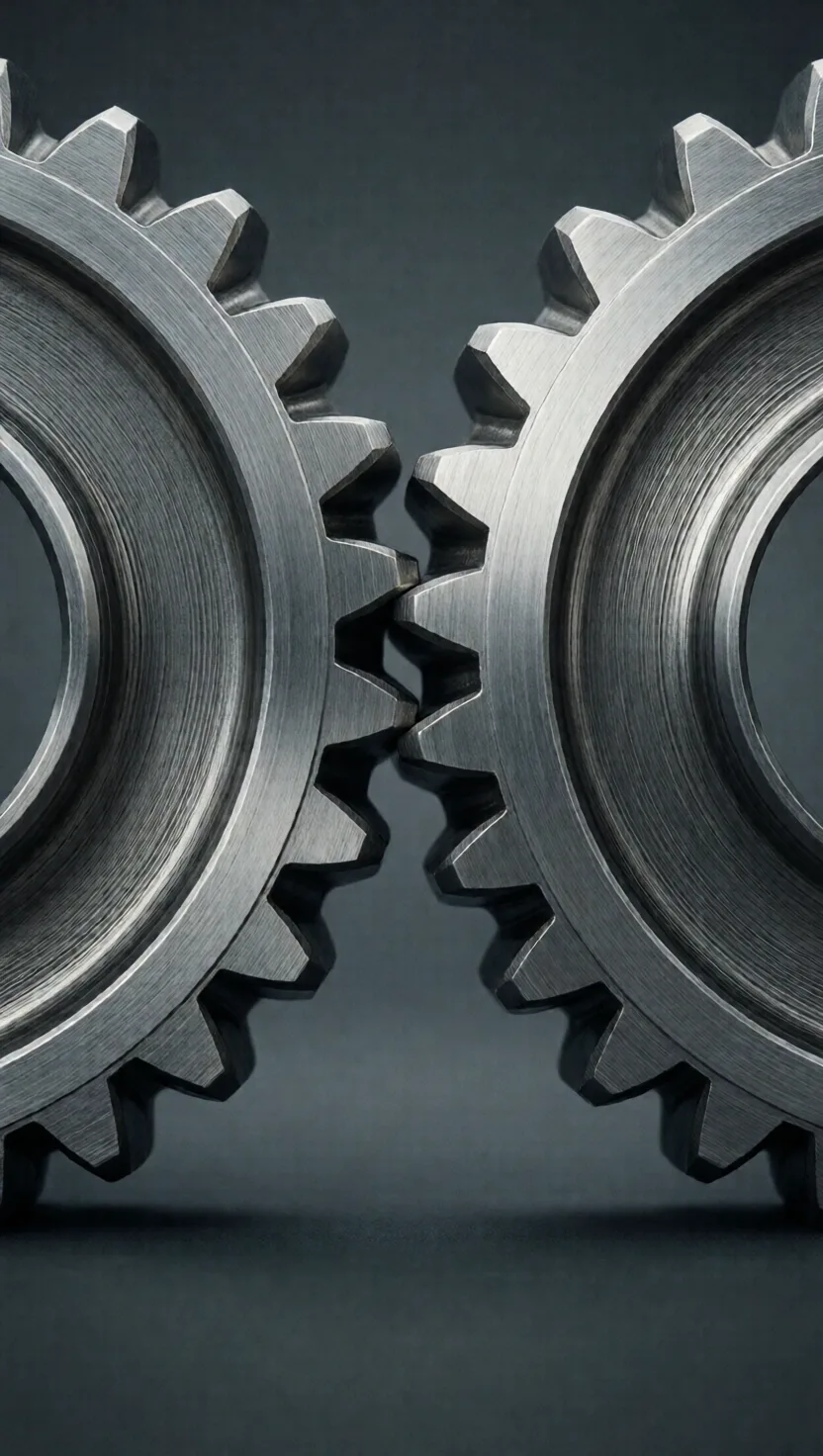
Gear teeth are curved so they roll, not scrape

Gear teeth are curved so they roll, not scrape

Most modern gear teeth follow an involute curve, the shape traced by unwinding a taut string from a circle. This geometry keeps the contact force pointed along one straight line, so the driven gear turns at a perfectly constant speed ratio through the whole mesh instead of surging. A bonus: the ratio holds even if the two gears are set slightly too far apart, which forgives manufacturing error. The profile traces to Leonhard Euler in the 18th century.
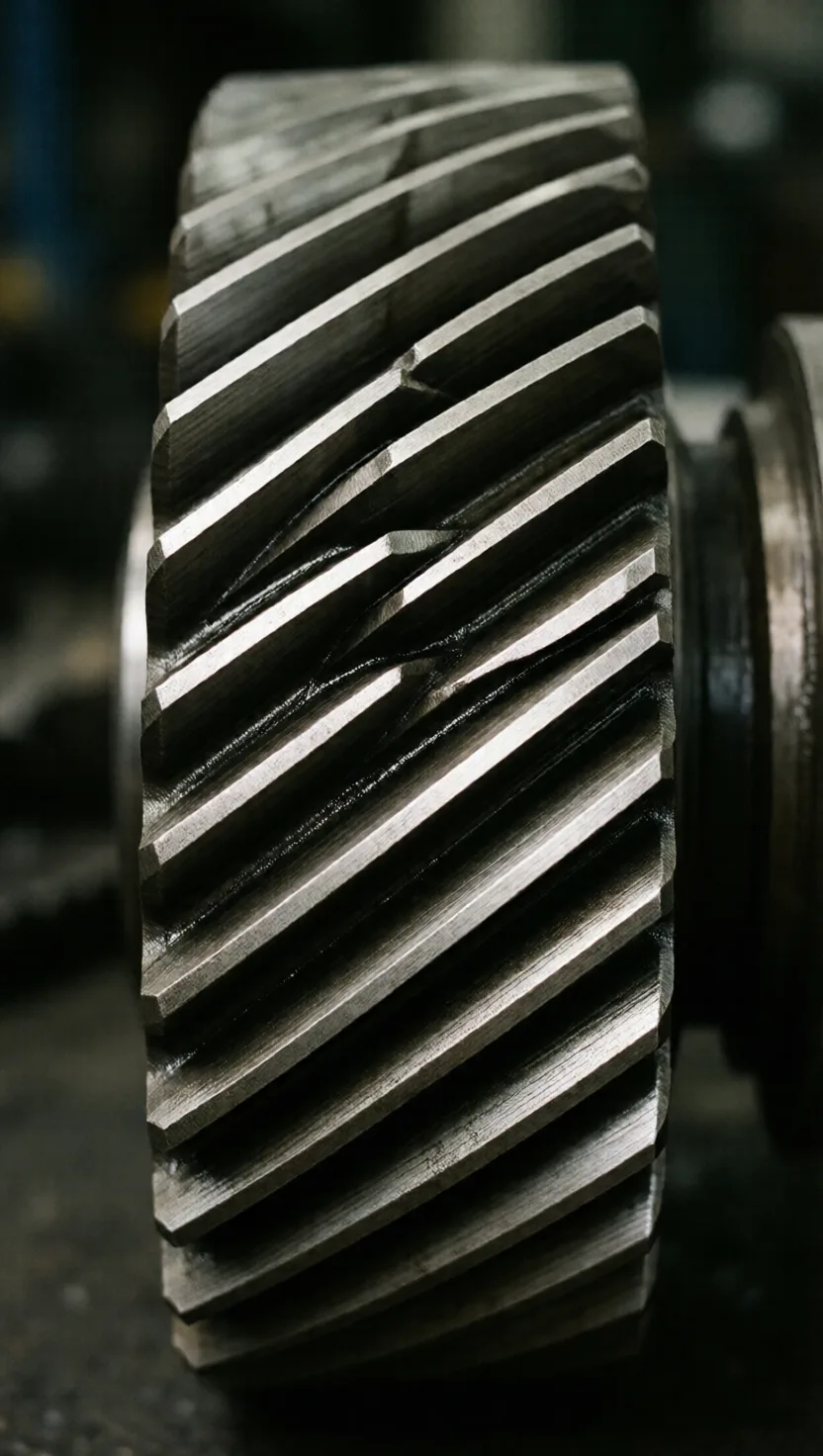
Two leaning tooth rows that cancel their own sideways shove

Two leaning tooth rows that cancel their own sideways shove

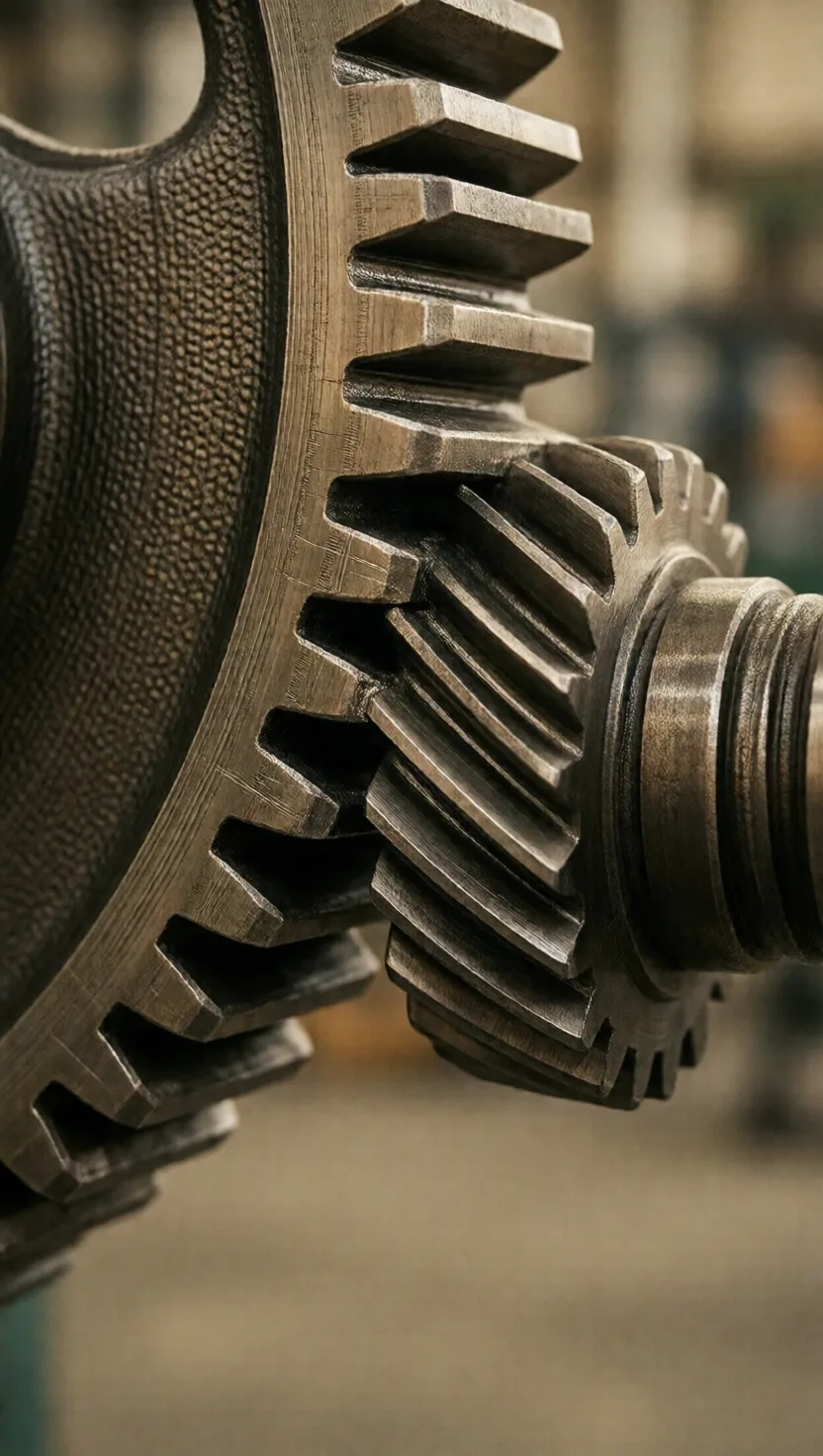
A single helical gear, with teeth cut at a slant, runs smoothly and quietly, but the slant pushes the shaft sideways along its axis, a force the bearings must fight. A herringbone gear puts two opposite-handed slants side by side, forming a V. Each half pushes the shaft the opposite way, so the axial forces cancel to nearly zero, removing the need for heavy thrust bearings while keeping the quiet, gradual tooth engagement.
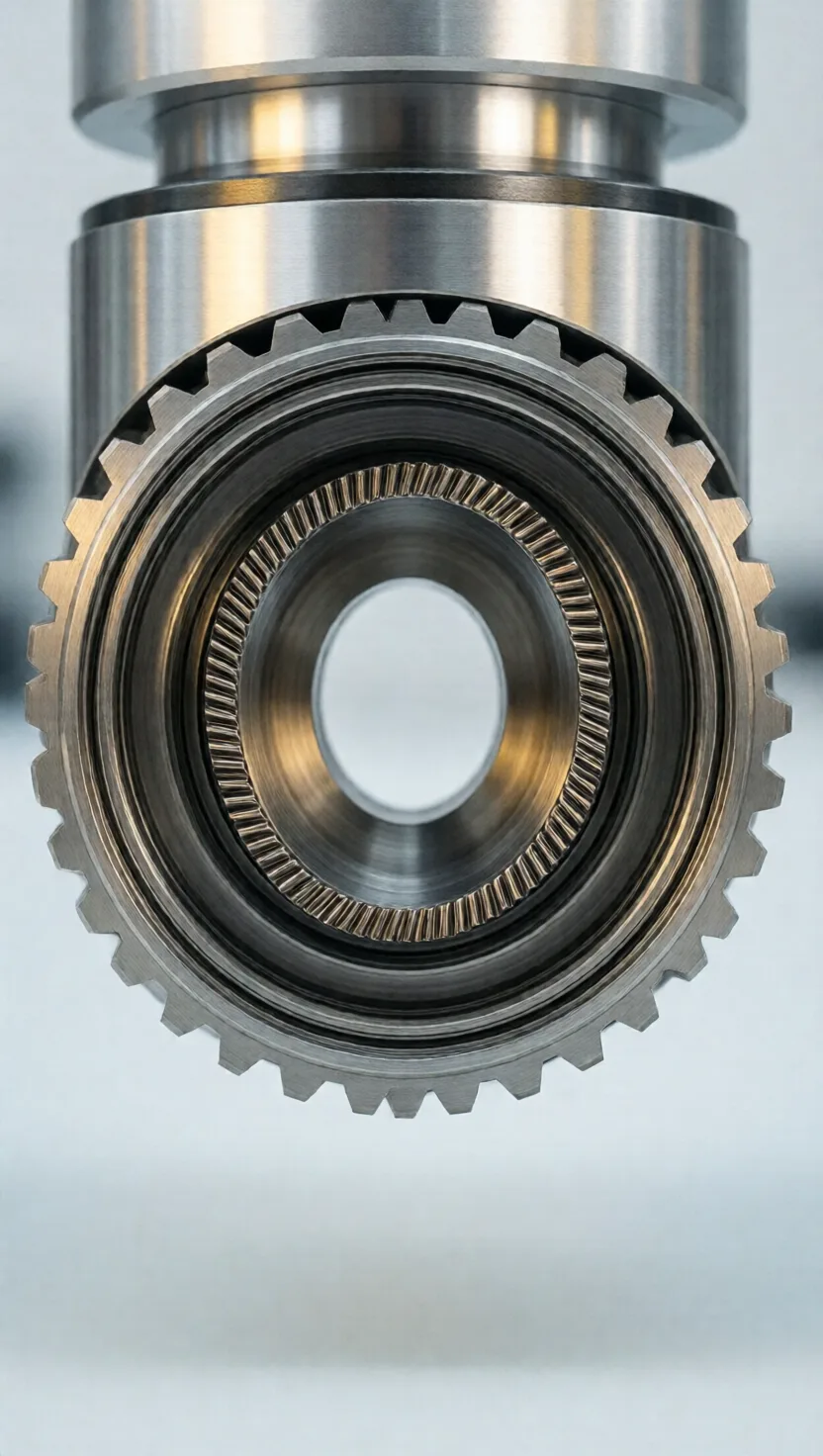
A gear that works by flexing, with almost no wobble

A gear that works by flexing, with almost no wobble

A strain-wave gear has a thin steel cup whose outer teeth are squeezed into an oval by a rotating plug inside, so they mesh with a rigid outer ring at just two points. Because the flexing cup carries two fewer teeth than the ring, one full turn of the plug nudges the cup backward by only those two teeth, giving single-stage reductions from about 30:1 to 320:1 with near-zero backlash. That precision is why it drives robot joints and flew on the 1971 lunar rover.
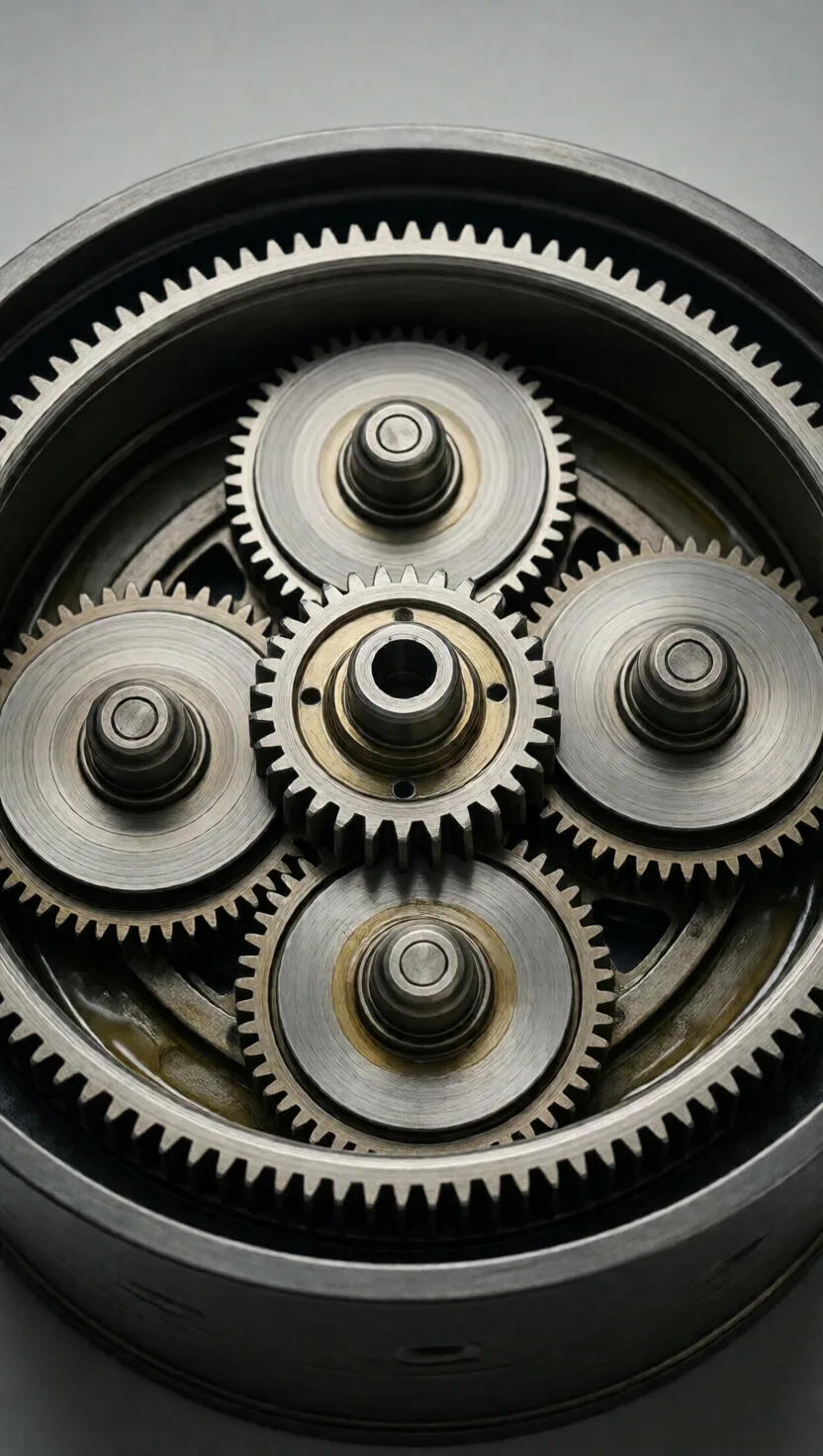
Small gears orbiting a center share the strain

Small gears orbiting a center share the strain

In a planetary gearset, several small gears orbit a central sun gear inside a toothed ring. Typically three or more planets mesh at once, so each carries only a fraction of the torque, letting a compact unit handle far more power than a single pair of gears its size. Stacking stages multiplies the reduction past 100:1 while keeping input and output on the same axis, which is why these sit inside cordless drills, car transmissions, and wind-turbine hubs.
Engineers pick odd tooth counts so gears wear evenly

Engineers pick odd tooth counts so gears wear evenly

If two meshing gears have tooth counts that share a common factor, the same teeth keep meeting the same partners, so any rough or chipped tooth hammers its mates and wear concentrates. Choosing tooth counts with no common factor, often a prime number, makes every tooth eventually meet every tooth on the other gear before the pattern repeats. This hunting-tooth design spreads contact and wear across the whole set, quietly extending the life of heavy drives.
Mills cut gear teeth from fruitwood for a reason

Mills cut gear teeth from fruitwood for a reason

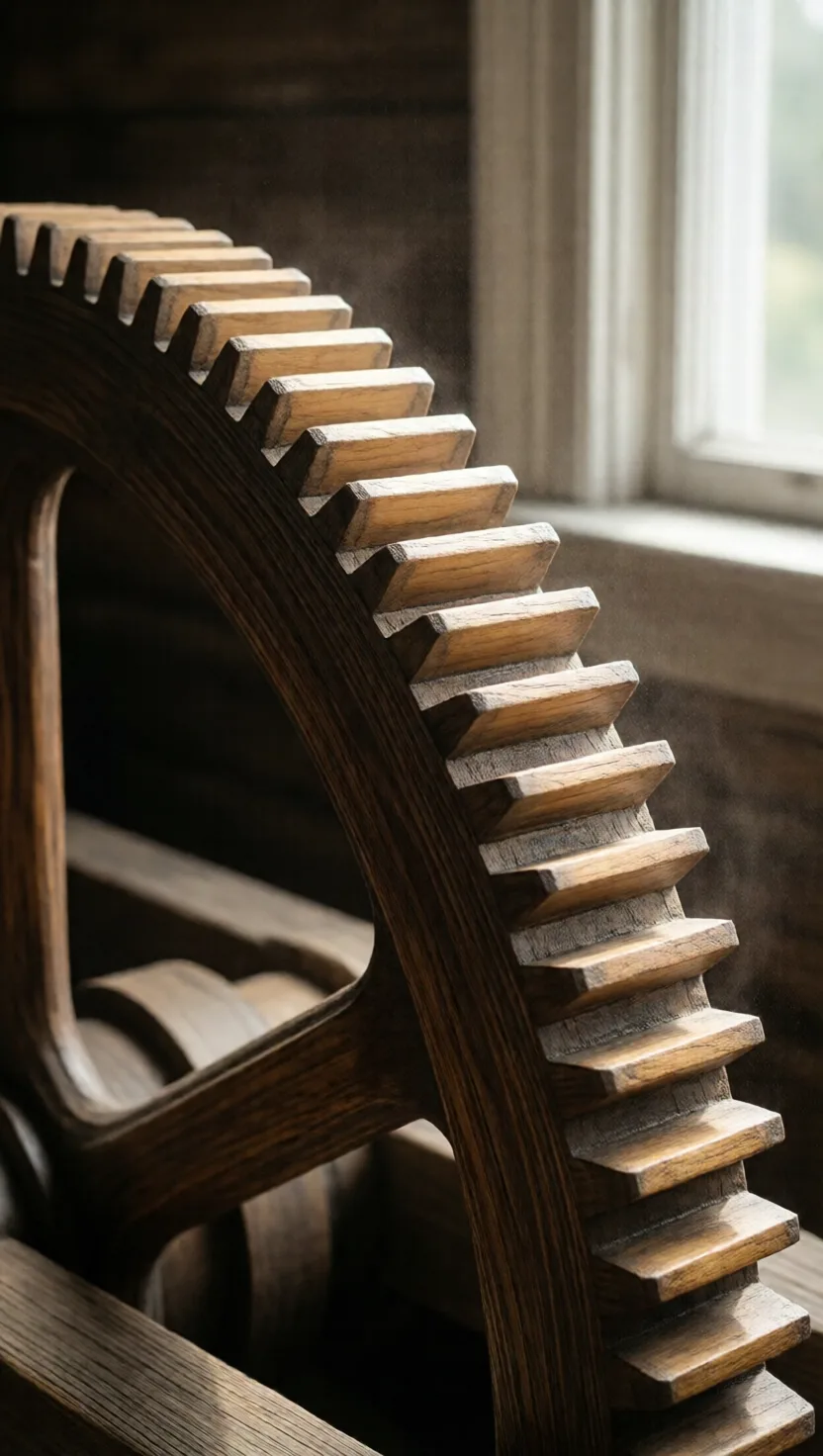
Before machined metal, big mill gears ran on teeth made of wood, individual pegs driven into the rim of a wheel. Hard, fine-grained woods like hornbeam, maple, or apple were favored: tough enough to carry load, quiet against an iron mate, and a little self-lubricating when waxed. Best of all, a single worn or broken tooth could be knocked out and replaced rather than scrapping the whole wheel, so some wooden gear trains have run for well over a century.
tap →swipe ↑ for depthswipe ↓ to exit