A touchy shower handle teaches the art of the tiny wiggle.

SRC·78 Source
The handle that scalds by a hair

The handle that scalds by a hair

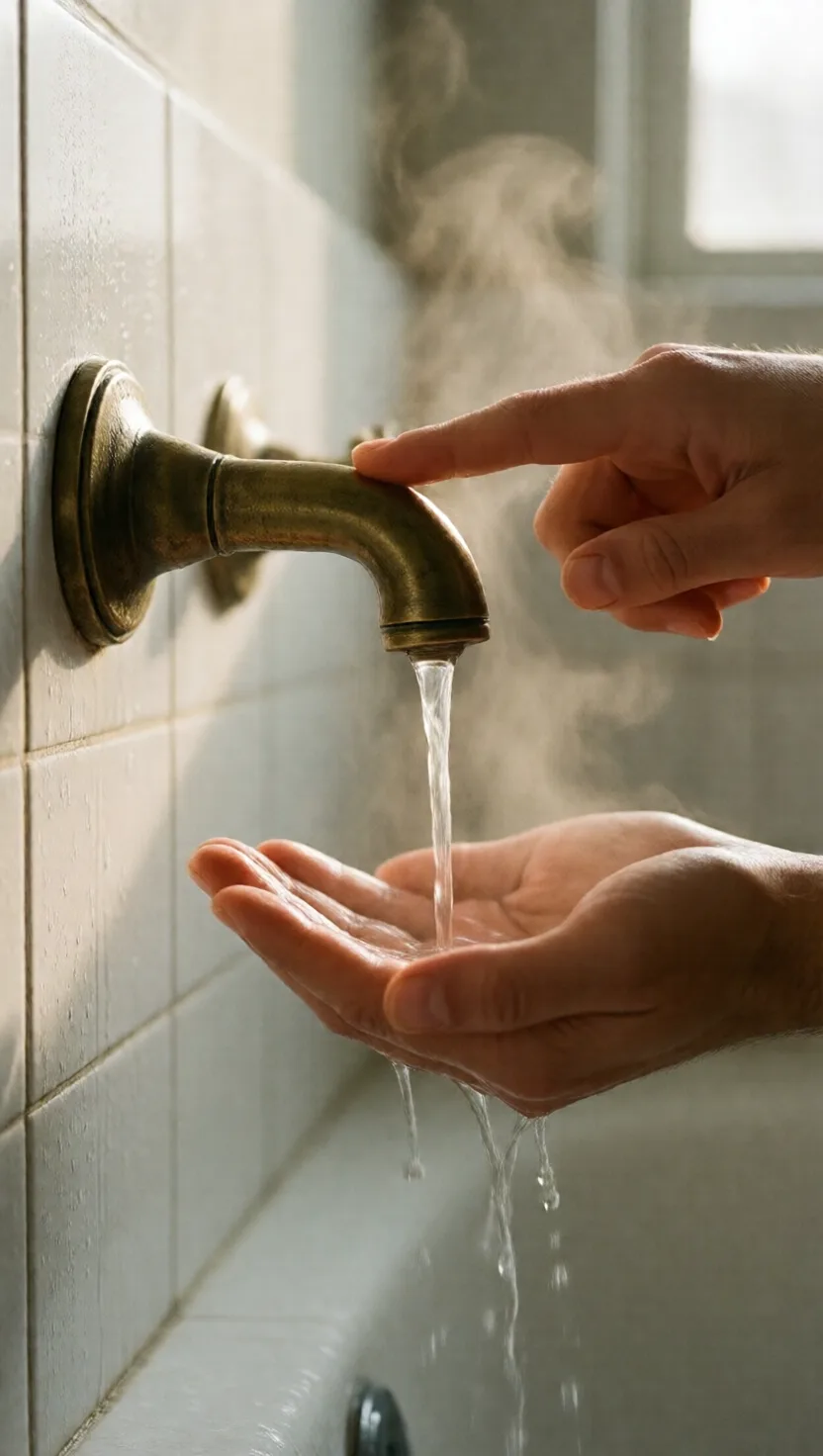
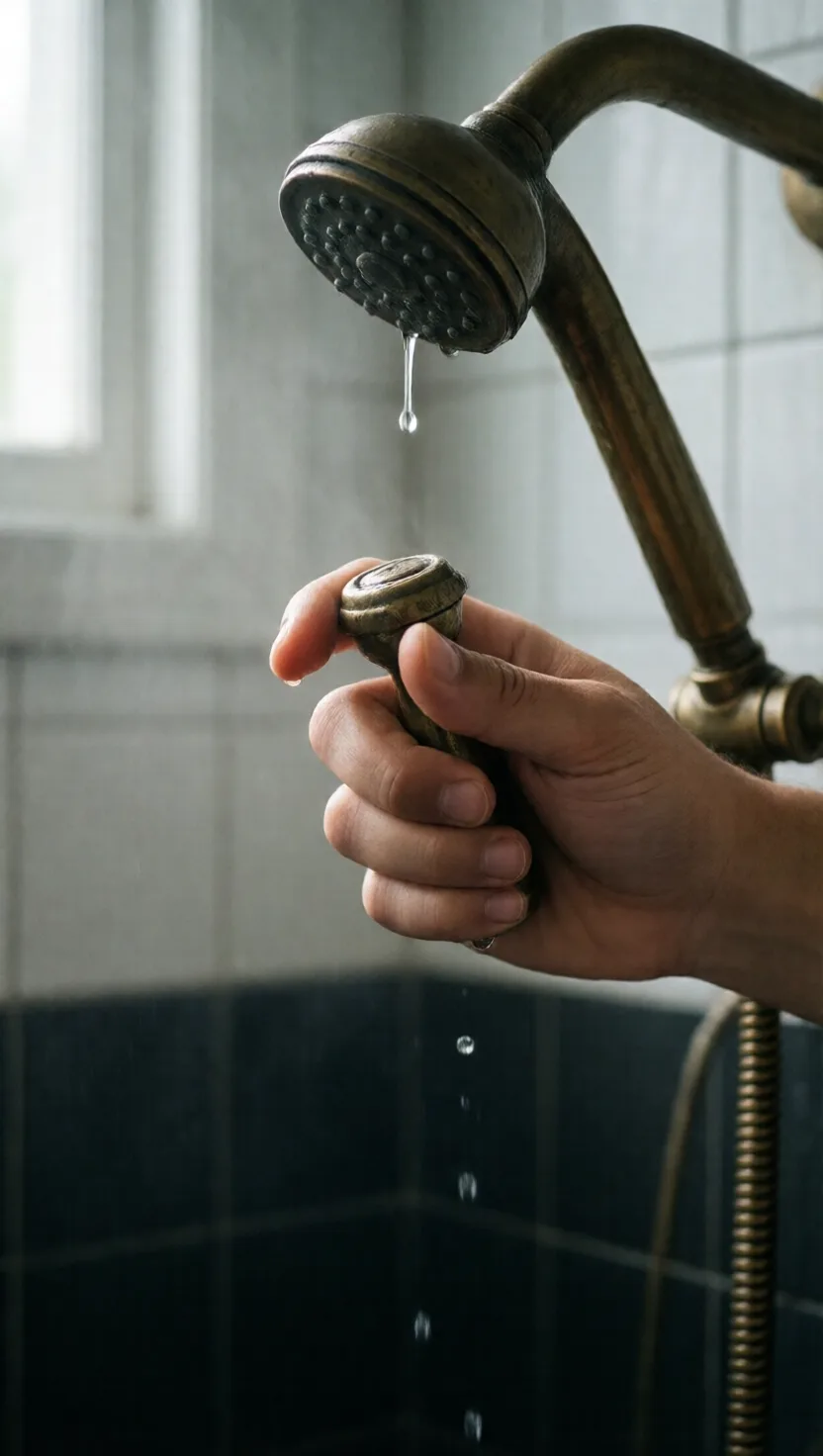
First morning in the borrowed apartment, you meet the shower's single brass handle. At some positions, a hair's width of turn swings the water from cool to scalding. At others you can crank a whole quarter-turn and nothing changes at all. Same handle, same pipes, same you. What exactly is different from one position to the next?
A big turn only tells you the average

A big turn only tells you the average

You try to map the handle with bold quarter-turns. Useless — a wide sweep only reports the average behavior across the whole arc. It blurs a gentle stretch and a vicious one into a single number, and you get scalded finding out. What you need is the handle's truth right here, at exactly this angle. So you go small. Very small.
The art of the tiny wiggle

The art of the tiny wiggle

New method. Hold a position, nudge the handle a millimeter, feel how much the water shifts: change out, divided by wiggle in — one honest number per position. But go too tiny and the shift drowns below what your skin can tell apart. Too big lies about here; too small vanishes into noise. You want the wiggle shrunk all the way to nothing — perfectly.
Sensitivity, made exact: the derivative

Sensitivity, made exact: the derivative

f(x)=limh0f(x+h)f(x)hf'(x) = \lim_{h \to 0} \frac{f(x+h) - f(x)}{h}
Mathematics finishes your gesture. Shrink the wiggle toward zero and the ratio settles on one exact number: the derivative — the output's sensitivity to the input at precisely this point. The formula reads like your hands: nudge the input by a tiny h, divide the output's change by h, let h shrink to nothing. Position by position, this number makes a promise.
A promise about the neighborhood

A promise about the neighborhood

The promise is local: near this angle, the water's change is about sensitivity times your turn — the best straight-line story of the handle right here, and only here. It never claims the whole dial; trust it for a hair's width, not a quarter-turn. By evening you've collected the number at every angle, and together they form something bigger.
A map of where to be careful

A map of where to be careful

You now own the handle's sensitivity map: ferocious through the middle, nearly dead at the ends. It answers the only two questions that matter — which way to turn for warmer, and how far to trust the move. A learning machine asks exactly this of every knob it owns, and it owns close to a billion. There, the wiggle hits a wall.
🌱 A billion handles, one gesture

🌱 A billion handles, one gesture

A modern model is a shower with a billion handles, and each wiggle costs a full test of the water. Feeling them out one by one wouldn't take a morning — it would take an era. 🌱 Yet these models do get trained. Somehow the machine senses every handle's sensitivity at once, in roughly one gesture. What would a trick like that have to look like?
tap →swipe ↑ for depthswipe ↓ to exit