Two machines in a row are secretly one machine.

SRC·77 Source
Same machines, same metal, different parts

Same machines, same metal, different parts

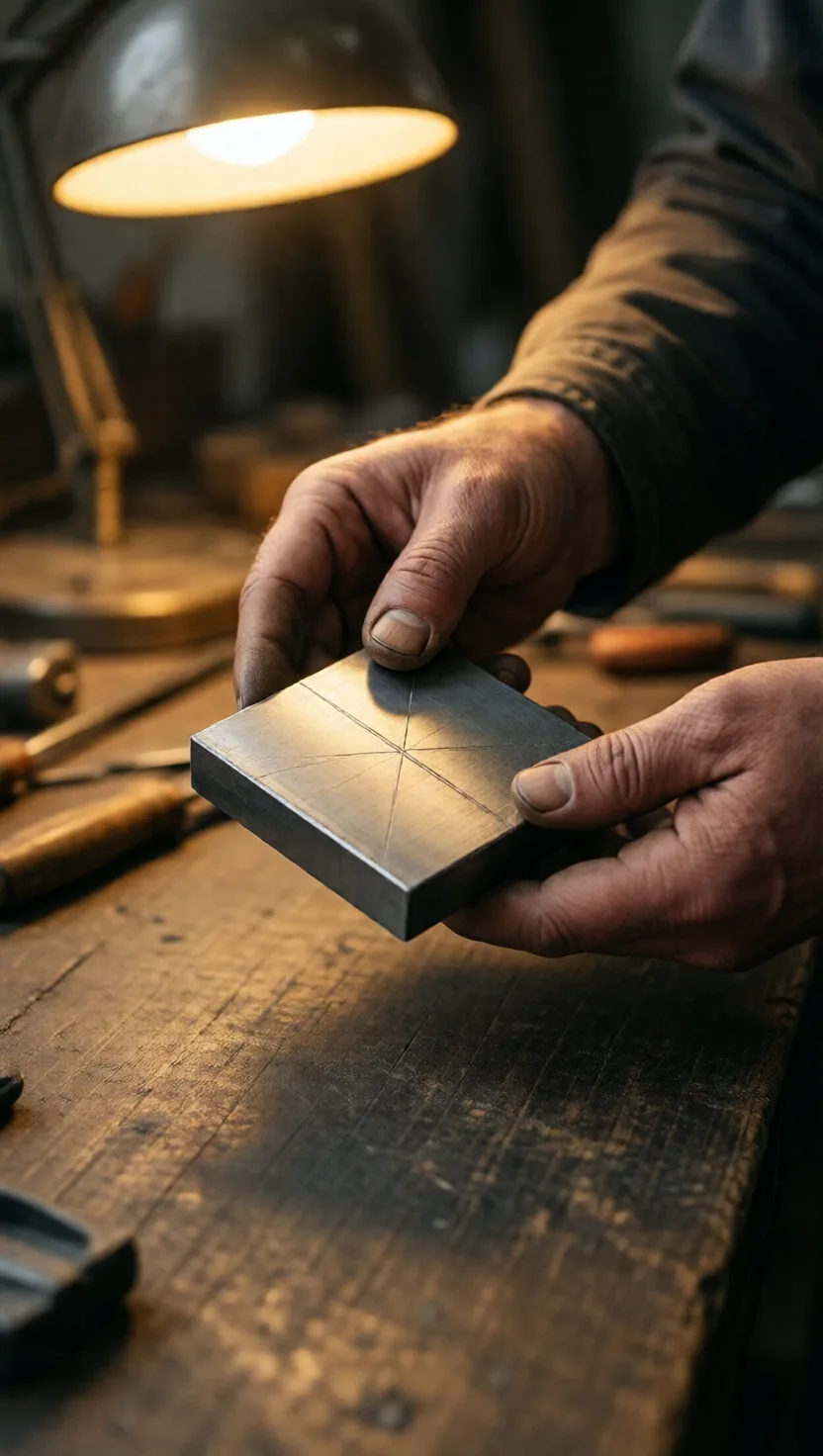
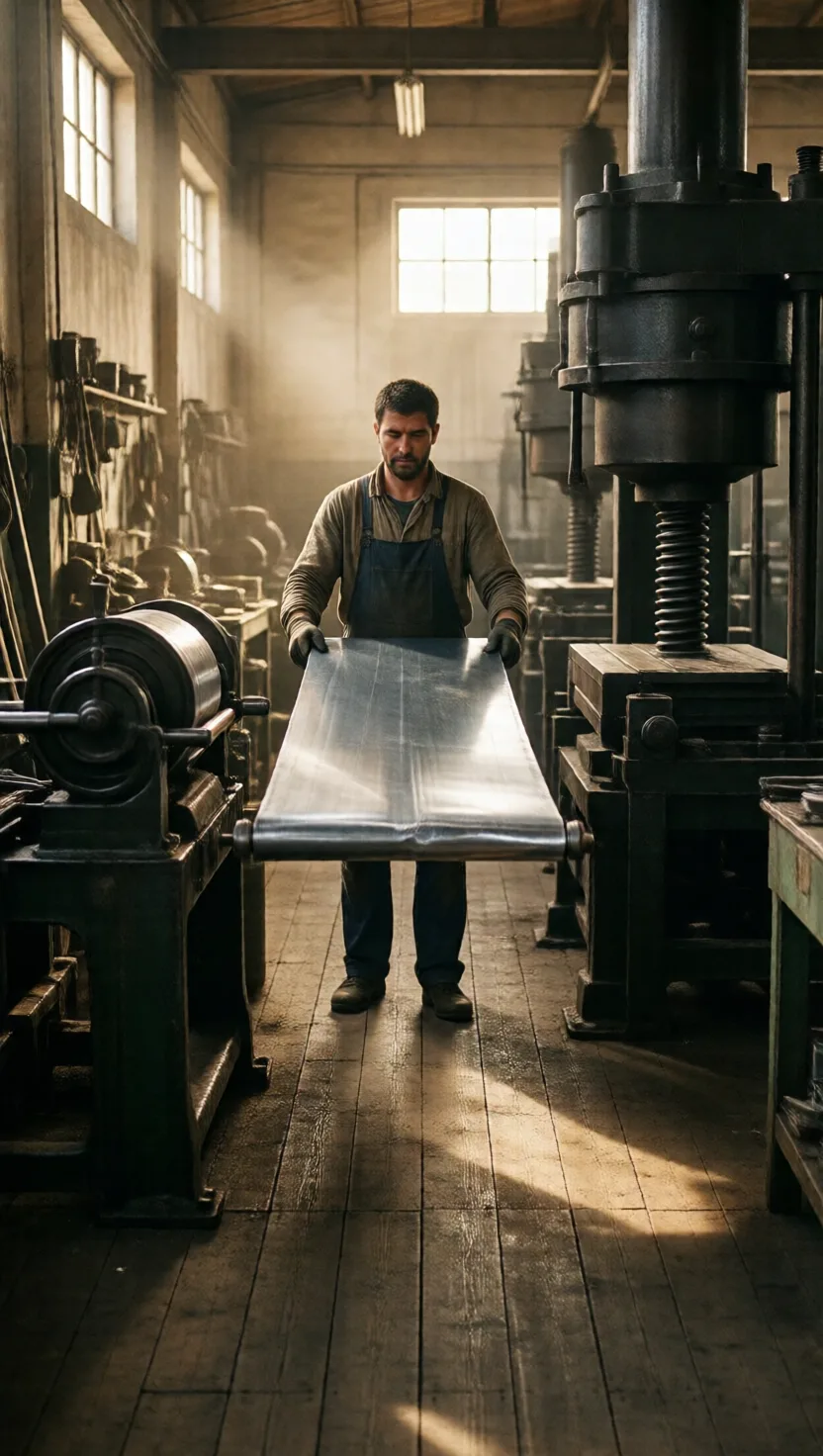
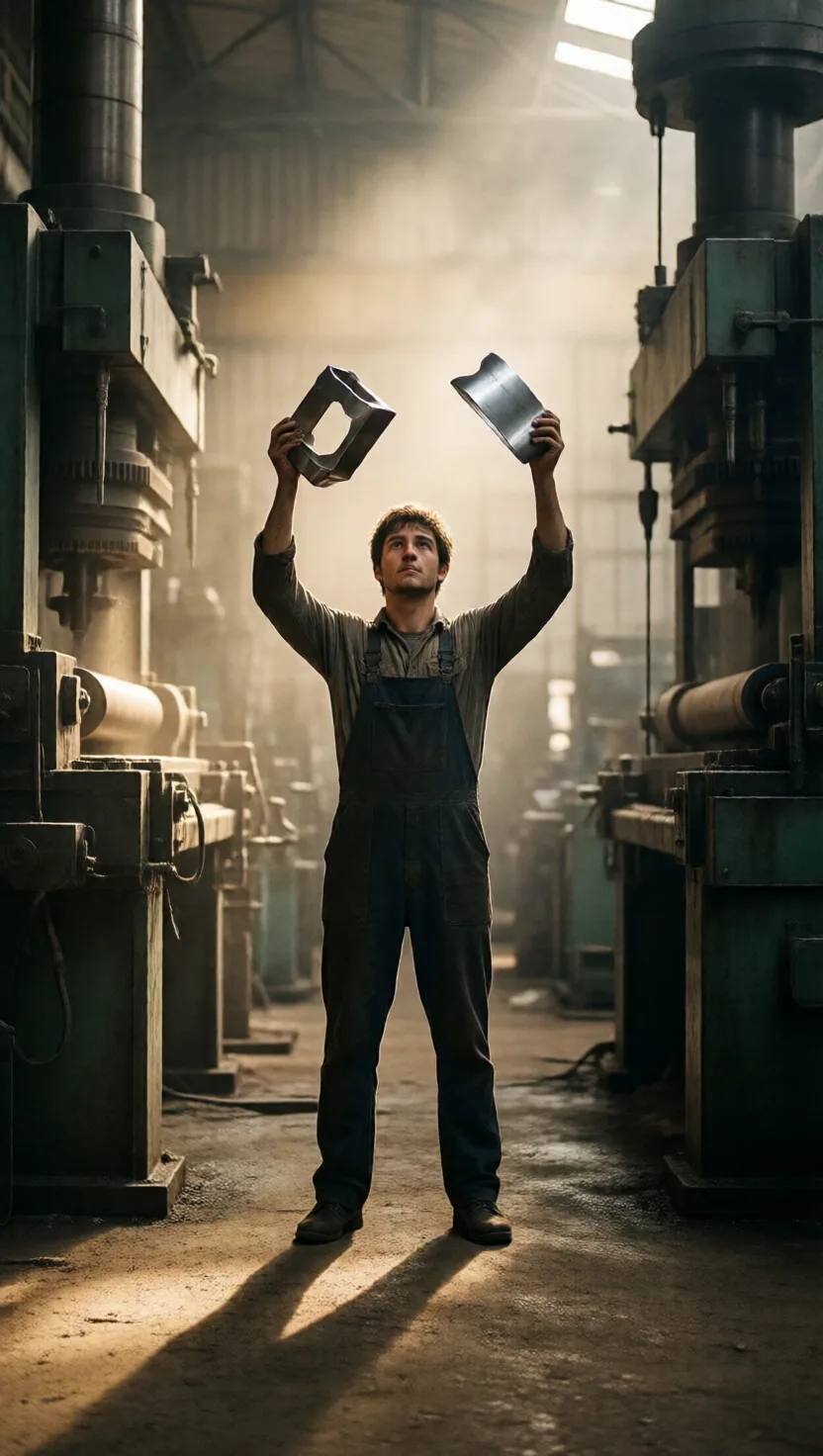
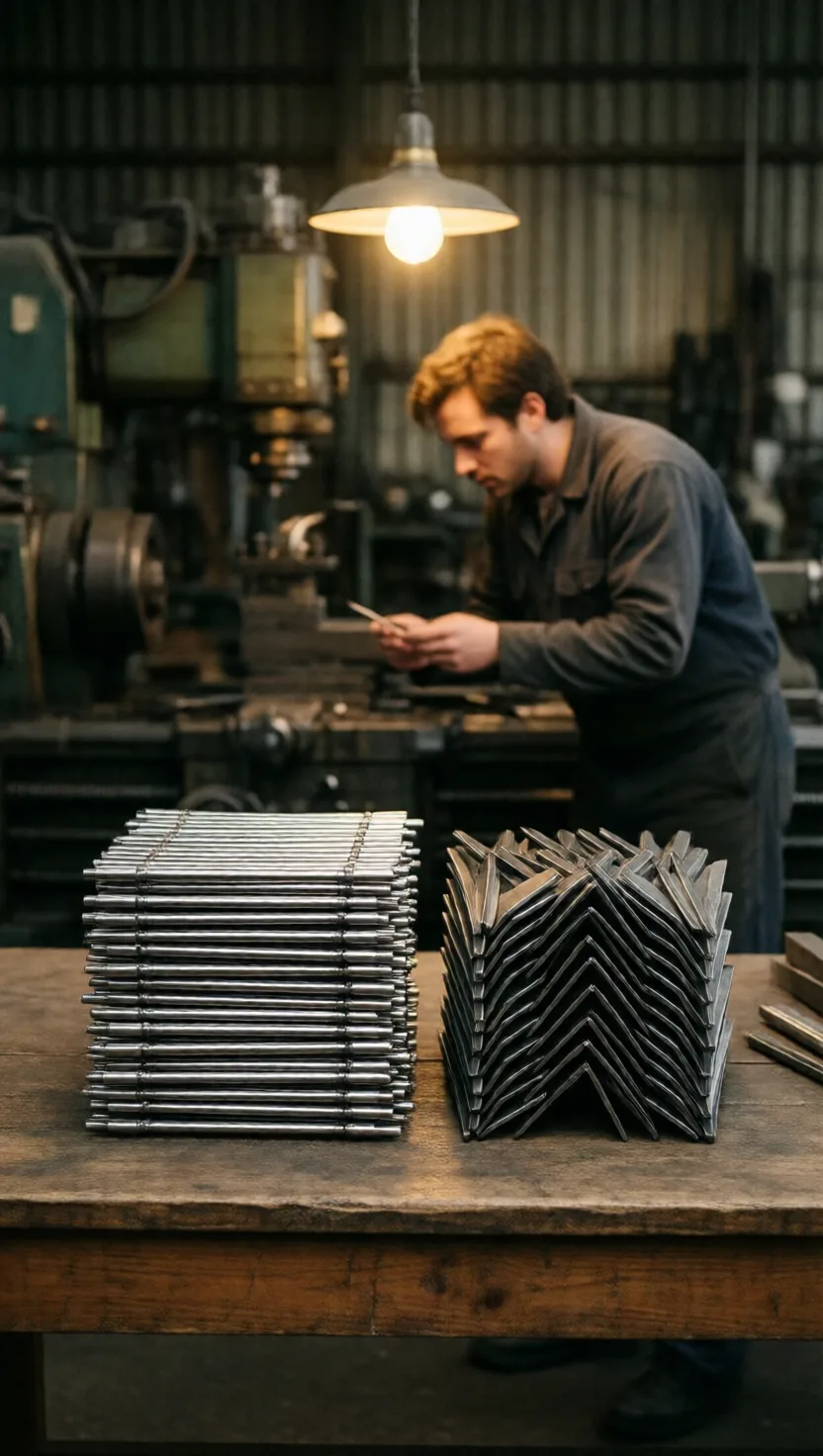
First week in the sheet-metal shop. Two identical stacks of blanks go through the same two stations — the roller that stretches, the press that shears sideways. Same machines, same settings, same metal. Yet the parts that come out are different shapes. The foreman only smiles. What could possibly have changed?
Each station does one lawful thing

Each station does one lawful thing

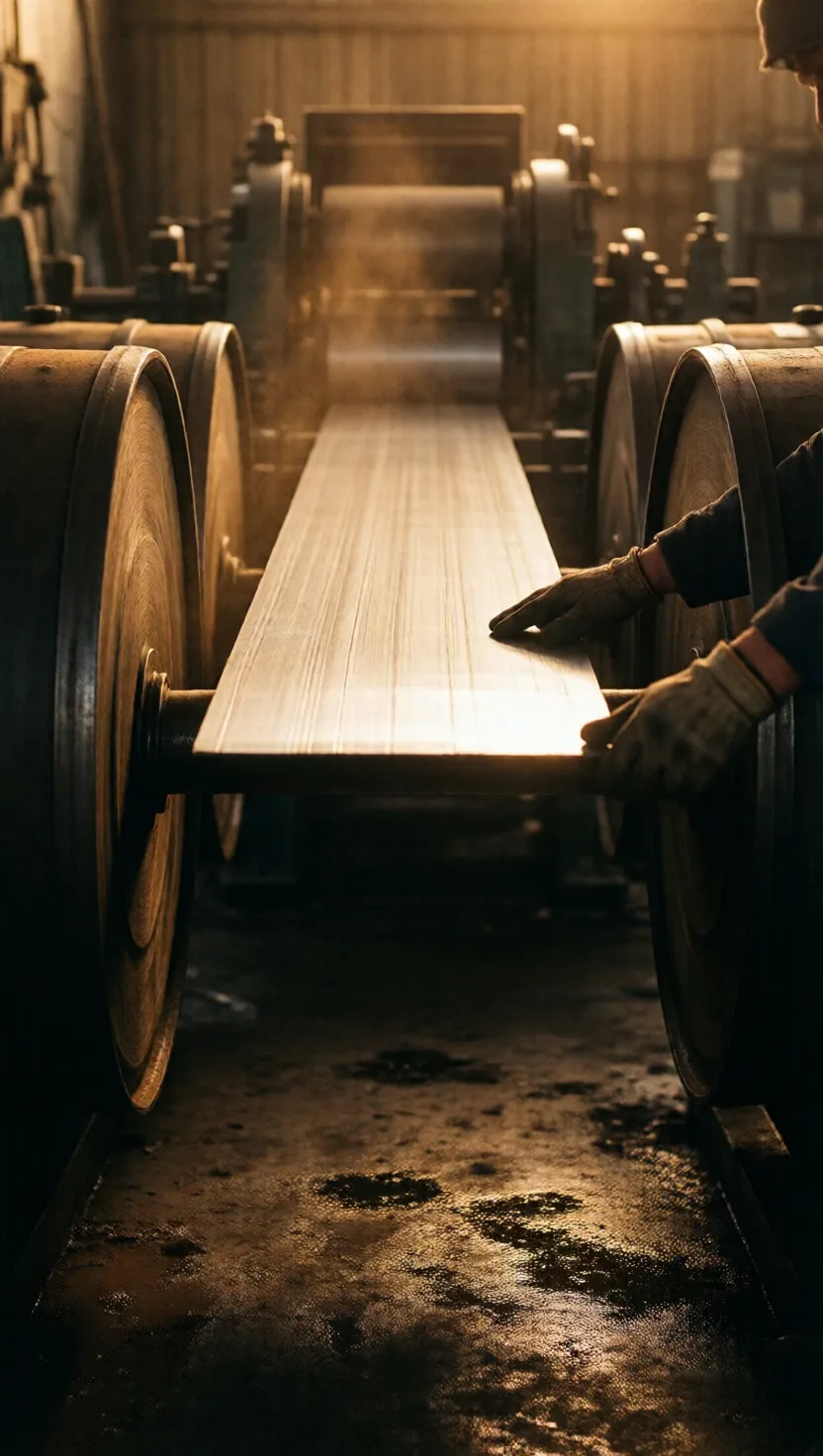
You watch the stations for a day. The roller stretches every sheet by one fixed rule; the press slides the top edge sideways by another — a clean shear. Feed a shape twice as big, get a result twice as big; the machines never improvise. Strangely, the foreman never watches whole sheets. He watches two little scratches.
Two scratches tell you everything

Two scratches tell you everything

Every scribed point on a blank is just so-far along one scratch plus so-far along the other. So once you know where a station sends those two, you know where it sends everything. The foreman keeps a small card per station recording exactly that — where the scratches land. The card is the whole machine, folded into a pocket. And cards can be combined.
Two stations fold into one

Two stations fold into one

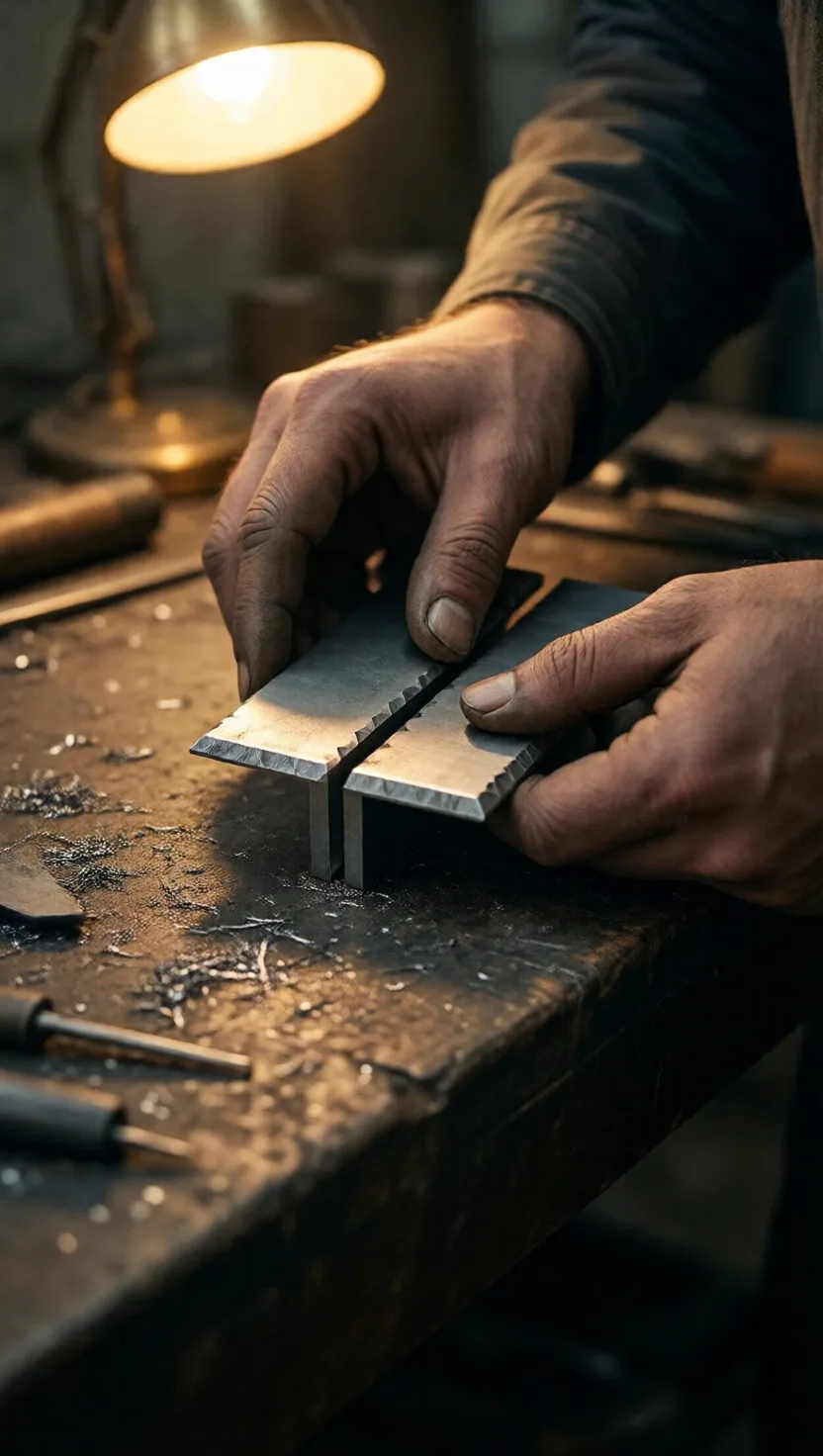
Every part runs roller then press, and running the line twice is slow. So the foreman traces the two scratches through the roller, then feeds those landing spots through the press's card — and writes one new card. One card, one pass, identical parts. Two machines in a row were one machine all along. And the arithmetic he just did has a famous name.
Chaining machines is matrix multiplication

Chaining machines is matrix multiplication

Each station's card is a matrix: a machine for transforming space, written down as where two scratches land. And the foreman's combining move is matrix multiplication — row into column isn't a convention someone picked, it's the only rule that makes the one-pass card come out right. Which leaves just one mystery: the two mismatched stacks.
The order of the stations was the change

The order of the stations was the change

Run the roller first and the press shears a sheet already stretched long. Run the press first and the roller stretches a sheet already slanted. Same two machines — two different combined machines, because order matters. Chain three stations and the grouping never matters, but the sequence always does. One question follows you home from the shop.
🌱 Can every machine be run backward?

🌱 Can every machine be run backward?

The roller can run in reverse: stretch undone, sheet restored. 🌱 But imagine a press so total it flattens every scribed shape onto a single line. Feed it two different parts and out come two identical slivers. No machine anywhere can tell them apart again. The shapes were different when they went in — so where did the difference go?
tap →swipe ↑ for depthswipe ↓ to exit