Give the model an open book: let it look things up instead of making them up.

SRC·38 Source
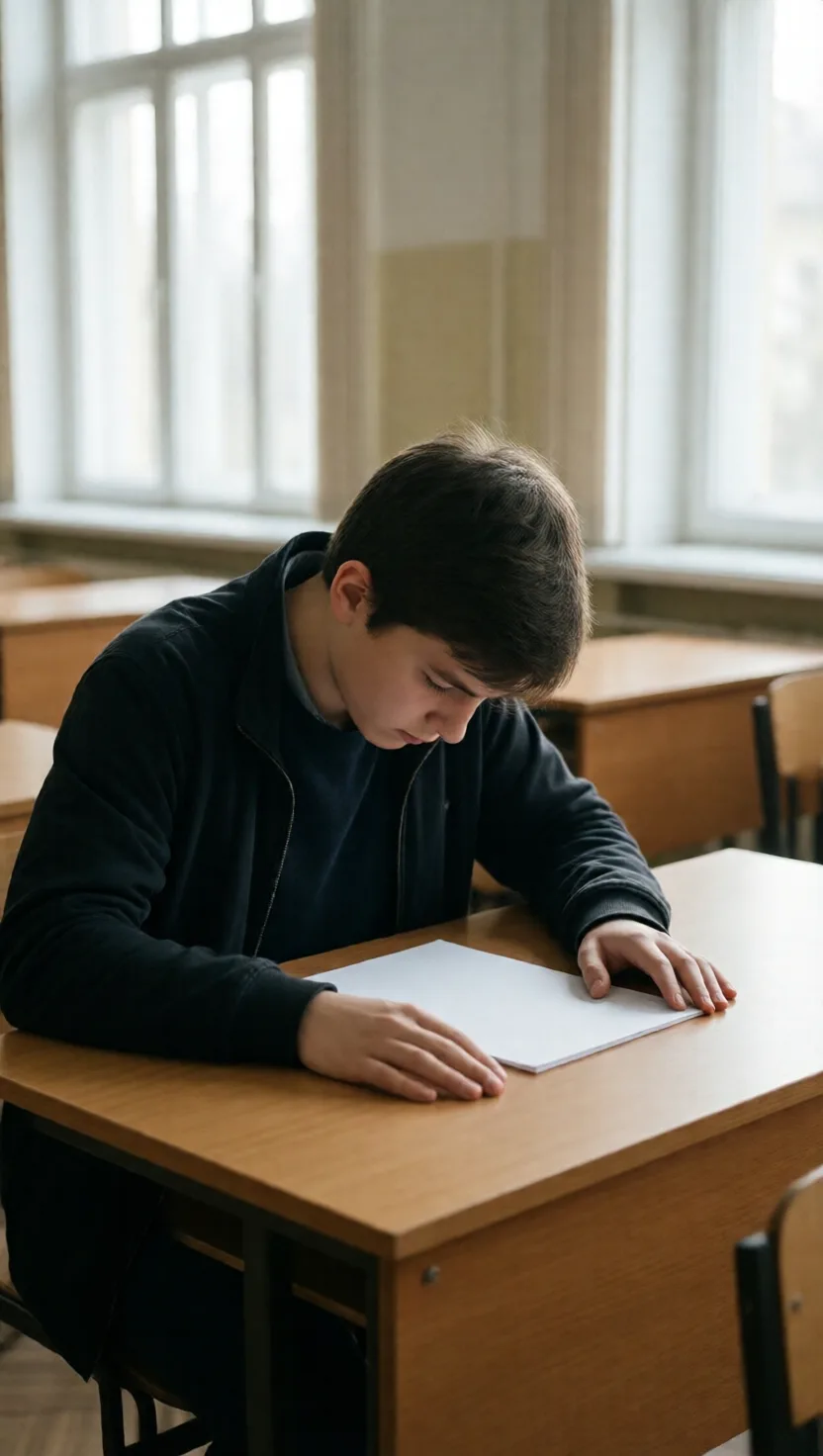
A genius locked in a room with no notes — so it bluffs.

A genius locked in a room with no notes — so it bluffs.

A trained model is a closed-book exam: everything it knows was sealed in the day training ended. Ask about your private files or this morning's news and there's no page to turn to — so it guesses, fluently, and sounds certain. Retrieval-augmented generation hands it the book. Let it look things up instead of dredging memory. Like an open-book exam: you stop memorizing the world and start finding the page.
Its knowledge was frozen the day it shipped.

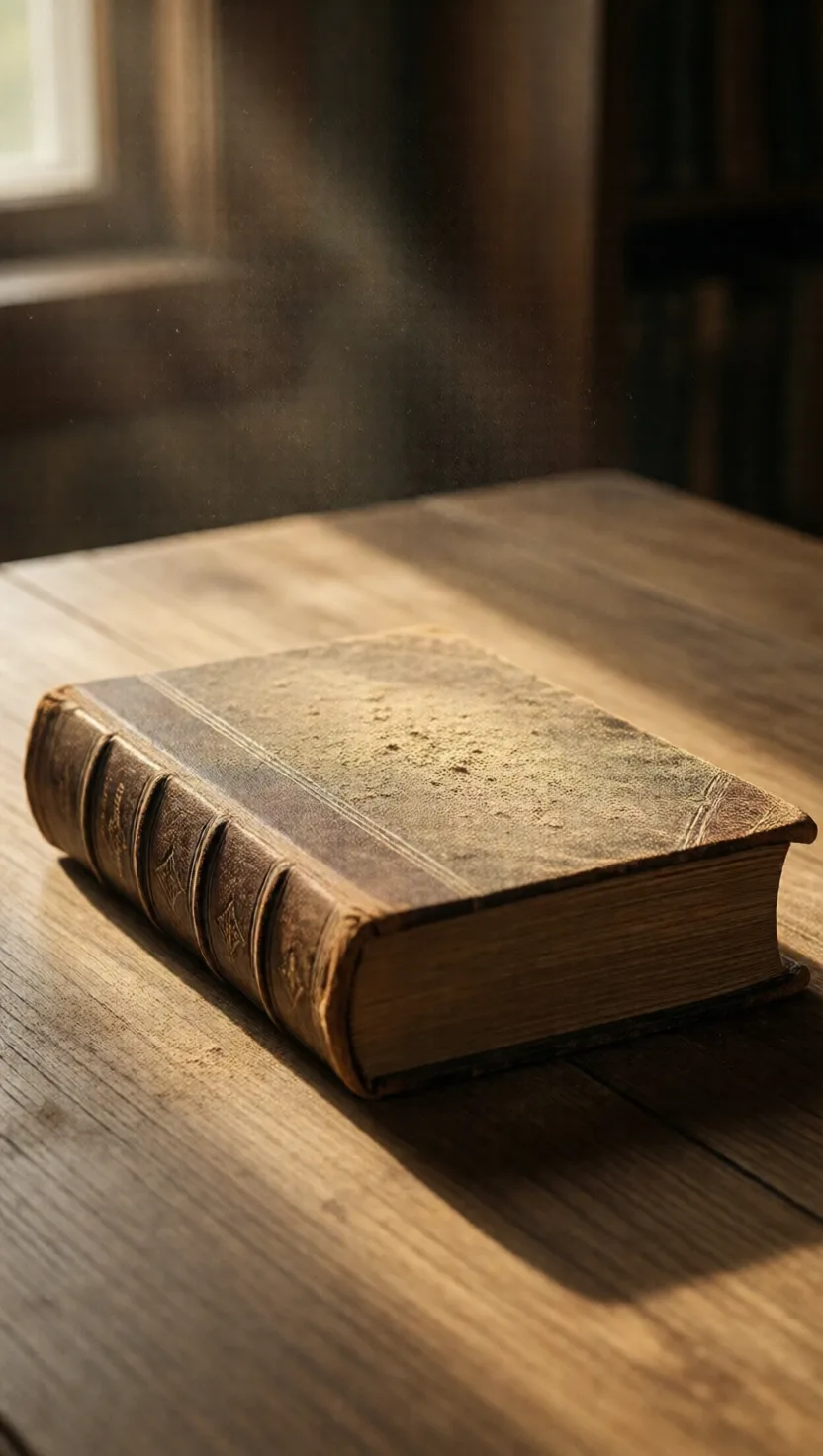
Its knowledge was frozen the day it shipped.

Everything the model learned is baked into fixed weights and then frozen — nothing updates after training. It can't hold your company's documents, and it can't know what happened today. Worse, it has no slot for 'I never read that', so it fills the gap with whatever sounds plausible. Like a printed encyclopedia: authoritative, beautifully bound — and a little out of date the moment the ink dries.
So don't cram it all in. Fetch what you need.

So don't cram it all in. Fetch what you need.

Here's the move: stop trying to pack every fact into the weights. Keep the knowledge outside the model, in an ordinary searchable store, and pull in only the few passages each question needs — then answer from those. The model stops being a know-it-all and becomes a brilliant reader. Like a squirrel's cache: it doesn't hold every acorn in its cheeks — it buries them nearby and digs up just the ones it wants.
How it finds the right passage: by meaning, not words.

How it finds the right passage: by meaning, not words.

eq=E(q), ed=E(d),sim(q,d)=eqedeqed,Dk=Top-kdD sim(q,d)e_q=E(q),\ e_d=E(d),\quad \mathrm{sim}(q,d)=\dfrac{e_q\cdot e_d}{\lVert e_q\rVert\,\lVert e_d\rVert},\quad \mathcal{D}_k=\operatorname*{Top\text{-}k}_{d\in\mathcal{D}}\ \mathrm{sim}(q,d)
Both the question and every passage are turned into points in one space of meaning — the same trick that puts cat beside kitten. Score each passage by how closely its point lines up with the question's, and keep the top few. No keyword has to match; nearness of meaning does the finding. Like a florist: ask for something soft and cheerful and they walk straight to the bucket that's closest in feel — never minding its name.
Now it answers from the page — not from memory.

Now it answers from the page — not from memory.

pη(dq)=expsim(q,d)dDkexpsim(q,d),p(yq)=dDkpη(dq)pθ(yq,d)p_\eta(d\mid q)=\dfrac{\exp\,\mathrm{sim}(q,d)}{\sum_{d'\in\mathcal{D}_k}\exp\,\mathrm{sim}(q,d')},\qquad p(y\mid q)=\sum_{d\in\mathcal{D}_k} p_\eta(d\mid q)\,p_\theta(y\mid q,d)
The retrieved passages are dropped into the prompt, and the model answers grounded in them — its reply is really a blend over those few passages, each weighted by how well it matched. Memory stops leading; the page does. In plain words: it builds the answer out of what was just handed to it. Like a witness reading the exhibit: instead of reciting from a hazy memory, they read from the document placed in front of them.
The catch: it's only as good as what you fetched.

The catch: it's only as good as what you fetched.

Recall@k=RDkR\mathrm{Recall}@k=\dfrac{\lvert R\cap\mathcal{D}_k\rvert}{\lvert R\rvert}
Grounding cuts both ways. If retrieval surfaces the wrong passages, the model grounds itself confidently in the wrong thing — and if the one passage you needed never made the fetched few, nothing downstream can recover it. In plain words: this just measures the share of the truly-relevant passages that made the cut. The ceiling is set before a single word is written. Like the morning groceries: the finest cook can only plate what arrived in the crate.
Update the library, never the model.

Update the library, never the model.

ypθ(yq, Dk),Dk=Top-kdD sim(q,d);update D,  θ fixedy\sim p_\theta\big(y\mid q,\ \mathcal{D}_k\big),\quad \mathcal{D}_k=\operatorname*{Top\text{-}k}_{d\in\mathcal{D}}\ \mathrm{sim}(q,d);\qquad \text{update }\mathcal{D},\ \ \theta\ \text{fixed}
Step back and the whole loop is simple: turn the question into a point, fetch the nearest passages, answer from them. The model's weights never move — all the knowledge that matters lives outside, in a store you can edit, swap, or grow in seconds, and the model can point to the very passage it leaned on. Yesterday's facts? Replace the page, not the brain. Like a gallery with rotating exhibits: the hall stands unchanged while the walls show something new — and every piece hangs there to be checked.
🌱 If it can always look it up, what's worth knowing by heart?

🌱 If it can always look it up, what's worth knowing by heart?

Give a mind a fast enough way to look anything up, and the line between knowing and finding begins to blur. We live there too — half our memory now rests in the things we can reach. So what should a mind still hold in itself: the facts, or only the art of knowing where to look? And if it always reaches for the page, does anything ever truly become its own?
tap →swipe ↑ for depthswipe ↓ to exit