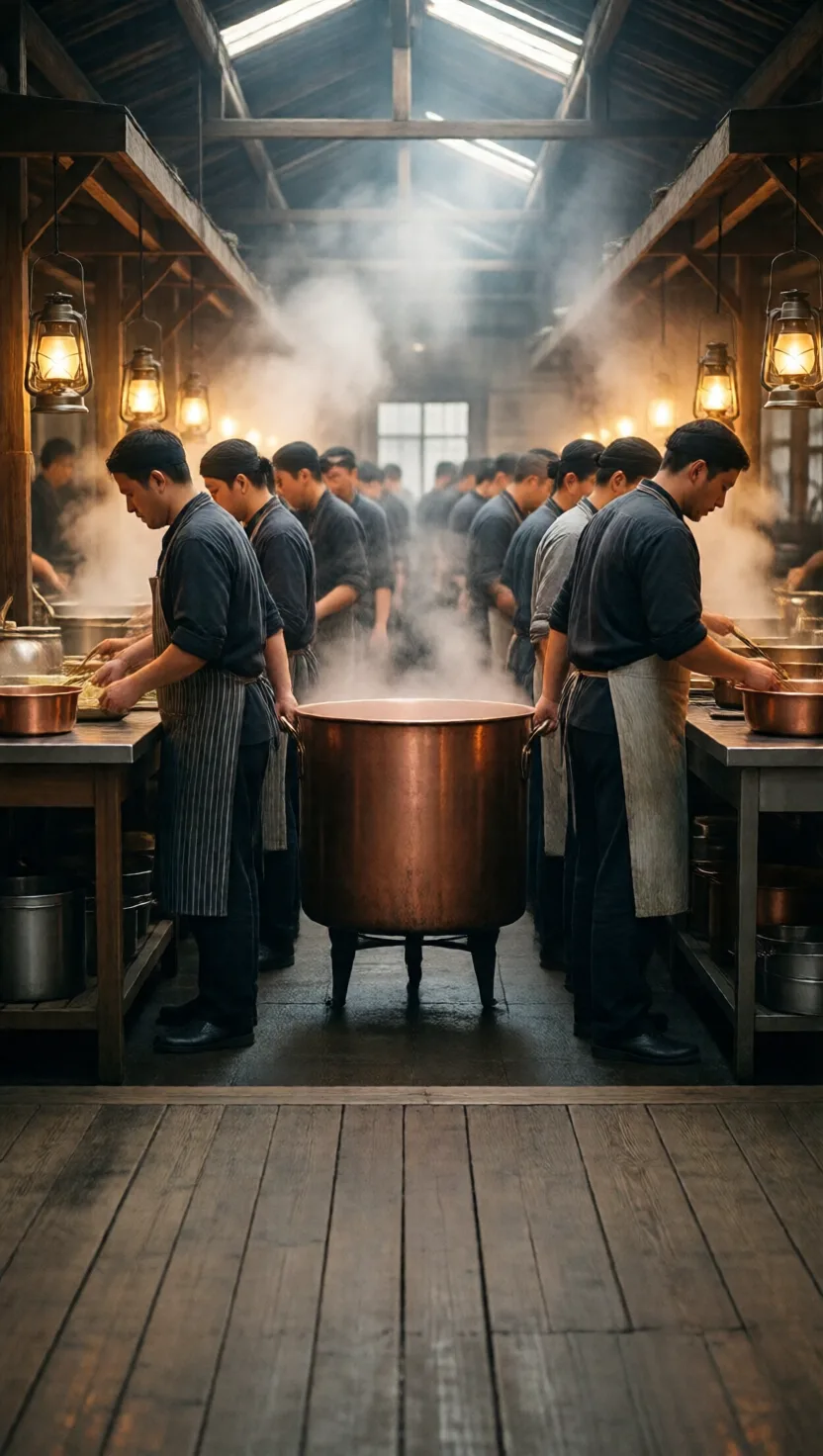
Forty cooks, one pot, and a rule against starting over.

SRC·127 Source
The iron rule: the pot always moves on whole

The iron rule: the pot always moves on whole

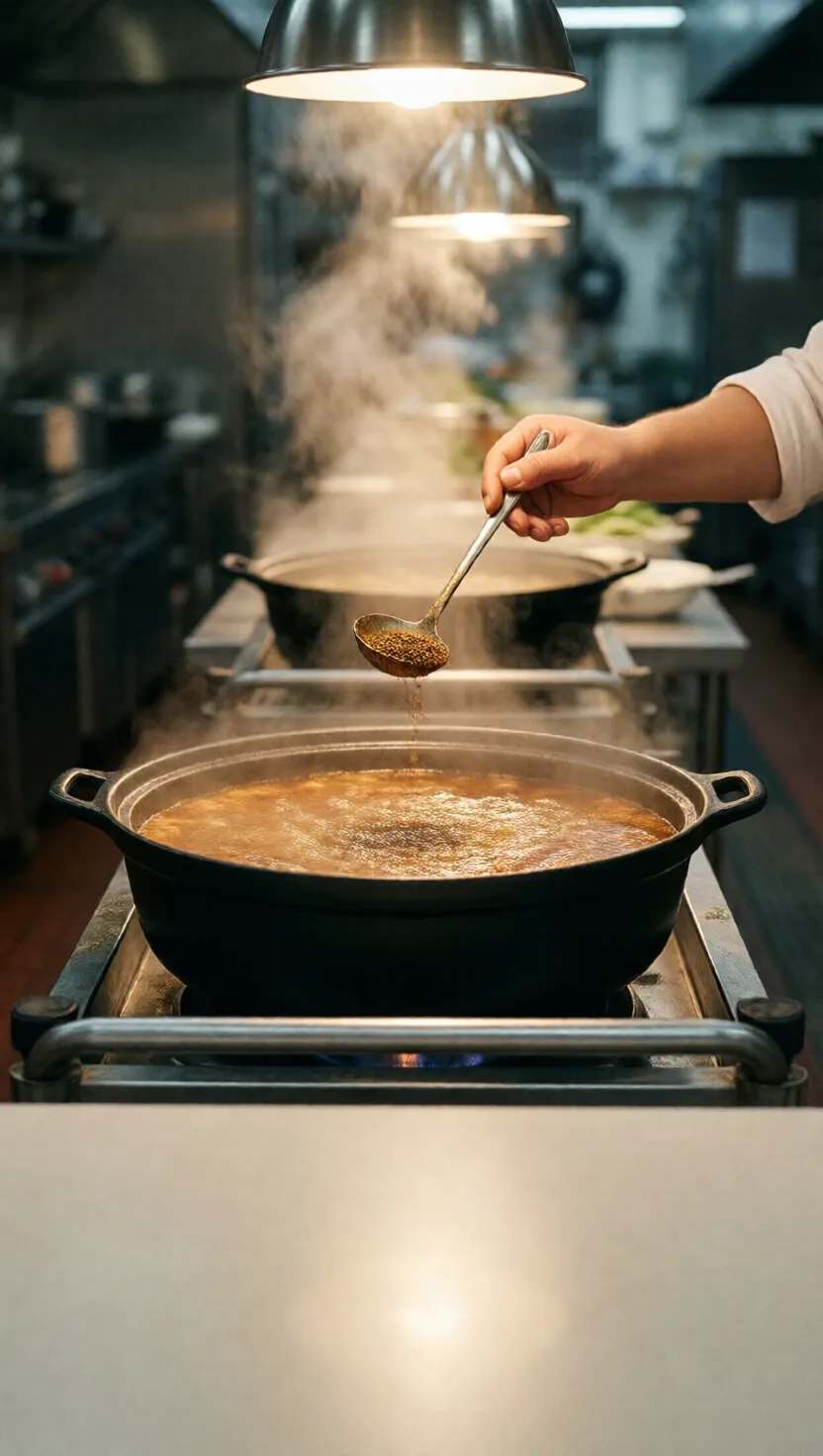
The festival kitchen runs one great pot down a line of forty cooks, and the new head cook sets a single iron rule: the pot moves on whole. Taste it, add one small spoonful if you must — never empty it, never rebuild it. The apprentices grumble that it's a rule against cooking. So why does this line now make the best broth in the valley?
The old kitchens: longer lines cooked worse

The old kitchens: longer lines cooked worse

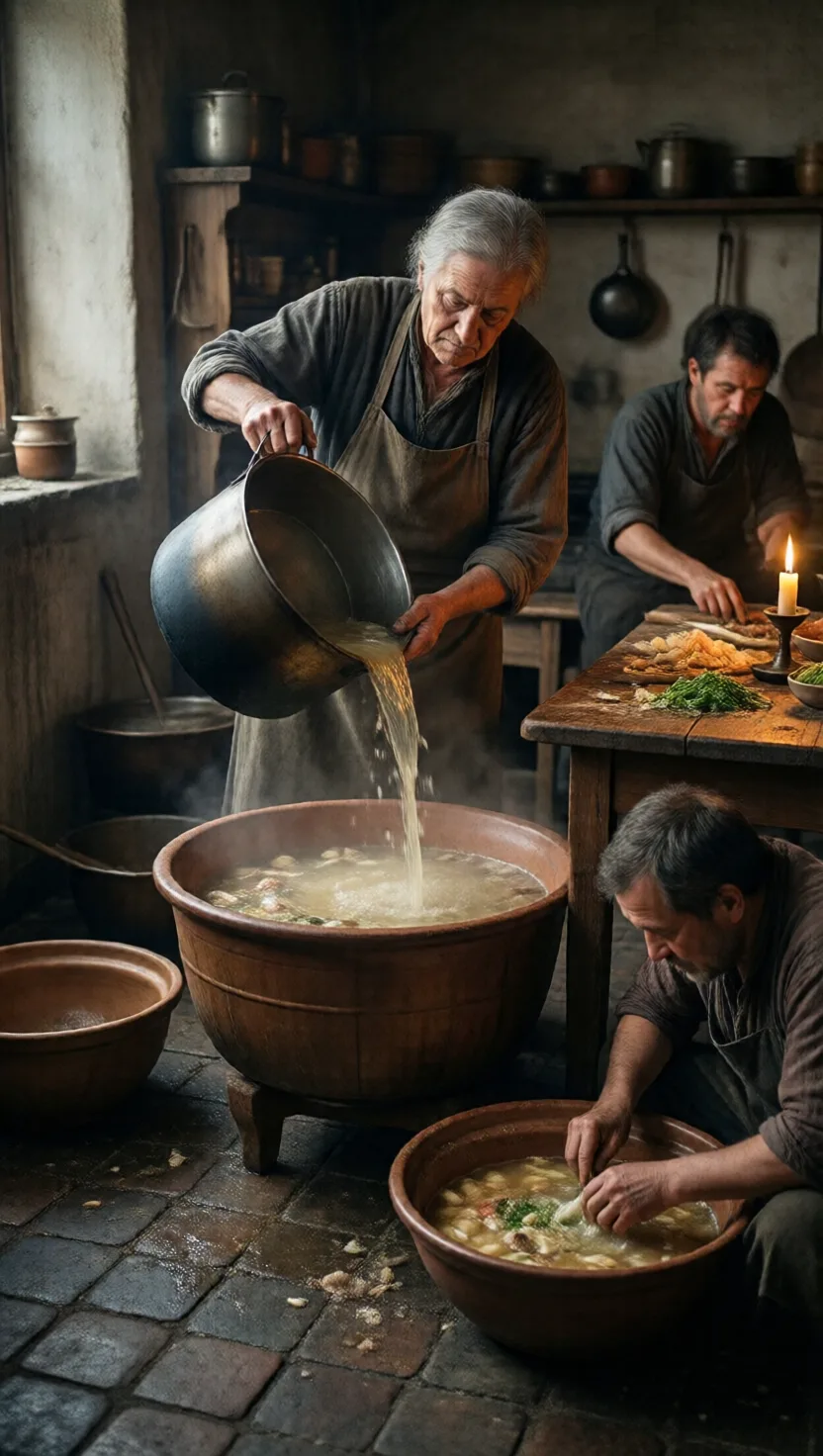
In the old kitchens every station emptied the pot and rebuilt the dish from what that cook had tasted. And the guild remembers an embarrassment: lines of forty masters cooked worse than lines of twenty. Not for lack of skill — faithfully remaking everything you received, forty times in a row, is where flavors quietly die. The new rule flips what a station is for…
Taste, add one spoonful, send it on

Taste, add one spoonful, send it on

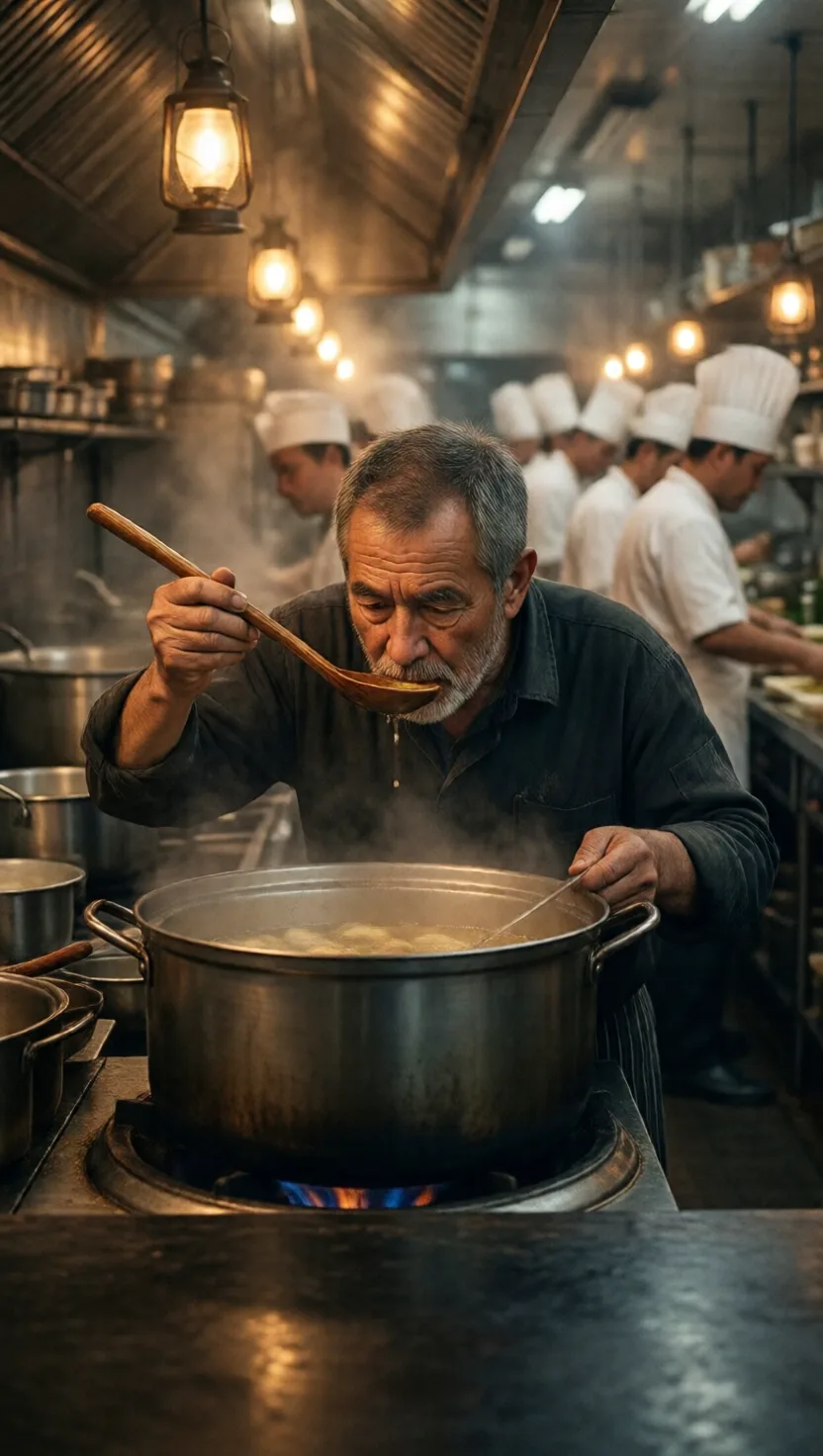
Under the rule a station is small. The pot arrives; the cook tastes; she adds a thread of acid or a pinch of smoke — a correction, not a dish — and sends it on whole. Doing nothing is effortless: just don't add. The base is never at risk, because nobody rebuilds it; each cook owes the pot only a nudge. Then comes the shift of the timid apprentice, afraid to add anything at all…
The timid cook breaks nothing

The timid cook breaks nothing

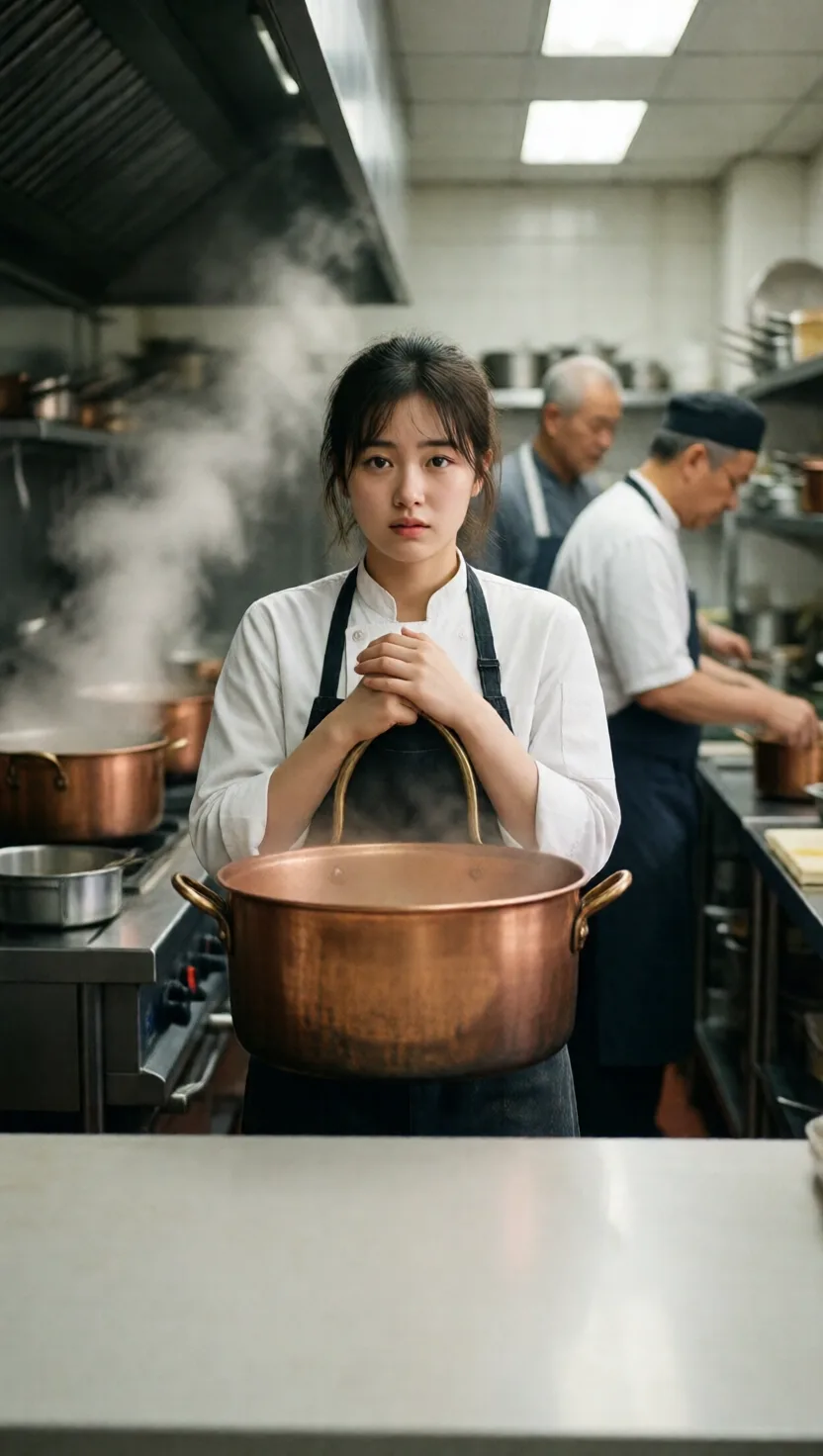
She lets the pot pass untouched — and nothing breaks; the broth leaves her station exactly as good as it arrived. In an old kitchen a frozen cook was a catastrophe: whatever she failed to remake was lost to every station after her. Here, doing nothing is the safe default the rule grants every cook for free. And down the line, the rule is quietly doing something stranger…
The fortieth cook can still taste the first

The fortieth cook can still taste the first

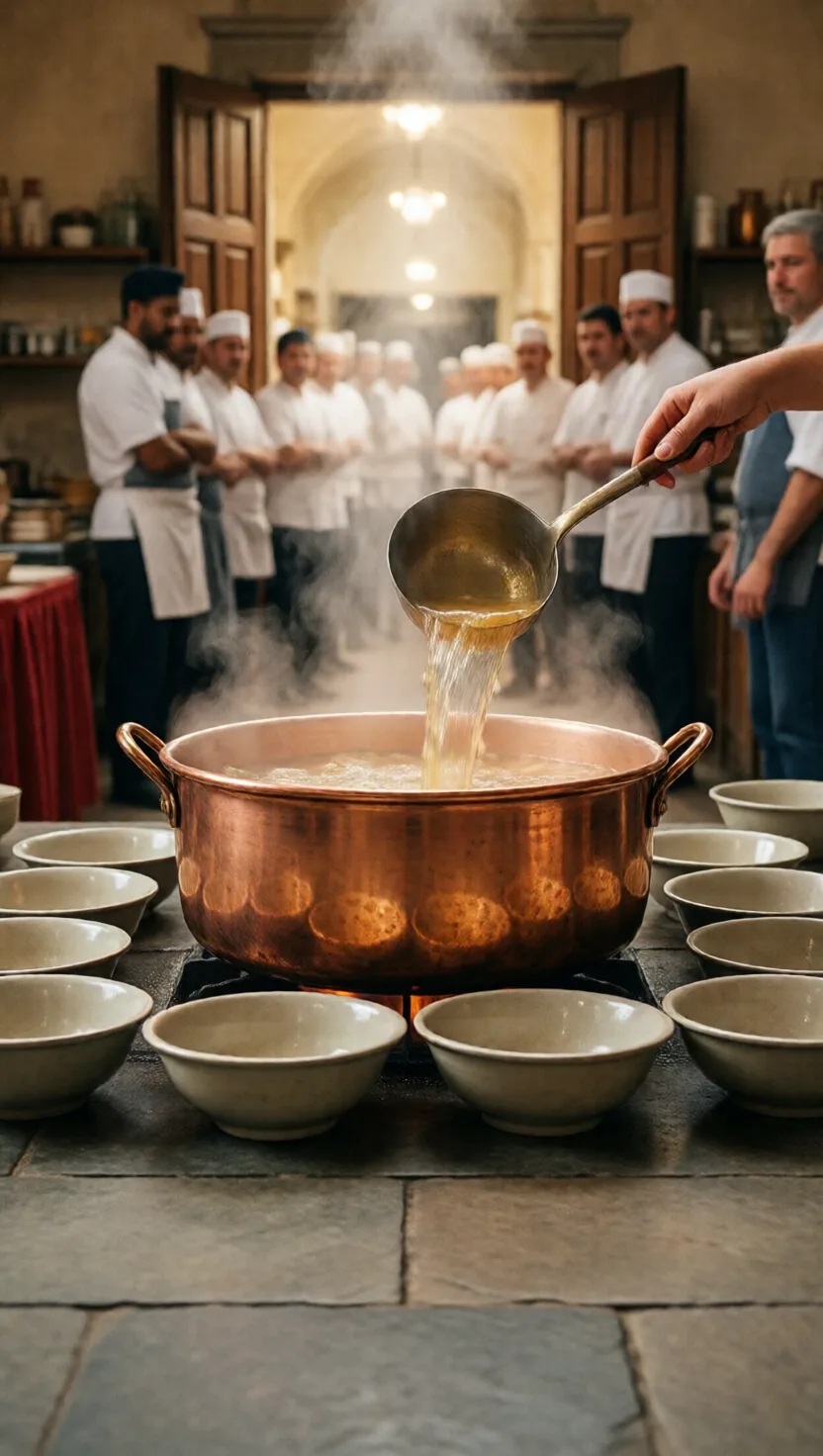
Because the pot survives every station, the first cook's smoked bones still speak in the final bowl, forty stations on, undiluted by retelling. And when the tasting master sends back a verdict — too sharp, too thin — it rides the same unbroken line, so even the first cook learns how her spoonful landed. This is no chain of retellings; it's forty hands around one pot. And it has a name…
One pot, forty small additions: the residual stream

One pot, forty small additions: the residual stream

y=x+F(x)y = x + F(x)
Deep language models are this kitchen. A stream of numbers — the residual stream — flows from the first layer to the last, and each layer may only add a small correction, never rebuild what it received: what leaves, y, is what arrived, x, plus that layer's spoonful, F(x). This is why very deep models train at all — a silent layer costs nothing, early work survives to the end, and blame flows back to the very first station.
🌱 What do you pass on whole?

🌱 What do you pass on whole?

The festival ends and the pot goes back on its hook. Most of what we hand one another — stories, plans, a family recipe — is rebuilt at every station, each teller remaking the whole from what they understood. What in your life would keep more of its flavor if the rule were the kitchen's: pass it on whole, and let each hand add only one honest spoonful?
tap →swipe ↑ for depthswipe ↓ to exit